Experian
1 / 25. Lapse in Insurance
Failing to pay your insurance premiums could cause your insurer to drop you, leading to a lapse in car insurance coverage. Even if you don't own a car or aren't driving, having a gap in coverage typically leads to higher premiums when you next purchase car insurance. Purchasing non-owner car insurance or maintaining a minimum amount of coverage when you don't plan to drive can help you avoid this risk.
6. Driving More
Putting more miles on your car increases your odds of being involved in an accident. In general, car insurance companies consider driving 15,000 miles or more annually high mileage, while driving 12,000 or less is considered low mileage. A new job with a long commute could push your mileage out of the low-mileage zone or even into the high-mileage range, both of which may cause a premium increase.
7. Buying a New Car
Whether you add another car to your policy or replace an existing car with a new vehicle, be prepared for a rate increase. The cost of insuring your new car depends on factors such as the cost of repairing or replacing it, its safety record and whether it's a model that's frequently stolen. If the vehicle is financed, the lender may require purchasing comprehensive and collision coverage, which adds to your costs.
8. Getting Older
Turning 55 can bring good news in the form of a discount on your car insurance. People ages 55 to 69 tend to drive cautiously and log fewer miles, reducing their risk of accidents. However, your 70th birthday is likely to bring a premium hike, since drivers aged 70 and up are statistically more likely to be involved in serious accidents.
9. Getting Divorced
Your insurance premiums may rise after a divorce. Married people are statistically less likely to file auto insurance claims, according to the National Association of Insurance Commissioners. Married people may also be more likely to qualify for price reductions such as discounts for homeownership or bundling home and car insurance.
10. Increasing Your Insurance Coverage
Purchasing more insurance coverage generally increases your premiums. When you choose to bump up coverage amounts or add optional coverage, such as roadside assistance or rental car reimbursement, be prepared to pay more. Several states, including California, North Carolina, Utah and Virginia, have raised their required minimum coverage limits effective Jan. 1, 2025, which will likely mean higher premiums for drivers in these locations.
11. Inflation
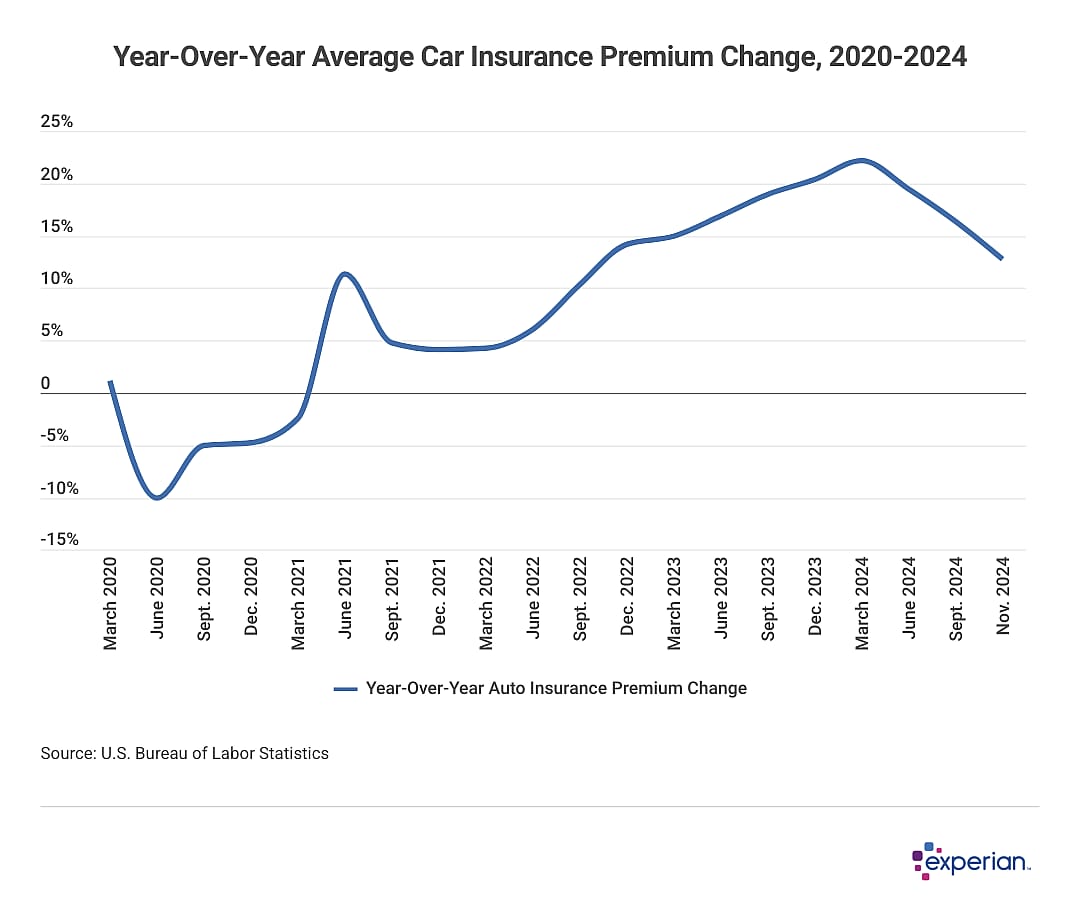
The cost of car insurance has soared by record amounts in the past few years as inflation has driven increases in the cost of auto parts, new vehicles and labor. Another factor in the surge in premiums is the number of severe weather events, which has increased dramatically in the last five years, according to the National Centers for Environmental Information. To compensate for the rising cost of claims, insurance companies are raising rates. The cost of car insurance increased by 12.7% from November 2023 to November 2024, according to data from the Bureau of Labor Statistics (BLS).
12. Low Credit Score
In most states, insurance companies can use credit-based insurance scores to help determine your car insurance premiums. These scores, which assess how likely you are to file a claim, are determined by using data from your credit report (and possibly other noncredit information). As a result, checking your regular credit score can be a good indicator of your credit-based insurance score. If your score falls on the lower end of the credit scoring range, insurance companies may be likely to charge you more for car insurance.
The Cost of Car Insurance Continues to Rise
If you've noticed an increase in your car insurance premiums, you aren't alone. After decreasing during the pandemic, car insurance costs returned to pre-pandemic levels at the beginning of 2022 and have kept rising ever since, according to BLS data.
The chart below shows trends in auto insurance premiums from January 2020 to November 2024. In 2023 alone, auto insurance premiums rose by 17.9%. As of November 2024, the average premium has risen by 18.5% year-to-date.