parfumdreams // DataPulse Research
1 / 4Deciding that less is more
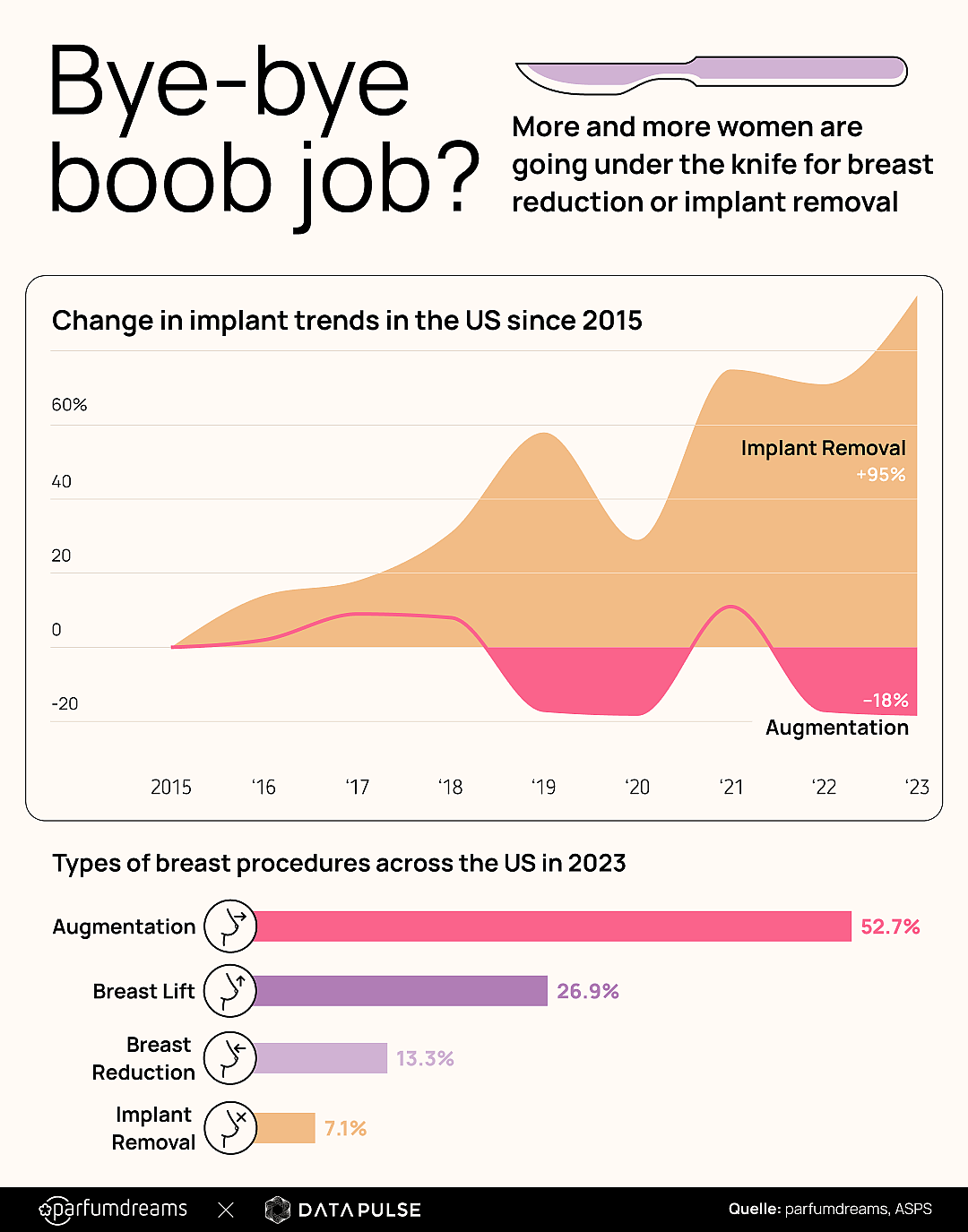
In 2023, there were between 40,000 and 75,000 breast implant removals carried out across the U.S. Although the number varies according to the source, it's evident that the procedure is becoming more popular.
Two major industry groups—the Aesthetic Society and the American Society of Plastic Surgeons (ASPS)—have different methodologies for tallying the procedures, but data from both organizations shows twice as many explantations carried out today than in 2015. At the same time, there's been little change (or perhaps even a slight decrease) in the number of augmentations performed.
There are still far more implant insertions than removals every year. Of all the cosmetic bust-related plastic surgeries, including breast lifts and breast reductions, breast enlargements dominate the field, accounting for more than half of all breast procedures performed each year.
The rising number of implant removals is remarkable because it signals a "movement towards a more natural and athletic physique," notes the ASPS in its 2023 statistics report. "Dubbed the 'ballet body' trend, this look emphasizes a harmonious, proportionate, and elegantly contoured body shape."
Health is certainly one reason for the uptick, even if not everyone strives to dance ballet. Particularly since the pandemic, Americans are focusing more on their mental health, confidence, and self esteem. They're also looking to support their physical health, which includes fitness activities and the use of weight-loss drugs like Ozempic. According to the ASPS, these shifts have led many women to ditch their implants to have a "balanced body shape."
What's more, implants have been known to make people sick. So-called "breast implant illness," or BII, can trigger joint and muscle pain, fatigue, hair loss, and memory problems. The Food and Drug Administration notes that BII is not recognized as a formal diagnosis and there are no tests or clinical criteria to define it. However, one type of implant made by Allergan was recalled in 2019 after it was determined to increase the risk of a cancerous lymphoma called BIA-ALCL.