OurWorldinData.org
1 / 2Adaptive diets cut meat consumption
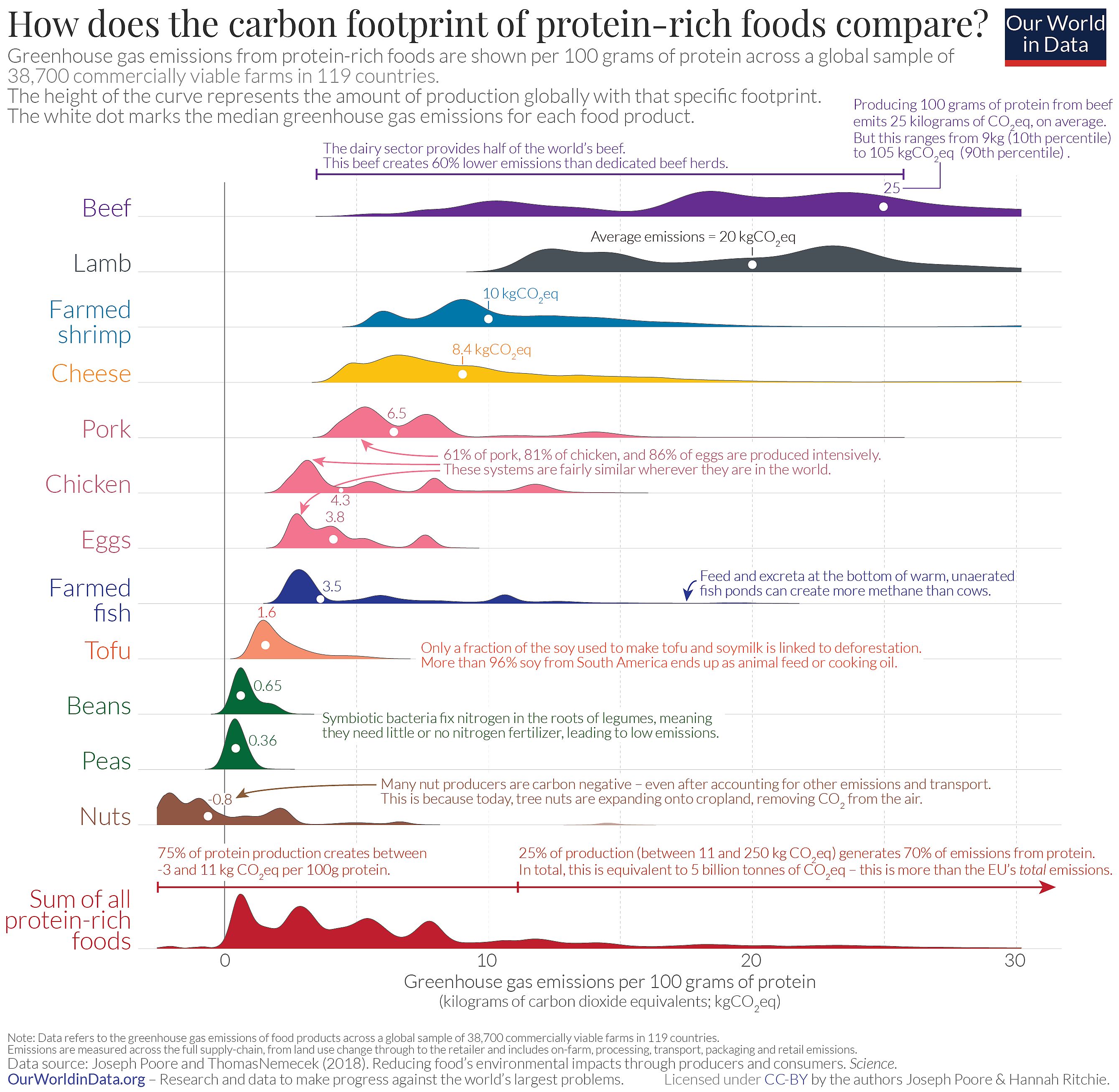
Yet a major study published in 2021 found that the emissions made by producing plant-based foods are roughly half the amount incurred by meat production — which advocates say underlines the massive cuts that can be achieved by adapting diets.
"At the beginning, I wasn't so much focused on agriculture, but when you look at the emissions and our land use for farming, you understand it's a huge deal," says Ida Auken, a member of parliament for Denmark's Social Democrats party who, as the country's former environment minister, was at the forefront of the policy. "Danes have to change the way that we eat."
Denmark believes, however, that the necessary shift toward plant-based eating also offers a massive economic opportunity. AgriFoodTure, a research and innovation partnership of Danish universities, companies and other organizations, estimates that if the country were to gain a three percent share of the global plant-based food market, it could create up to 27,000 jobs and bring in 13.5 billion Danish kroner, or DKK ($1.9 billion).
"Building a strong domestic market for plant-based foods will reduce the climate footprint of the Danish people, but will also help to put Danish companies in a stronger position on export markets," the government strategy notes.
And according to research by the University of Copenhagen, if Danes ate according to climate-friendly guidelines, it would prevent 1,000 deaths a year, cut the country's emissions by 31 percent to 45 percent and save DKK 12 billion ($1.7 billion) in health costs.
The publication of Denmark's national action plan follows the 2021 investment of DKK 1.25 billion ($182 million) to advance plant-based foods, most of which went into the fund.
The first tranche of funding, which totalled DKK 58.2 million ($8.47 million) for 36 projects, was granted last November and spans proposals to develop plant proteins, to train chefs in plant-based cuisine and for national information campaigns.
For example, the start-up PlanetDairy is working on plant-based versions of natural yogurt and Danbo, a popular cow's milk cheese from Denmark, through "precision fermentation" to produce "milk" proteins made out of peas and broad beans (fava beans).
Others are looking to boost nut, oat and barley production; to research the "culinary potential" of mushrooms (which have the unique umami flavor); and to improve seaweed cultivation both on and off-shore — as well as creating new sustainable preservation methods such as a seaweed-based pesto.
Meanwhile, practical initiatives that were funded include a new vegetarian degree program at Denmark's hospitality school, a "knowledge center" about plant-based cooking for chefs and students and a "vegan travel team" — proposed by Krebs — to train chefs around the country who are usually schooled in traditional, French-style methods despite the fame of Noma (the country's celebrated, best-in-the-world restaurant known for its innovative use of foraged local ingredients).