Gorodenkoff // Shutterstock
1 / 5Surgical and medical skills
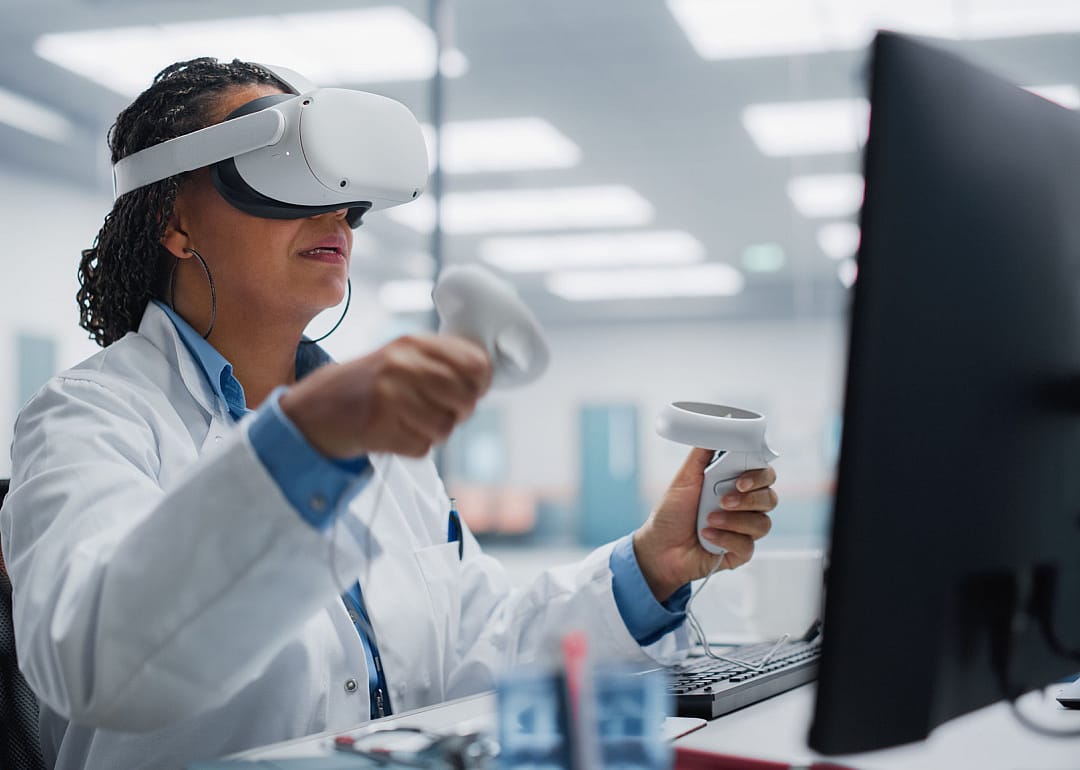
Many universities and medical schools now use VR, AR, and MR as safe and cost-effective ways to train health care professionals. The American Board of Internal Medicine encourages the use of VR training before residents perform surgical interventions on actual patients. This training approach allows residents to practice skills as often as necessary, leading to greater competence and effectiveness.
Emergency responders at the Ohio State University College of Medicine, for example, use VR to learn how to triage patients, while those at the University of Miami's Miller School of Medicine practice treating trauma patients who have suffered heart attacks or gunshot wounds. Educators teach medical residents at UConn Health orthopedic surgical procedures using VR. And the World Health Organization even uses AR to train health care workers treating COVID-19.