Experian
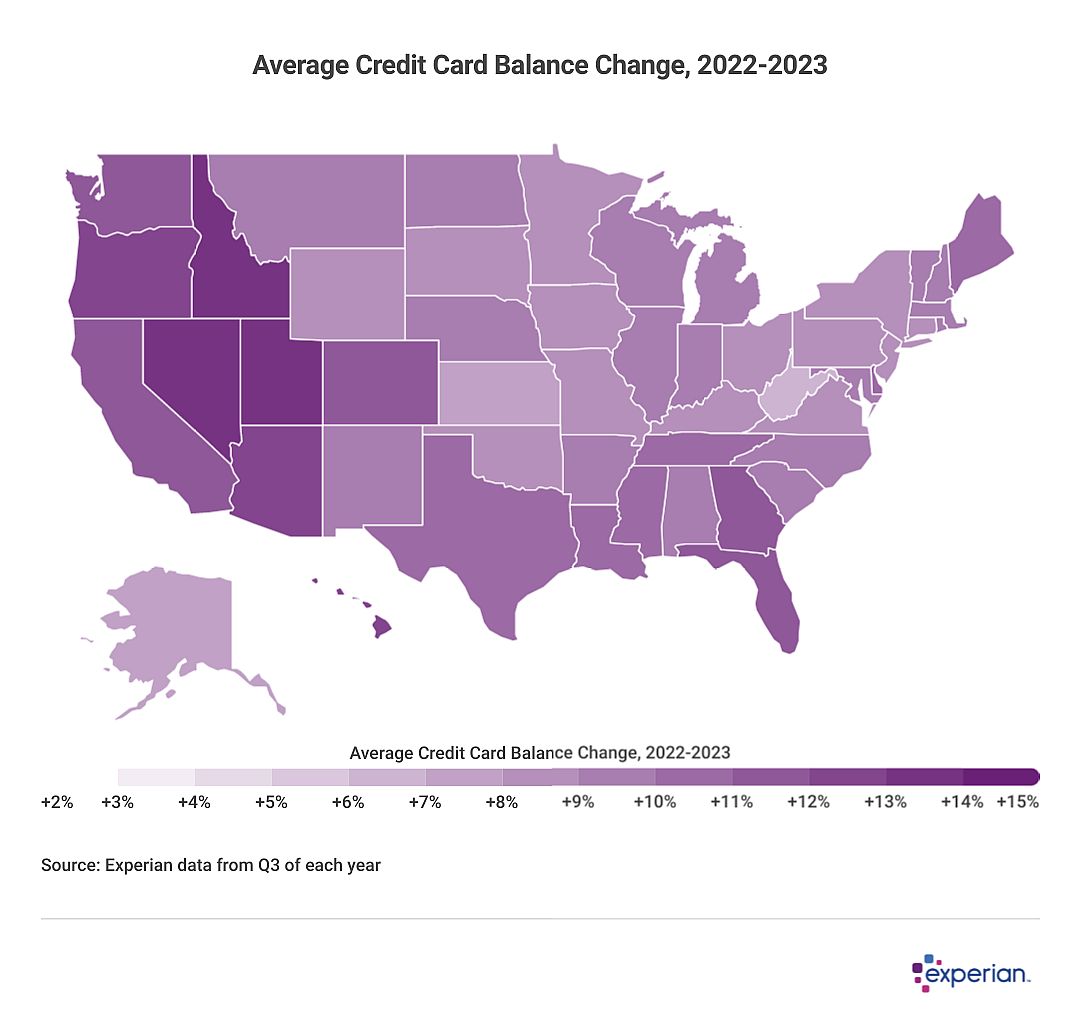
1 / 4Average Credit Card Balances by State Increased From 7% to 13%
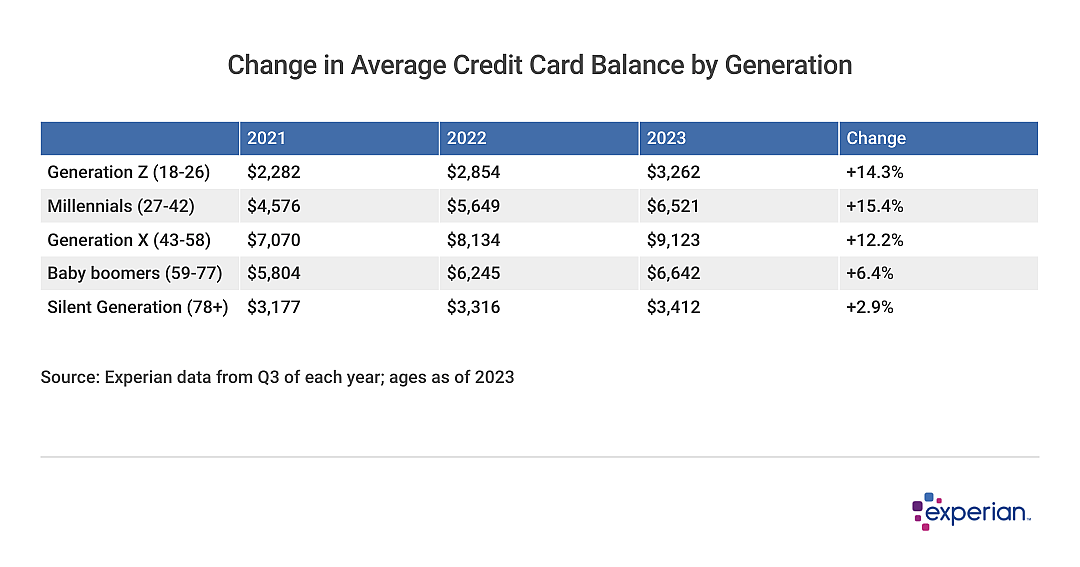
With the national average credit card balance up exactly 10% over the past year, it's easy to find those states with faster-growing debt in the map. States where consumers are amassing credit card debt faster than the national average have double-digit percentage growth rates of average balances, while those with more measured credit usage overall saw less than the 10% average annual increases. Even in these states, however, the increases in average balances were often 8% or 9% higher.
As with other types of consumer debt, including mortgages and auto loans, average credit card balances increased more rapidly in the Western U.S., with every state west of the Rockies (save sparsely populated Alaska and Wyoming) swelling average balances by at least 11% in 2023.
Other warm spots include some Southern U.S. states like Florida, Georgia, Tennessee and Texas, all of which increased average balances by more than 10% in 2023. The rest of the U.S., while not adding quite as much to their average balances, increased credit card balances by 7% to 9% in 2023.
Average Credit Utilization Inches Up
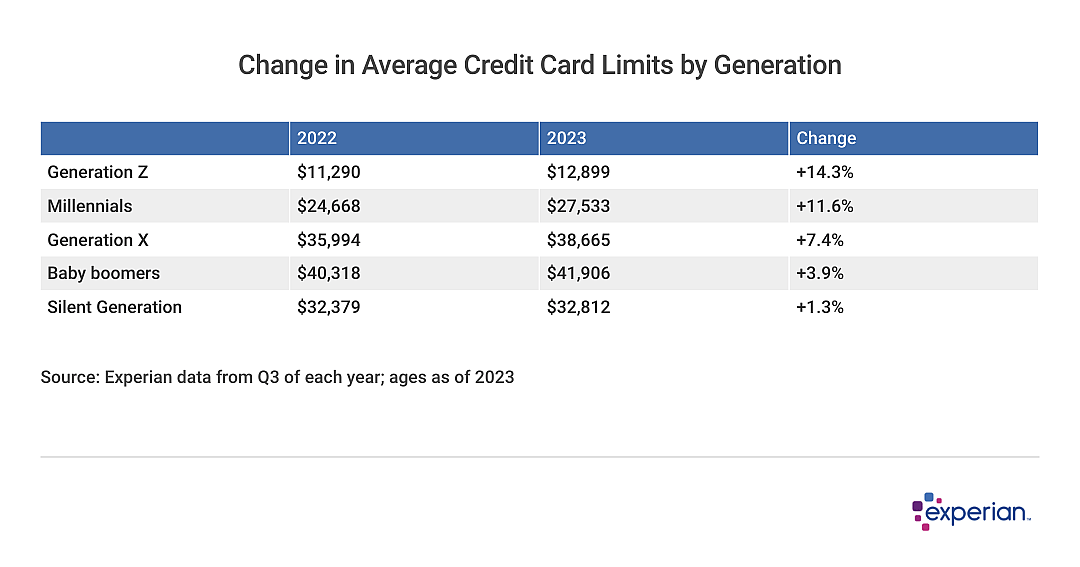
The average credit utilization ratio among consumers climbed to 29% in 2023, a result of average balances growing faster than average credit limits.
Utilization is a significant factor in credit score calculations. Lower is always better when it comes to a good credit utilization ratio, as the table below illustrates. If you keep your utilization below 30%, carrying a balance shouldn't be too detrimental to your FICO Score.
Still, utilization is only one of several factors influencing an individual's credit score. Length of credit history, the types of credit used and new credit all influence FICO Score calculations as well (though not as much as utilization or payment history).