Experian
1 / 2Retail cards for mid-range purchases
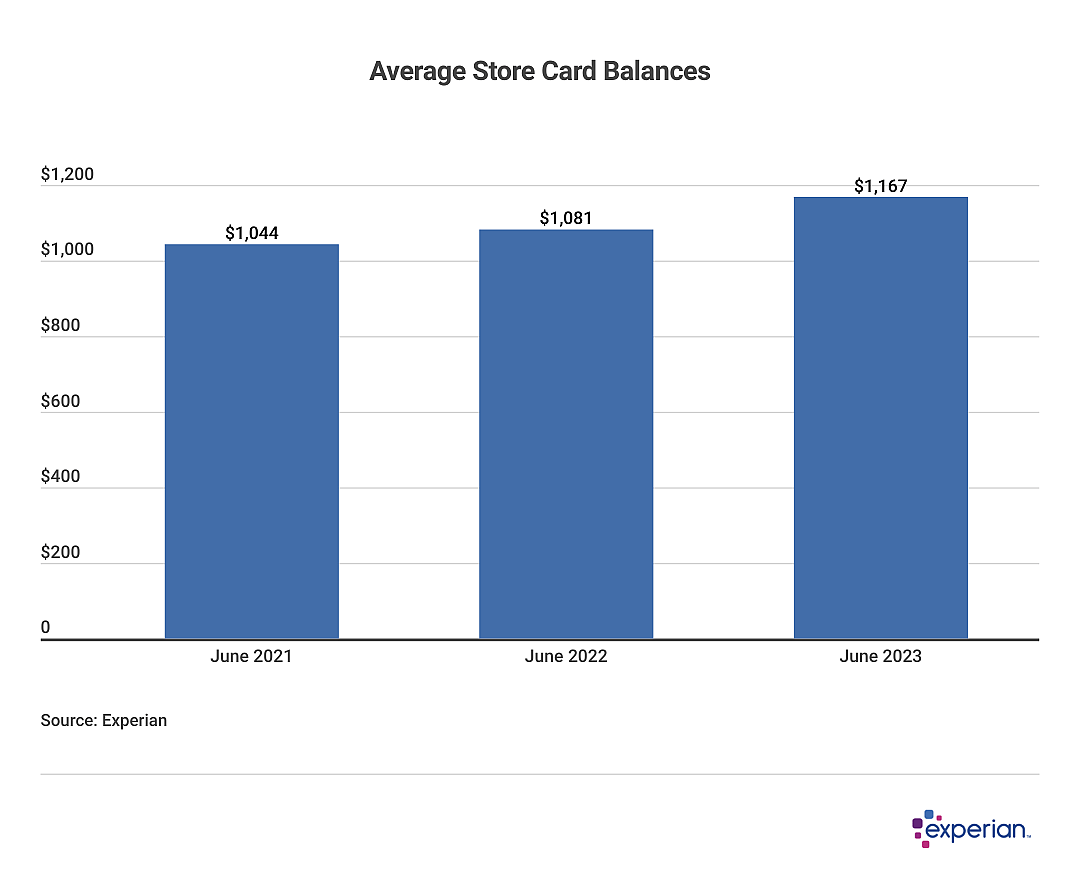
Store credit cards can be the most expensive credit cards in a consumer's wallet. And although not all of that balance is necessarily subject to interest charges, retail cards sport some of the highest annual percentage rates on the market. Many have APRs of 27.99%—nearly 6 percentage points higher than the average credit card interest rate, according to Federal Reserve data.
Consumers often sign up for these store cards at the checkout counter to take advantage of interest-free financing promotions. Depending on the item being purchased, the store may offer you 0% financing for six, 12, or 18 months to pay off the refrigerator or power washer you buy. However, if you miss a payment or have a balance remaining after the 0% financing period expires, you could retroactively owe interest from the original date of purchase.
Is buy now, pay later replacing the store card for purchases?
Buy now, pay later plans offer similar—though not exact—terms as 0% financing offers made by large retailers through their store credit cards. These financing plans are often available for instant approval at the point of sale (the buy now part), and consumers are typically asked to pay later in four or fewer installments within three months.
Terms and conditions around the products purchased using buy now, pay later plans aren't parallel to purchases made with store or credit cards—something that needs to be considered if you need to return or exchange a purchase.
Nonetheless, the types of purchases consumers make with buy now, pay later plans are similar to those offered by retail cards for big box stores for purchasing their appliances and other durable goods. Most purchases made with buy now, pay later range in cost from $100 to $500, according to Experian data.
So-called "closed loop" store credit cards—those meant to be used exclusively within the confines of traditional department stores and home improvement stores—are now competing most directly with buy now, pay later, even at these stores' checkout registers. (For those playing at home, Amazon also has an Amazon-only store card for purchases on their site.) And for their part, retailers are embracing the new way for consumers to make purchases, even though their name isn't on buy now, pay later plans like they are on branded credit cards.