Experian
1 / 4Newer Loans Are More Costly Than Older Loans
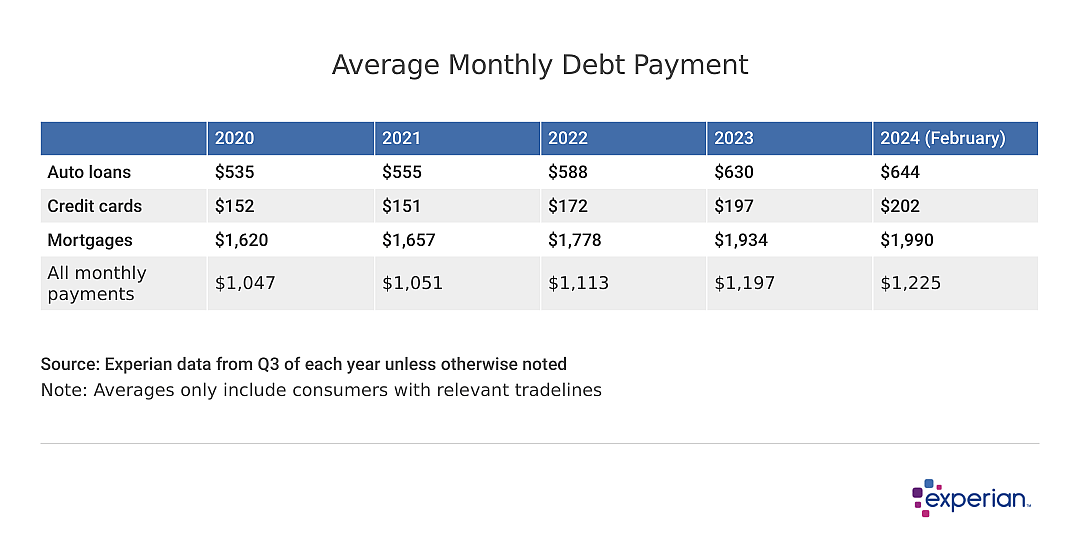
Consumers with newer car loans and mortgages are more likely to have above-average monthly loan payments, while those with loans originated before 2021 are more likely to pay less than the current monthly average. In recent years, a blend of both higher purchase prices, as well as higher interest rates, have resulted in higher-than-average monthly payments for more recent borrowers. One example: According to Experian Automotive, the average monthly payment for vehicle loans newly borrowed at the end of 2023 was $726—nearly $100 a month higher than the overall average monthly payment of $644.
Not all consumers carry every type of debt simultaneously, however, even if they use credit cards or own a home or vehicle. Roughly half of all credit card users carry an interest-bearing balance from month to month, according to the American Bankers Association. Not all homeowners have a mortgage, either. And although there are almost as many vehicles registered in the U.S. as there are people, just 62% of consumers have an auto loan in their credit file, according to Experian data.
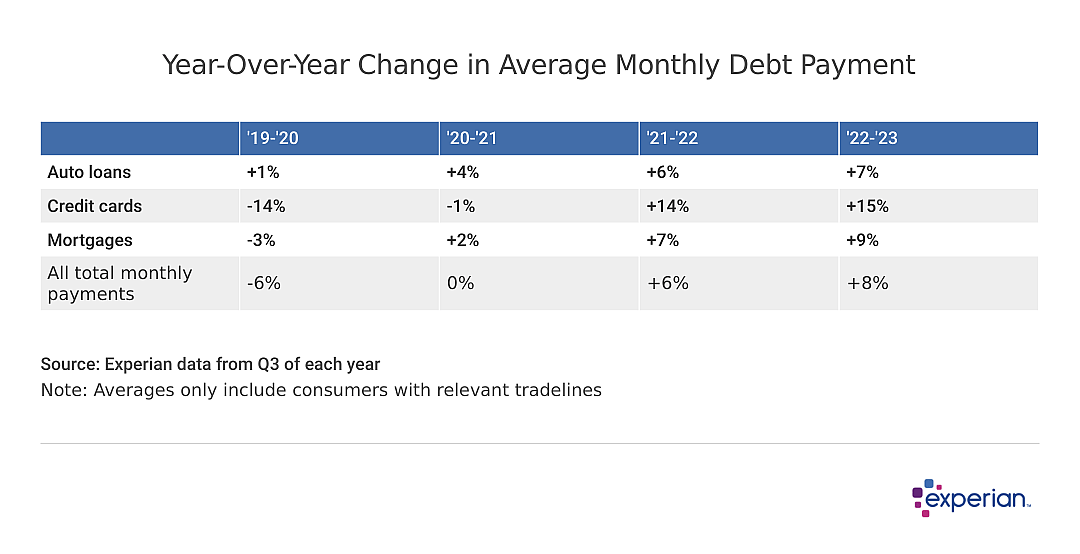
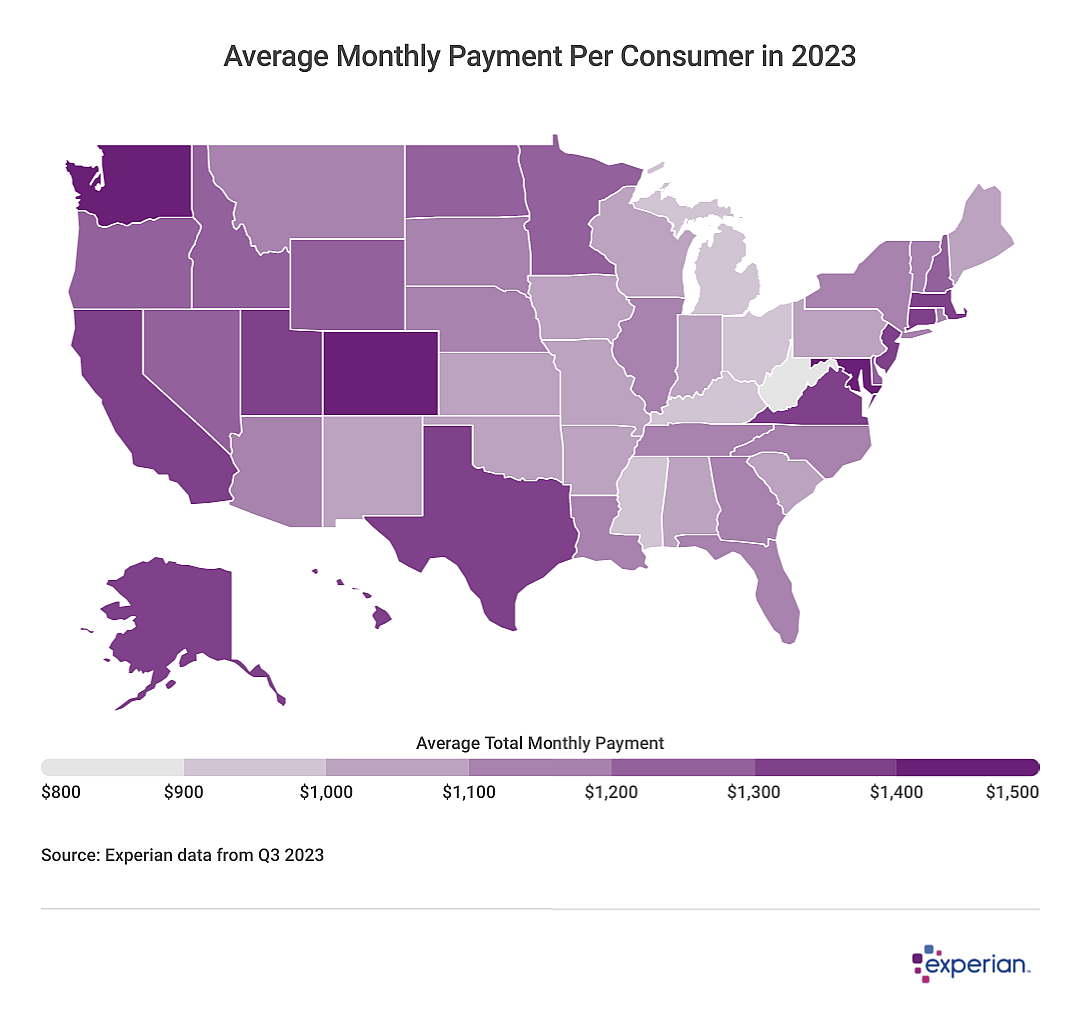
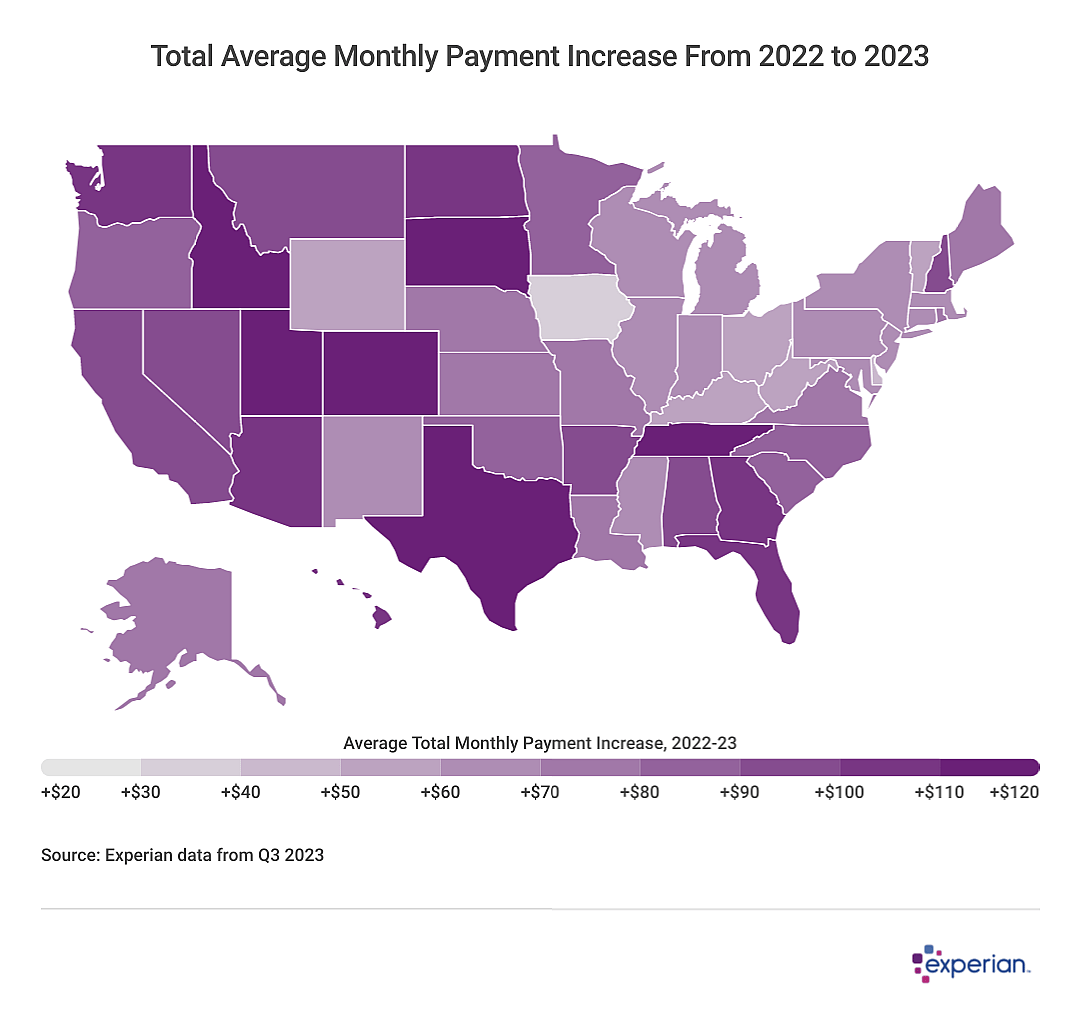
Looking at average total monthly payments—the blend of payments varies for every consumer—the burden increased by 8% in 2023.