Foothold Technology
1 / 1Industries employing the largest shares of workers with and without disabilities
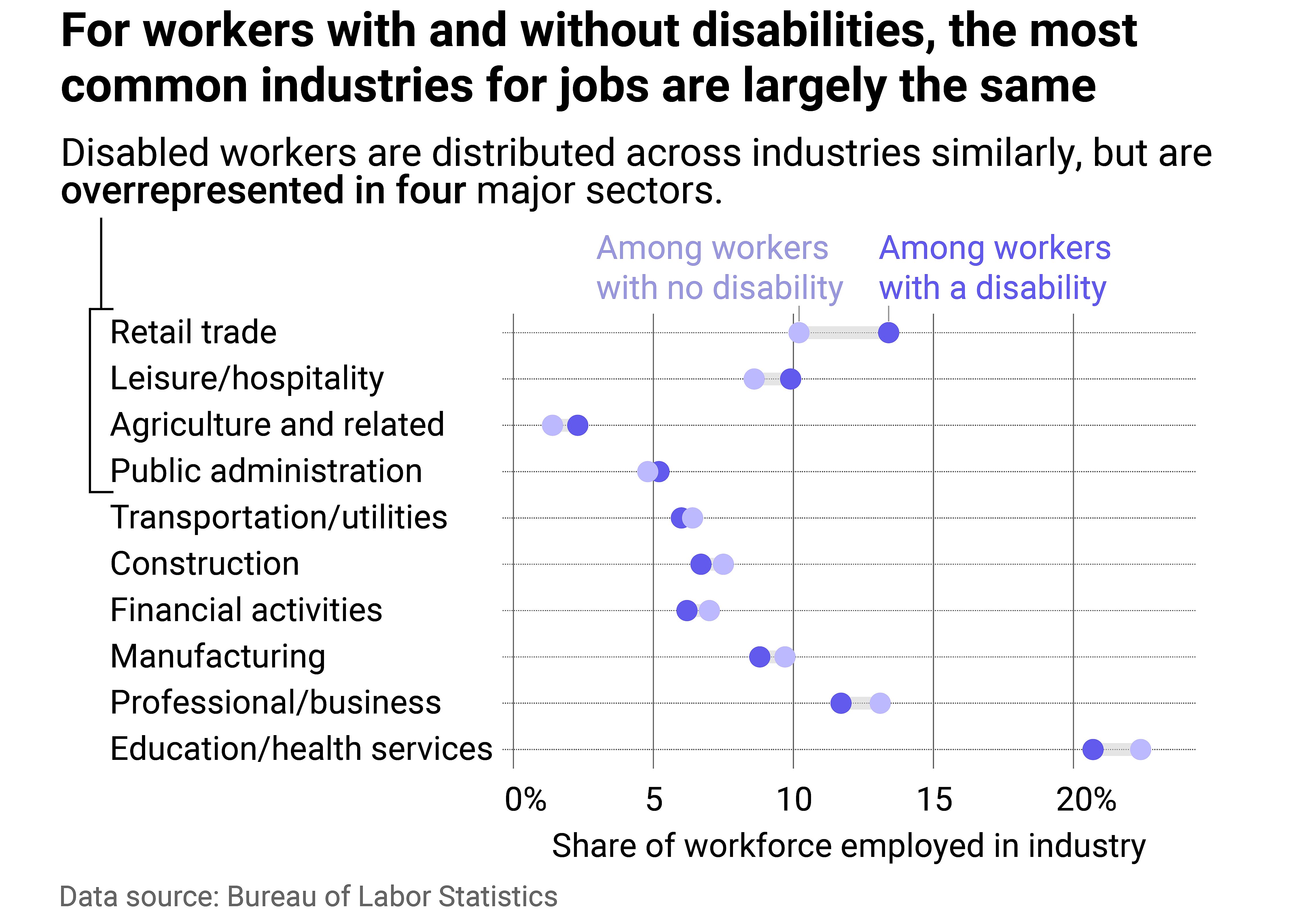
Workers with disabilities are more likely to be employed in four industries versus workers without disabilities: retail, leisure and hospitality, agriculture, and public administration.
Six large retail chains—Walmart, Target, CVS Health, Kroger Co., Meijer, and Walgreens— earned spots on the list of 2021 Disability Equality Index Best Places to Work. Companies qualify for the list based on factors such as employment practices, community engagement, and culture and leadership. Timothy Williams, vice president of diversity and inclusion at Meijer, credited passionate team members with helping the company grow and innovate.
About 30% of workers with disabilities are employed part time, double the rate of workers without disabilities. BLS also reports the proportion of workers who work part time for economic reasons, such as being unable to find a full-time job or having hours reduced, also was higher for workers with disabilities than workers without disabilities.
Many people with disabilities rely on public benefits systems, like Supplemental Security Income and Medicaid, which have low-income limits. While full-time employment may provide higher income, it may risk access to these crucial payments.
People with disabilities are less likely to have attained a bachelor's degree than people without disabilities. And the higher a worker's education level, the lower their chance of being unemployed.
To help bridge the gap, the Labor Department in August 2023 opened up $69 million in grants toward creating programs to help marginalized, young adults with disabilities join the workforce.
Additional writing and story editing by Ashleigh Graf. Copy editing by Kristen Wegrzyn.