1 / 50
Quote #1: "She could be a farmer in those clothes."
This movie was one of the most famous films of the 1990s. It was loosely based on Jane Austen's classic novel "Emma" and adapted to a modern-day setting in Beverly Hills, California.

Movies have a way of captivating us with their unique storylines, characters, and dialogue. While entire storylines and characters are sometimes what we remember most from these films, sometimes a single line from the movie stays with us long after the credits have rolled.
In fact, some movie quotes have become iconic enough to be etched into pop culture forever. They've been printed on mugs and T-shirts, repeated to actors in airports, and turned into memes by people who have never seen the films.
From sci-fi classics to romantic comedies to mobster movies, those lines cover various genres. There's something for everyone, whether you're a die-hard movie buff or just a casual moviegoer.
Just look at all the standout movie quotes of 2026. "Amaze! Amaze! Amaze!" from the March sci-fi release "Project Hail Mary" is a strong contender for quote of the year after meriting a mention in a real-life NASA mission. There are plenty more memorable lines from the year's biggest hits, including "The Odyssey" ("Don't look for gods in men; you'll always be disappointed") and "Obsession" ("I'm your freaky Nikki").
While we wait to determine which 2026 movie quotes have the most lasting appeal, we want to look back further than just the last year (and put your film knowledge to the test in the process). Stacker compiled 25 movie quotes from a range of famous films to see if you can guess the movie from just one quote. Quotes were ordered randomly prior to publication.
Now, grab some popcorn and get ready to see how many classic movies you can identify by their most famous bits of dialogue. Can you guess the movie from just one line?
This movie was one of the most famous films of the 1990s. It was loosely based on Jane Austen's classic novel "Emma" and adapted to a modern-day setting in Beverly Hills, California.
The insult "she could be a farmer in those clothes" was said by the primary antagonist in "Clueless," Amber. Bronson Alcott High School's resident mean girl, Amber, uses the phrase to insult the new girl, Tai. The phrase has since become so well-known that it has even inspired merchandise, including sweatshirts and mugs emblazoned with the phrase.
This award-winning movie from the 1930s was based on a bestselling book of the same name. The movie is the highest-grossing film of all time when adjusted for inflation, and this line was said by the film's primary heroine.
The line was said by Vivien Leigh's character Scarlett O'Hara in "Gone with the Wind," who is stating aloud her determination to never go hungry again as the Civil War ravages the South. The scene is one of the film's most dramatic, visually and emotionally. Scarlett is scraping for food in the ruined fields of Tara, vowing that she'll "lie, steal, cheat, or kill" before going hungry again. The scene ends with the camera panning to Scarlett's silhouette against a tree at sunset before dramatically cutting to intermission.
This movie is part of an action franchise beloved by audiences worldwide. This line was said by the film's primary villain.
Although Thanos is planning destruction on a cosmic scale, this quote was meant to show the villain's humanity. Thanos says this famous line in reference to his belief that he needs to gather the Infinity Stones and wipe out half of all life in the universe in order to prevent suffering from overpopulation (a burden he sees as his alone to carry). In a performance delivered with complexity and nuance, Josh Brolin has been widely praised for bringing such subtlety to a role that otherwise could have felt one-dimensional.
This 1980 film features one of the most iconic actors of his generation playing a tortured villain. The film was based on a book by a famous horror novelist, and although original reviews for the movie were not wholly positive, it has since become a horror classic.
Jack Nicholson plays a caretaker who descends into murderous madness in "The Shining," a 1980 adaptation of the Stephen King novel of the same name. The famous line "Here's Johnny!" (a riff on Ed McMahon's nightly introduction of Johnny Carson on "The Tonight Show") was not originally in the script. Nicholson improvised the line during filming right after smashing an axe through a bathroom door.
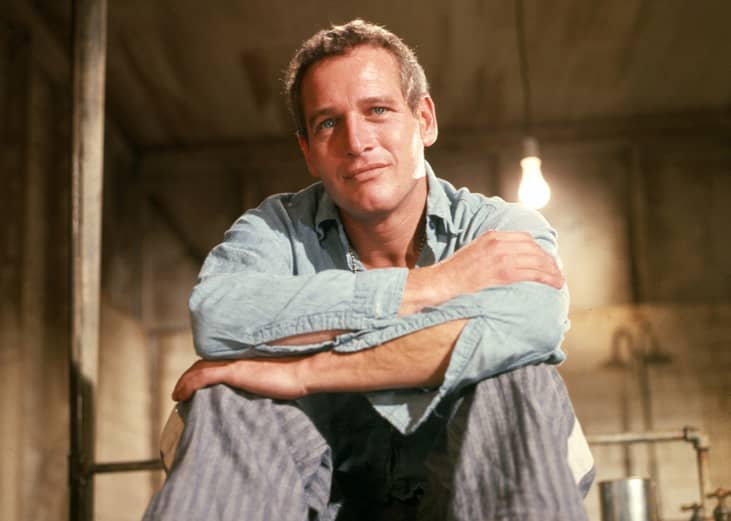
This film from the 1960s was adapted from a novel of the same name. It centers on the life of a convict in prison who refuses to abide by the typical culture of the prison.
The famous line from "Cool Hand Luke" ("What we've got here is failure to communicate") wasn't actually said by the film's hero, Luke (Paul Newman). Instead, it was said by the Captain (Strother Martin), who runs the prison camp and is expressing his displeasure over not being able to break Luke's spirit and keep him from trying to escape. Luke's refusal to fall in line is the point, showing how the human spirit can withstand even the most brutal of circumstances. It's also one of the most misquoted lines in film history, often repeated as "What we have here is a failure to communicate."
This movie from the early 1990s was one of the first to make extensive use of computer-generated images. And because the movie brought long-extinct creatures back to life, this was almost a necessity.
"Life… uh… finds a way," Dr. Ian Malcolm (Jeff Goldblum) says in "Jurassic Park," warning that the park's dinosaurs will breed in the wild even though scientists made them all female. The quote has gone on to have a long afterlife since the 1993 film was released. It has even become a meme in the internet age to convey a profound truth of life in a pithy manner.
This movie was released in the early 2010s and is based on a wildly popular dystopian novel of the same name.
Heroine Katniss Everdeen (Jennifer Lawrence) volunteers as a tribute to save her younger sister, Prim, from having to compete in the ruthless Hunger Games, in the film of the same name. The quote is symbolic of Katniss' personality. It is meant to connote courage in the face of oppressive circumstances and is a harbinger of Katniss' behavior and valor in the Hunger Games themselves.
This classic film from the 1980s centers on the violence of drug culture. Its screenwriter, Oliver Stone, wrote the script while trying to kick his own cocaine habit.
Al Pacino's character, drug kingpin Tony Montana, says this immortal line in "Scarface." Pacino uses this famous one-liner as he unleashes a hail of gunfire from his rifle. For its inimitable delivery, The Guardian called the line one of the most famous in cinematic history.
One of the most famous films of the early 2000s, this movie was emblematic of the "indie" aesthetic popular in art just after the turn of the millennium.
When one of the protagonists of "Garden State" wishes another luck "exploring the infinite abyss," the line resonated widely across cultures. "Garden State" takes as its subject young people just setting out on the path of adulthood, and the line perfectly captures the melancholic mood of the characters and their particular moments in life. The line was dissected over the ensuing years in numerous blogs and other written mediums as writers attempted to explain why it held such resonance to them and society at large.
This film was an instant hit when it came out more than 45 years ago and remains a fan favorite today, thanks to its beloved soundtrack.
"We're on a mission from God," says Elwood Blues (Dan Aykroyd) in "The Blues Brothers," explaining why he and his brother Jake (John Belushi) are getting their old band back together: to raise $5,000 to save the orphanage where they were raised. Vanity Fair has called the line the film's signature quote.
This film was released several years after the founding of the massive social media network on which the movie is based.
The quote "A million dollars isn't cool. You know what's cool? A billion dollars" is from the 2010 movie "The Social Network." In the film, the quote is spoken by Sean Parker (Justin Timberlake), the co-founder of Napster and a major influence on Mark Zuckerberg (Jesse Eisenberg). Parker is trying to convince Zuckerberg not to settle for a quick payday, and instead to think big enough to build something truly groundbreaking. The line has since become an inspiration to some founders and has been put on posters and T-shirts as motivation or a declaration of intent.
This 1989 action film pairs two iconic leading men as father and son on a globe-trotting hunt for the Holy Grail.
The quote "X never, ever marks the spot" is from "Indiana Jones and the Last Crusade," directed by Steven Spielberg. In the film, Indiana Jones (Harrison Ford) says this line to his archaeology students, warning them that real archaeologists don't follow maps to buried treasure. The joke pays off later in a Venice library, where Indy finds a giant Roman numeral X marking the spot after all. The quote has become a popular phrase, often used to suggest that the truth may be hidden in unexpected places.
This cult classic film from the 1990s was seen for years as a Bible of sorts for some men looking to improve their dating lives with women.
When Trent Walker (Vince Vaughn) says the line "You're so money, baby" in the cult classic "Swingers," he is uttering a line that would live on in the public imagination for decades to come. Trent is using the line to hype up his friend Mike (Jon Favreau, who also wrote the film) before going to meet women at a bar. The phrase is now used among friends to boost confidence and is even emblazoned on gifts meant to remind loved ones just how great they are.
This 1980s film features a love triangle between an Italian American widow and two brothers.
The iconic Cher played Loretta Castorini in "Moonstruck" (a role that won her the Academy Award for Best Actress) and said the famous line, "Snap out of it!" Nicolas Cage, the actor to whom Cher said the line, has said that the line has followed him around for years. In the decades since the film was released, fans have come up to Cage in airports to repeat the line. On several occasions, he's even been slapped by an overzealous follower while delivering the line, just as he was in the film.
This 1960s film was made at the height of the Cold War and dramatizes what might happen if the wrong person got ahold of the nuclear codes.
The quote "Gentlemen, you can't fight in here! This is the War Room" is one of the film's sharpest jokes. Peter Sellers (who played three roles in the film) delivers the line as President Merkin Muffley, scolding two men for scuffling in the one room built for planning a nuclear war. The irony of the line, as many have pointed out, is that war is indeed nothing but a fight.
This 2002 installment in a beloved British franchise features a hero captured by North Korean forces who must endure more than a year in prison.
This quip, delivered by Pierce Brosnan's James Bond, is an example of 007's classic humor. Bond has just been introduced to an agent named Mr. Kil. Without missing a beat, Bond replies, "Now there's a name to die for." This exemplifies the dry British humor the Bond films are known for and Bond's signature wit.
This 2017 psychological thriller focused on the subtle influence of race and racism in seemingly benign interpersonal dynamics.
"Get Out" director Jordan Peele has explained "the Sunken Place" as emblematic of a psychological state. The "Sunken Place" is meant to connote a place of absolute powerlessness, as Peele explained on Twitter. When Missy Armitage references it in the film, it is meant to be indicative of this space, where no matter what a person does, the system always conspires to keep them down.
This beloved comedic satire of the Middle Ages is told through the prism of King Arthur and his knights' quest for the Holy Grail.
Although the Bridgekeeper line "What is the air-speed velocity of an unladen swallow?" has become one of the film's best-known moments, it has gone on to live a second life long after the film. (King Arthur's reply, "What do you mean? An African or European swallow?" stumps the Bridgekeeper himself and sends him flying into the gorge.) Film buffs, physicists, and mathematicians alike have busied themselves for decades trying to answer this question. Message boards, articles, and even universities have attempted to answer the question in the years since the film's release.
This early 2000s installment in a beloved science fiction franchise takes place 10 years after the prior installment in a galaxy far, far away.
The Star Wars films are not best known for their romance. But that's exactly the context of this famous Anakin Skywalker (Hayden Christensen) line. Anakin is at a lakeside retreat on Naboo with Senator Padmé Amidala (Natalie Portman), trying to charm her. When he instead utters this line, it humanizes him as a man having trouble keeping a cool head around the object of his affection. It has since become one of the most memed lines in the franchise.
This 2004 beloved teen comedy features a recent transplant to a new high school trying to fit in with a group of popular girls and succeeding all too well.
When queen mean girl Regina George instructed her friend to stop trying to make "fetch" happen, she ended up making it happen. In the years after "Mean Girls" was released, the word fetch did, in fact, become part of the popular lexicon. The word (Gretchen's slang for cool) appeared on everything from merchandise to memes in the years that followed.
This 1976 satire tells the story of a news anchorman being retired against his will as he tries to deal with that unpleasant reality.
In the film "Network," news anchorman Howard Beale (Peter Finch) learns he's being forced off the air and has a breakdown during a live broadcast. Paradoxically, his on-air breakdown revives his flagging ratings, which were the entire reason his show was being canceled in the first place. The network keeps him on, and this memorable line comes from one of the rants that follow (it ends with viewers across the country shouting it out their windows). Finch won a posthumous Academy Award for the role.
This 1960 thriller features a woman on the run after stealing $40,000 from her employer.
In Alfred Hitchcock's masterpiece thriller "Psycho," Norman Bates says the line "A boy's best friend is his mother." Film critics have interpreted the line as hinting at a conflicted relationship between the character and his mother. Although the two are close, there is actually some resentment on the part of Bates toward his mother for the overbearing nature of their relationship, which carries vaguely Oedipal undertones.
This early 2000s cheer squad film follows a cheerleading captain trying to lead her team to a national championship.
Unusually, this famous line isn't said by one of the film's main characters. Instead, it is said by the choreographer Sparky Polastri, who is on screen for less than five minutes. However, his admonition to the cheerleaders to put some pep in their every move was instantly quotable by everyone who saw the movie.
This film about a young mobster working his way up the ranks of organized crime is one of the most beloved of the 1990s.
In "Goodfellas," Tommy DeVito (Joe Pesci) pretends to take someone telling him he's funny as an insult. In a manner made all the more terrifying by his hair-trigger temper, he dresses down his friend Henry Hill (Ray Liotta) for calling him funny. The scene is memorable for its tension, chaotic nature, and the threat of violence always lurking just beneath the surface. Pesci based it on a real encounter of his own, and the role won him an Academy Award.
This classic 1959 film features two men fleeing from Chicago after witnessing a mob murder and one of them trying to seduce a jazz singer after they escape to Florida.
The plot of "Some Like It Hot" hinges on the two main characters dressing up in drag to try and infiltrate an all-women jazz band. When Jerry (Jack Lemmon) ultimately reveals he is a man, he expects to be dressed down by the man who claims to have fallen in love with him as a woman. Instead, Osgood Fielding III (Joe E. Brown) smiles slowly and says, "Well, nobody's perfect." It's the last line of the film.