Emma Rubin // Stacker
1 / 3Less is more in the golden age
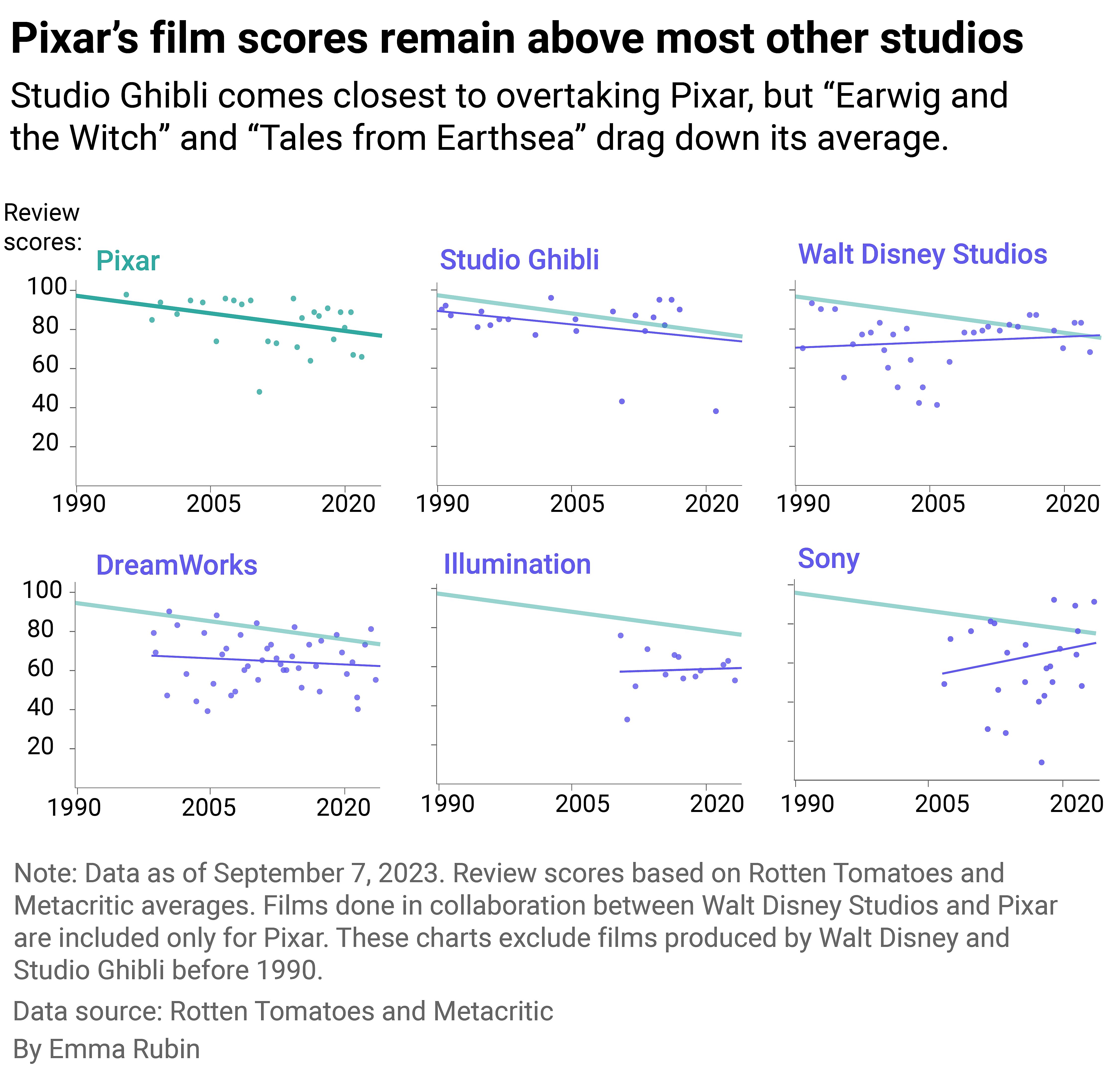
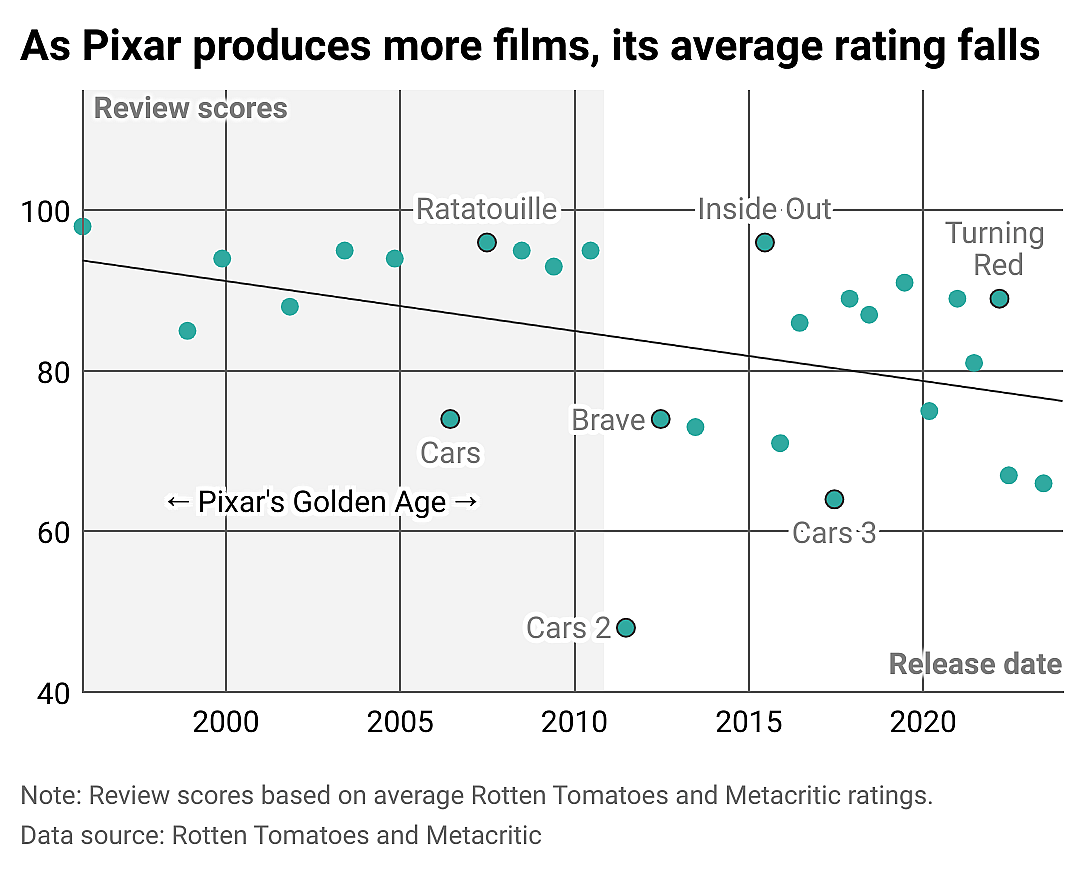
Pixar's review average for films released before 2011 was 91%, but since then, the average has plummeted to 78%. And its score variance—i.e., how far a film's score deviates from the studio's average—more than triples between those time periods, meaning Pixar has become far less consistent.
Pixar's newest films have largely received a "good but not great" critical response. Before 2011, 10 of Pixar's 11 films scored 85% or higher from the combined critical average (91% of these films), but since 2011, only seven of its 16 films performed as well (44% of these films).
Some of this could be due to Pixar's increased production of sequels and spinoffs. Before 2011, only two of Pixar's 11 films—"Toy Story 2" and "Toy Story 3"—were sequels or spinoffs (18%). Since then, seven of Pixar's 16 films have been sequels or spinoffs (44%), and those films' critical average is a paltry 73%—8 percentage points lower than the original films it produced during the same time. Some of Pixar's decline is surely due to sequelitis, a phenomenon in which as the number of entries in a franchise grows, the quality of said films declines.