OANDA
1 / 2What happens when currencies depreciate?
When a currency decreases in value, initially, the impact is felt at home. Imports get more expensive, and inflation ticks up, even as exporters gain an edge. Still, in our interdependent, real-time, global economy—where high-speed algorithmic trading responds instantly to market moves—domestic pressure doesn't stay contained for long.
What might begin as a decline in one currency can trigger selling across multiple markets, especially among economies that share key traits or are heavy trading partners.
Meanwhile, capital flows toward safe-haven currencies like the dollar, creating fresh headaches for U.S. manufacturers and rippling through global markets. This can force trading partners of the original declining currency into their own defensive devaluations, setting off a destabilizing cycle sometimes dubbed a "currency war."
One tumbling domino can trigger a chain reaction of selling across continents, causing a cascade of opportunities—and pitfalls—for investors to navigate. Consider what transpired when panic struck the currency markets in March 2020 when COVID-19 hit. Investors frantically dumped everything they owned and piled into dollars. The British pound plummeted to a 35-year low. Even the Japanese yen, usually a safe bet, barely budged. Meanwhile, there was a mass sell-off in emerging market currencies.
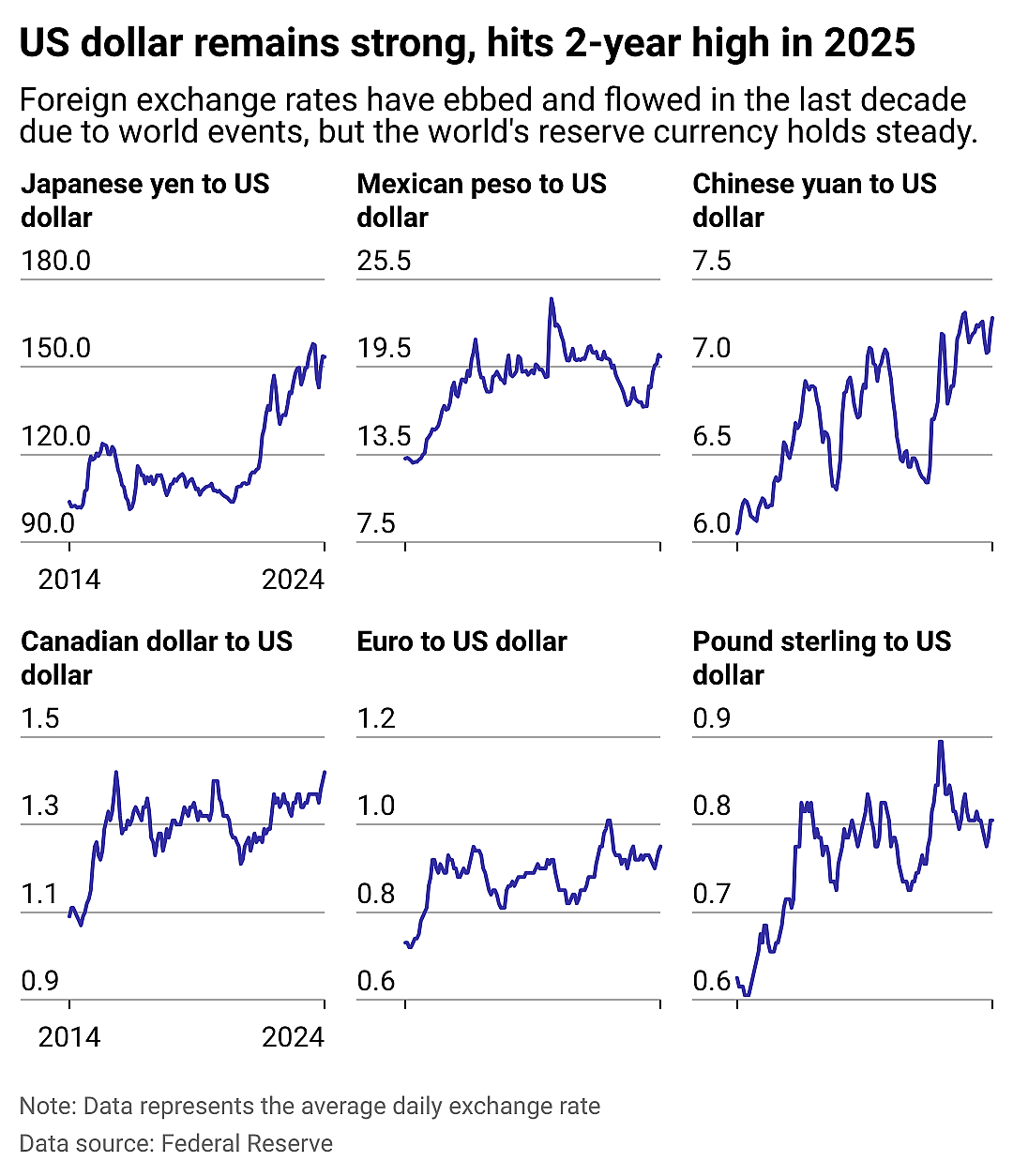
Another major event that rocked currency values was Trump's trade war with China, which started in 2018. When tit-for-tat tariffs send currency markets haywire, China let its yuan sink below 7 to the dollar in 2019. The Department of the Treasury officially labeled China a "currency manipulator" for raising fears of a currency war, although it never fully materialized.
China's yuan then strengthened between 2020 and 2021 as its economy recovered from the COVID-19 pandemic faster than other major economies. Beijing now walks a tightrope between cheap exports and further accusations of and blowback for currency manipulation. However, the overall direction is downward against the dollar as the country strives to maintain global competitiveness.
Meanwhile, other currencies are still riding a rollercoaster. The British pound has tumbled since the Brexit referendum in 2016, going from approximately $1.46 to the dollar before the referendum and never fully recovering, sitting at around $1.22 in early 2025, per Reuters. The euro's story reads like a slow-motion car crash, tumbling from $1.40 to barely holding even with the dollar. And Canada's dollar is a cork on the rising and falling tide of oil prices, floating between $0.70 and $0.80.
The Japanese yen went from 100 to the dollar in 2014 to over 150 today. That's driven by the Bank of Japan, which, despite ending its longstanding period of negative interest rates, is still keeping those at rock bottom relative to the Fed.
On the flip side, Mexico's peso has turned into the surprise champ, muscling up against the dollar despite Latin America's economic headaches. The emerging market currency has been bolstered by interest rates relative to the U.S. and larger economic swings, proving once again just how challenging predicting currency rates can be in an interconnected—and uncertain—world.