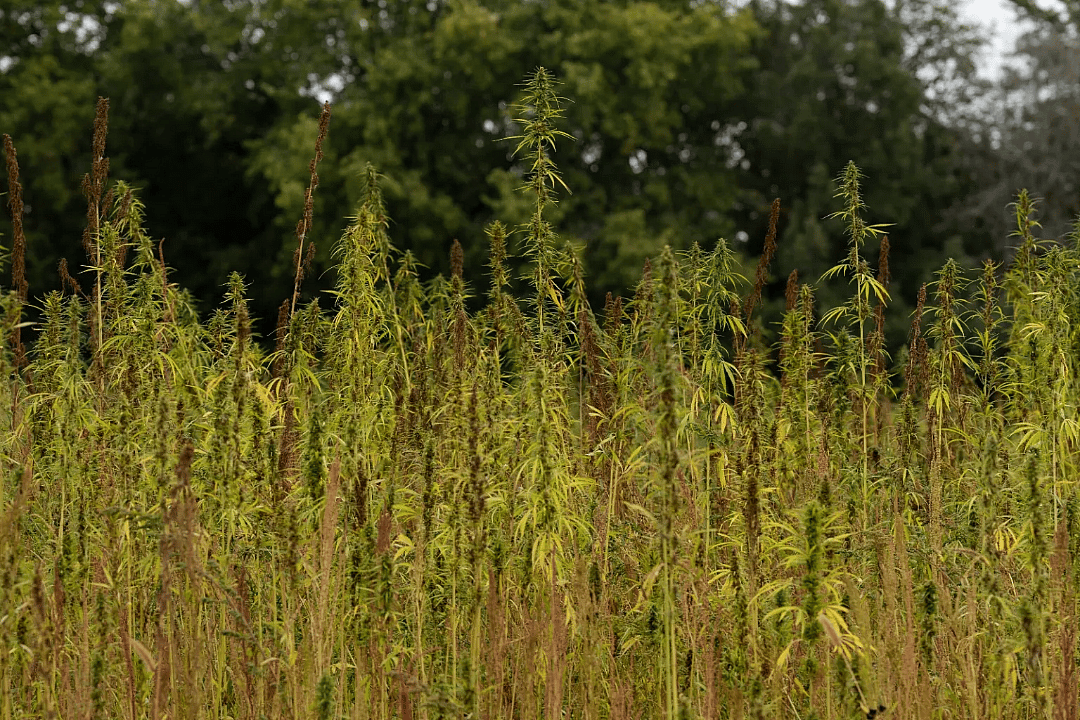
Aaron Nesheim / Grist
1 / 3Making hempcrete more accessible
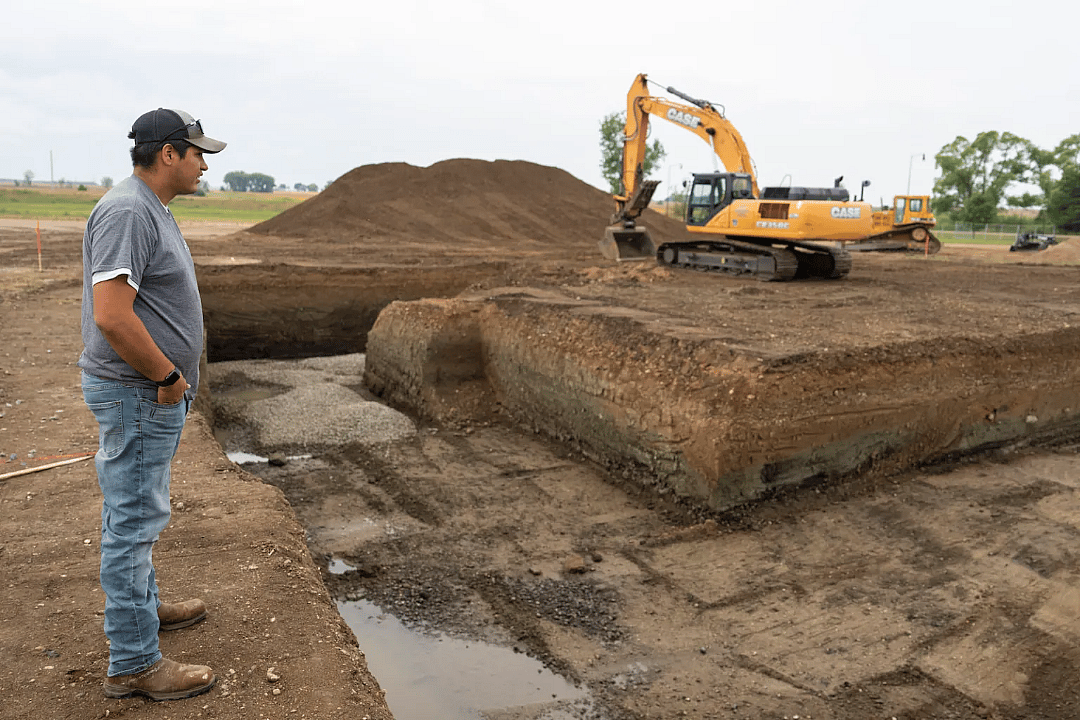
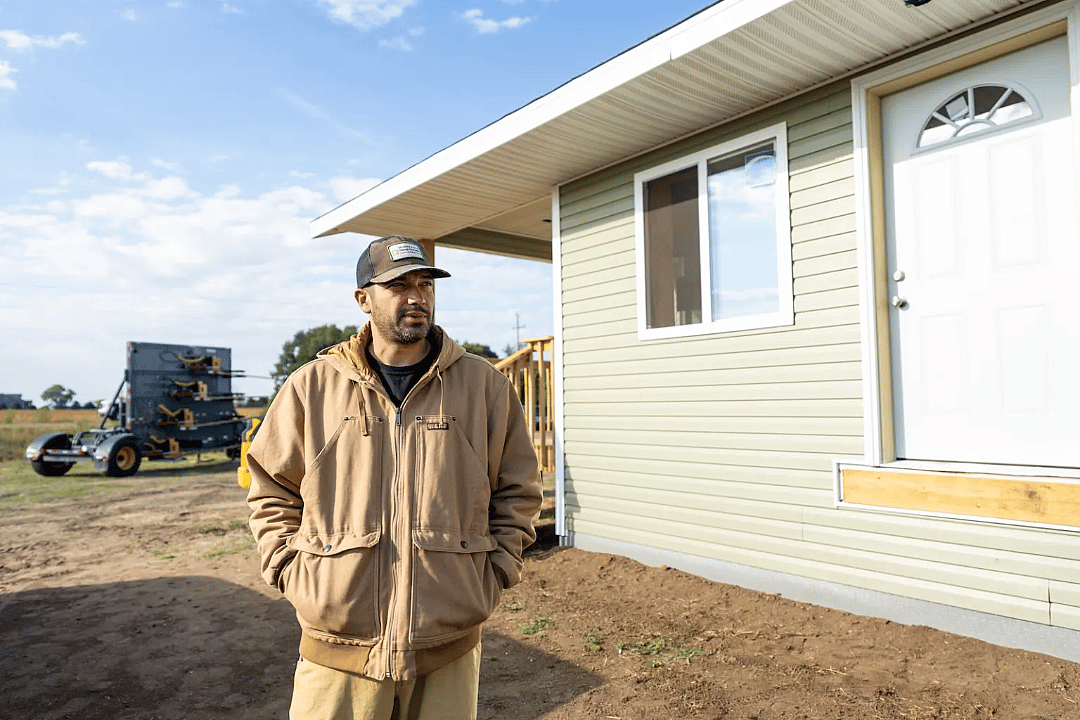
Now, they have two prototypes that are nearly done and know how to build or retrofit more. While learning how to make the houses, the construction team developed a niche eco-skill they can market off the reservation as well.
"The idea of making homes that would last and be healthy was a no-brainer," said Robert "Deuce" Larsen, the tribal council president.
"We need to build capacity in the community and show that it can be an income stream."
That one of the smallest tribes in the country, in terms of population and land in trust, is leading the national charge on an integrated hempcrete operation is no mean feat, seeing that virtually no one in the community had experience with either farming or construction before the five-person team was assembled earlier in 2024.
"It's fantastic," said Jody McGuinness, executive director of the Hemp Industries Association. "I haven't heard of any other fully integrated project like this domestically."
Besides, hempcrete as a construction material is normally the domain of rich people with means to contract a green home, not marginalized communities. That's because the sustainable material is normally imported from Europe rather than made locally.
"It's accessible to people with wealth, who can afford to build a bespoke house. It's not accessible to the general public," McGuinness said.
The project is the brainchild of Earl Pendleton, 52, a rail-thin man of quiet intensity, who until recently was the tribal council's vice president. He grew obsessed with industrial hemp when reading about it 13 years ago.
Pendleton was intrigued to learn that the bamboo-like plant has 25,000 uses, including wood substitutes, biofuel, bioplastics, animal feed, and textiles.
Hemp can grow in a variety of climates and, depending on the location, can yield more than one harvest a year. What's more, hemp regenerates soil, sequesters carbon, and doesn't require fertilizers.
"It blew my mind," he recalled.
People often confuse hemp with its cannabis cousin, marijuana. But hemp has negligible THC, or tetrahydrocannabinol, the psychoactive component that creates a weed high. And this stalky variant is more versatile than the flowery CBD (cannabidiol) type.
Hempcrete is made by mixing mashed stalks with lime and water. The resulting oatmeal-like substance is stuffed or sprayed into the cavities of framed walls. Once it hardens, it resembles cement to the touch (thus the name) but has different properties.
The petrified substance has airtight qualities that can dramatically cut down on heating and air-conditioning needs. Unlike many commonly used building materials, it is nontoxic and resists mold, fire, and pests.
While it's used in Europe, commercial hemp was banned in the U.S. until the 2018 Farm Bill. Since then, hempcrete has been slow to catch on, due to a chicken-and-egg conundrum. Farmers don't want to plant without facilities nearby to process the stalks. Potential processors don't want to buy expensive machinery without guarantees of raw material. And most American contractors don't know anything about hempcrete.
Aside from the green value, Pendleton saw a chance to pivot from the reservation's Jackpot Junction Casino, the tribe's main source of income for the past 35 years. A bronze statue of a warrior spearing a buffalo stands in front.
For many years, as Pendleton managed the floor and worked blackjack, he saw gamblers lose their paychecks, and more. The Lower Sioux weren't getting richer. The population on the reservation has expanded rapidly since 2000, which means the per capita cut that each family gets from the $30 million yearly profits has shrunk. For most families, it is the only income they receive.
"We sell misery. It's nothing to be proud of, the money to be made here," Pendleton said.
He added that the guaranteed money from the casinos killed many people's ambitions to get education or training for jobs, or to seek work off the reservation.
It took a while for him to convince the tribal leadership to endorse his hemp vision. "When I would bring it up eight years ago, they'd say, 'What? You're going to smoke the wall?' They associated it with weed."
He had some learning to do, too. Pendleton knew nothing about the industry, so he binged on YouTube videos about techniques and drove around the country to meet experts.
"It was daunting," he said.