maerzkind/Getty Images via Grist
1 / 3Industrialization made food a global commodity, the burdens of which made crop diversification difficult
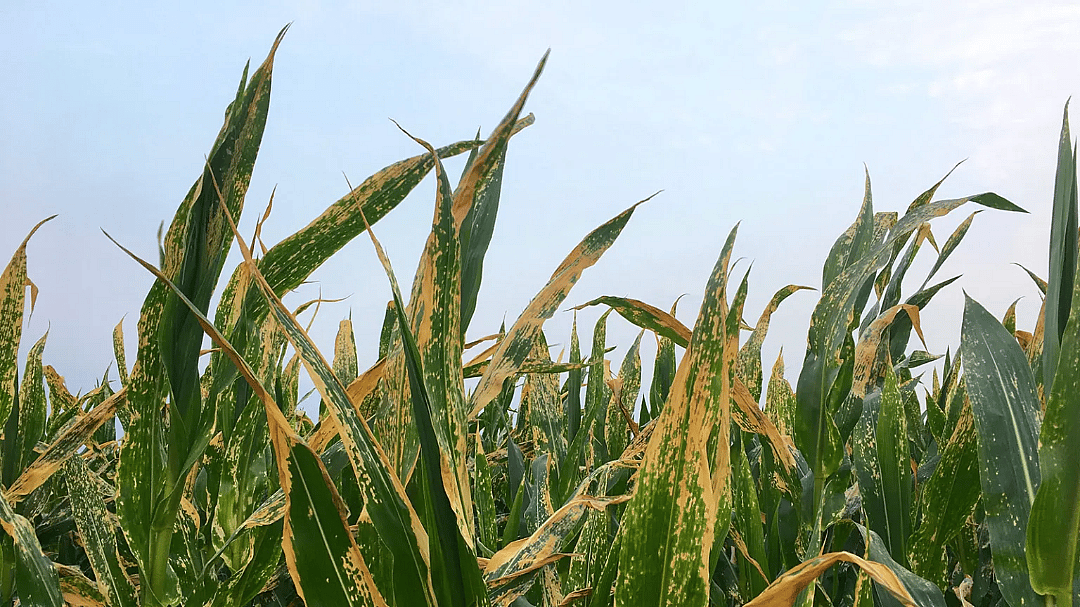
Farms cover close to 40 percent of the planet's land, according to a 2019 report from the Intergovernmental Science-Policy Platform on Biodiversity and Ecosystem Services. Almost 50 percent of those systems are made up of just four crops: wheat, corn, rice, and soybeans. Disease is commonplace — globally, $30 billion worth of food is lost to pathogens every year.
Things were not always this way. As the 1900s dawned in the United States, for instance, food was produced by humans, not machines — more than 40 percent of the American workforce was employed on a multitude of small farms growing a wide range of crop varieties. The British Empire sparked the shift toward today's industrialized food system, said historian Lizzie Collingham, who wrote the book "Taste of War: World War II and the Battle for Food."
By the early 1900s, the British Empire had learned that it could "basically treat the whole planet as a resource for its population," Collingham said. It acquired cocoa from West Africa, meat from Argentina, and sugar from the Caribbean, for example. Suddenly, food was not something to be bought from the farmer down the street, but a global commodity, subject to economies of scale.
America grabbed hold of this idea and ran with it, according to Collingham. First came the New Deal — President Roosevelt's plan for pulling the country out of the Great Depression included raising the standard of living for farmers, partly by bringing electricity to rural life. In 1933, farm country was characterized by outhouses, iceboxes, and a complete lack of street lights. By 1945, all that had changed.
Once they were on the power grid, farmers could buy equipment such as electric milk coolers and feed grinders that let them scale up their operations, but such things are expensive — only by expanding could farmers afford them. "It all makes sense if you rationalize it for economies of scale and make your farm into a factory," Collingham said.
Then World War II hit, and much of agriculture's workforce had to go off to fight. At the same time, the government had an army to feed and the general public to keep happy, so it really needed to keep the food supply coming. Machines were the answer — the war era solidified the shift from humans to tractors. And machines do best when they only perform one job, like harvesting a single crop, acre after acre.
Monocultures can be very efficient when they're not contracting diseases, and that efficiency is part of what got the United States through the war. In fact, the system worked so well that "soldiers doing their training in America got fatter," Collingham said. "A lot of them had never eaten so well in their lives."
Soon, small-scale farms growing diverse crops had largely retreated into the past in the Midwestern U.S. It's not that anyone intended for the practice to be lost. It was simply "in many people's minds, rendered obsolete," said agronomist Matt Liebman, who recently retired from Iowa State University.