Lyft
1 / 1Researchers analyzed 40 billion individual GPS data on drivers' location and speed
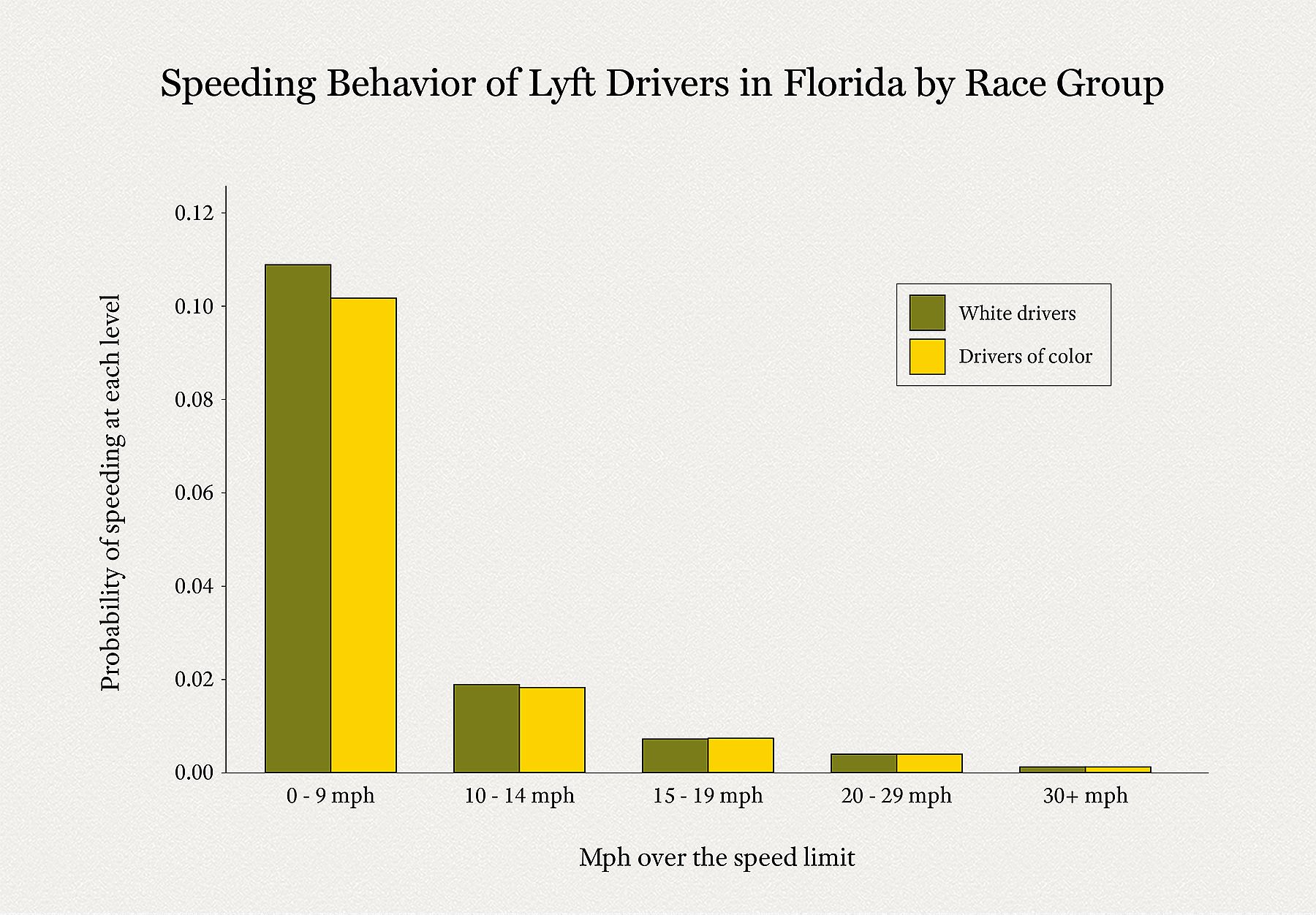
The data analyzed included 40 billion different GPS observations, which can be used to determine a driver's location and speed. The researchers cross-referenced that data with traffic violation records from Florida that they obtained by filing a Freedom of Information Act (FOIA) request.
By comparing Florida speeding tickets with Lyft GPS data, the researchers determined which vehicles were ticketed and how fast they were going. Then, using publicly available information from the Florida State Election Board, they were able to match drivers' names with self-reported racial identification. That allowed them to determine the race of the drivers who received speeding tickets.
The Florida Police Chiefs Association and the Florida Police Benevolent Association did not comment on the findings.
This story was produced by Lyft and reviewed and distributed by Stacker Media.