Jasmine Mithani // The 19th
1 / 2Myriad reasons why more migrants are dying
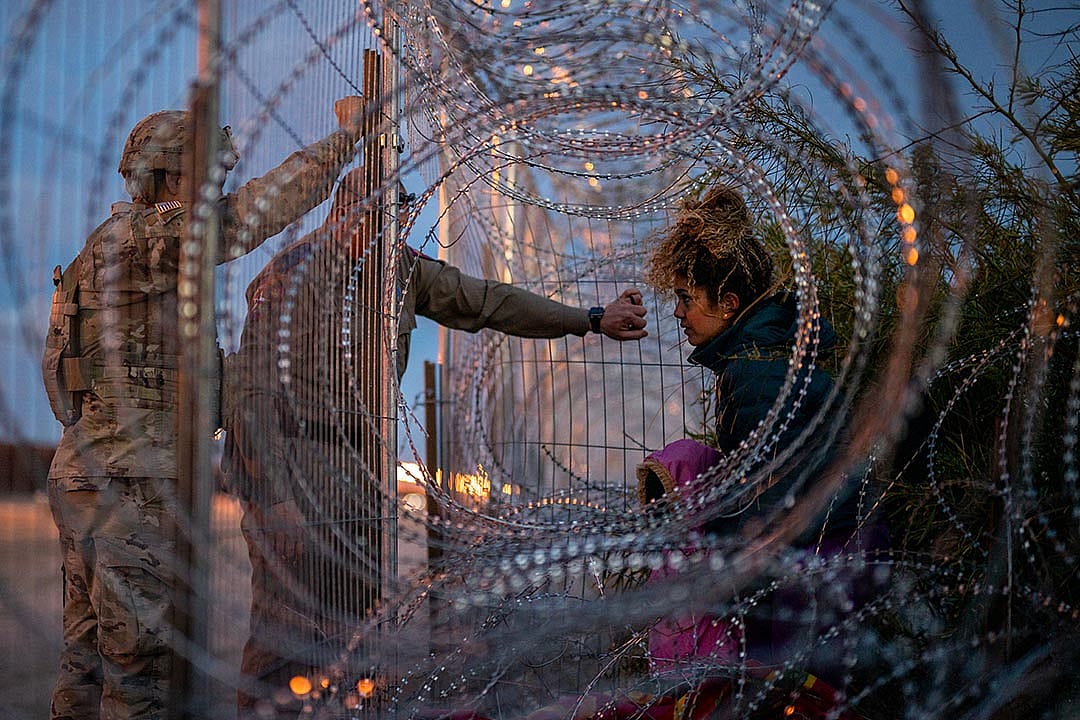
According to the No More Deaths report, many of the deaths in the El Paso sector in the last year were related to environmental exposure, dehydration and hyperthermia, a term used to describe heat illness. In data going back to 2014, the report also included migrants who died trying to climb over the border wall, among them a 19-year-old pregnant Guatemalan woman who died in 2020, or by drowning in canals. It also noted deaths involving the Border Patrol, in which migrants died while in custody, while being chased or by use of force.
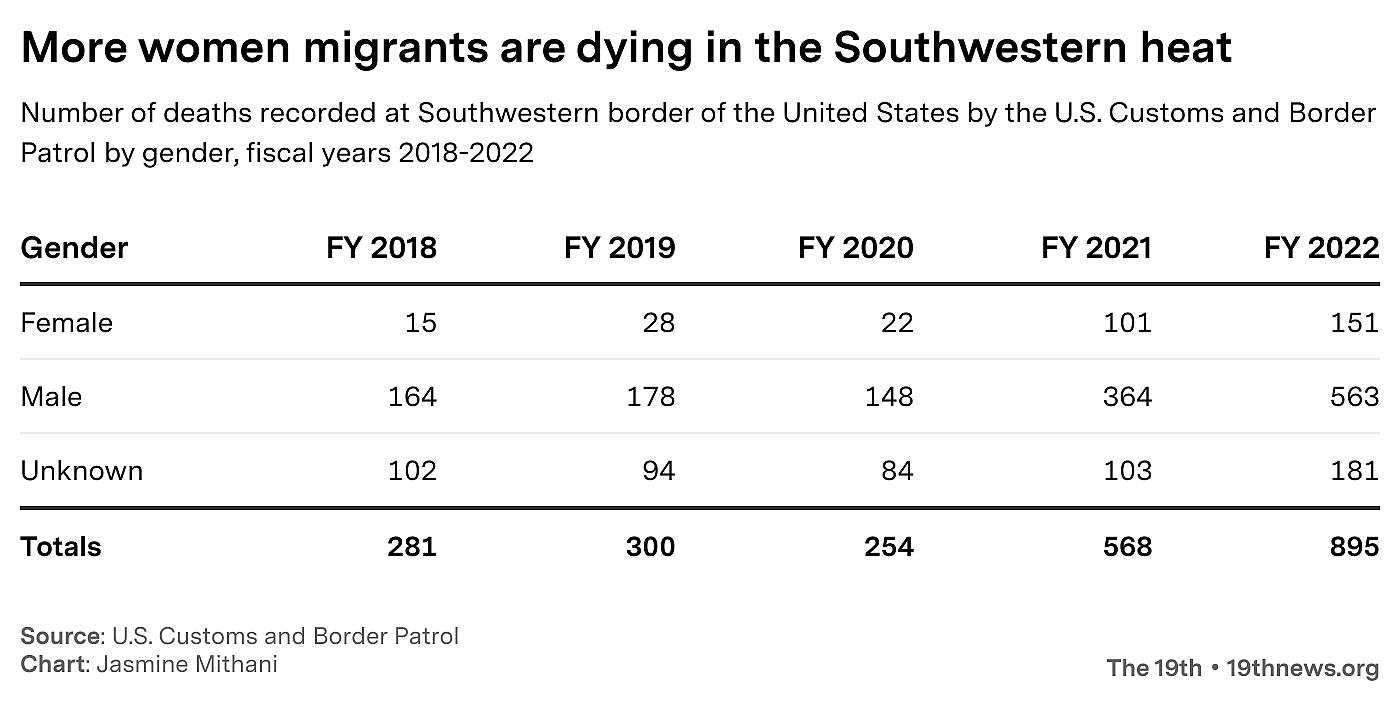
The data in the report comes from medical examiners' offices, news sources and from the volunteers themselves, who find remains out in the desert every year while they are leaving food and water along the trails used by migrants. The tally is different from the number the U.S. Customs and Border Protection provides. In most years, No More Deaths documented a higher number of deaths than the federal agency. One exception is 2023, when CBP registered 149 deaths in the El Paso sector. On its website, CBP says that "statistics are pulled from designated target zones, which comprise 45 counties along the southwest border."
Any figure is also likely an undercount — in part because of the vastness of the U.S.-Mexico border, which spans nearly 2,000 miles, and because of how animals and the elements scatter remains.
In the 1990s, the United States implemented a "prevention through deterrence" border strategy aimed at funneling migrants away from cities by concentrating more agents in urban hotspots. This forced people "over more hostile terrain, less suited for crossing and more suited for enforcement," according to the plan details. Advocates say this is why so many people die making the trek in the first place.
Since 1998, the Border Patrol has recorded over 8,000 deaths along the border, with a majority occurring in the Sonoran and Chihuahuan deserts, located in Arizona and New Mexico, respectively. Last week, the agency reported three deaths in the Sonoran desert, including a 17-year-old girl.
Advocates believe the growing number of deaths in El Paso and elsewhere along the border stems from a combination of two things: changes in asylum requirements converging with the growing number of asylum seekers. Asylum is a form of protection given to people fleeing persecution over identifiers like their religion and race or for being a part of a certain social group. Unlike refugees, who are granted permission to enter the country ahead of their arrival, asylum seekers request protection once they are already in the country or at ports of entry, which are the official entry and exit points into a country. To start the process, migrants have to undergo what is known as a "credible fear" interview, where an asylum officer determines if they meet the minimum threshold to request asylum.
As the number of people migrating across the world has continued to climb, actions by both the Trump and Biden administrations forced many migrants to stay in Mexico while their asylum claims are being processed. In June, faced with intense political pressure from Republicans — in an election year where immigration and the border rank as top-of-mind issues to voters — President Biden swung right. He issued an executive order that triggered a ban on migrants requesting asylum between ports of entry if the southern border is experiencing over 2,500 crossings a day. The order also raised the bar for migrants seeking protection, and requires migrants to voluntarily share or demonstrate their fears of persecution before being asked by a Border Patrol officer in what's known as "the shout test."
A requirement implemented last year remains unchanged: Asylum seekers must first make an appointment through an app called CBP One and wait in Mexico. The problem is that it can take many months to get an appointment. And the longer people have to wait, the more desperate they become. In an interview, Bryce Peterson, a volunteer with No More Deaths who helped compile the report, said he recently visited a migrant camp in Ciudad Juarez, the Mexican city bordering El Paso, where there is very little sanitation and no cooling system, so temperatures were consistently over 100 degrees.
Staying in Mexico is also very dangerous, Nezer said, as migrants are essentially sitting ducks for organized crime. "The shelters are completely overwhelmed, and security, particularly for women and children, is a major issue. Extortion, sexual violence, kidnapping — all of those things," she said. "At some point, if they're waiting for an appointment that may never come, they make the decision to try to enter wherever they can, with the plan of presenting themselves to border authorities once they cross."
While there aren't official stats breaking down how many asylum seekers coming to the United States are women, anecdotally, Peterson and Jones say they are seeing more women crossing — and more women with families. And because they initially come to seek asylum, these people may be less prepared for a desert crossing and not as aware of the dangers of heat.
Now with even more asylum restrictions in place this summer, advocates are wary of how many will then take the chance as summer temperatures continue to climb. "Our biggest concern is that asylum seekers are just going to take greater risks," Jones said. "That means entering in more remote areas to get into the country. That is our biggest concern. Border policy sometimes incentivizes risk."