Northwell Health
1 / 3Kidneys have the biggest shortfall between the waiting list and organs available
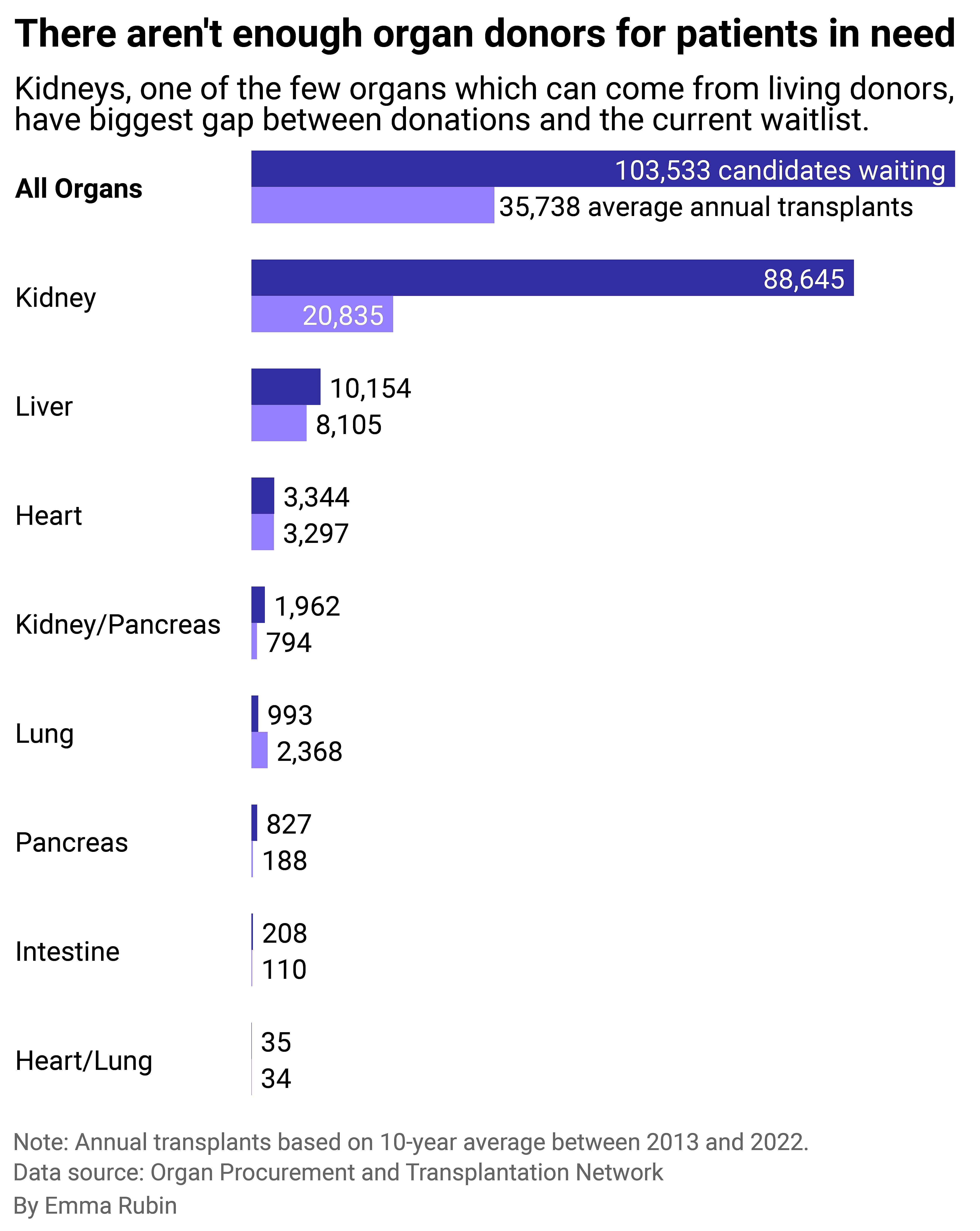
Over the past decade, only 1 in 3 necessary organ transplants were performed on average.
The gap between the number of people who need a new organ and the average number of donations for that organ each year is the greatest for kidneys. Loss of kidney function or kidney failure is the most common reason for needing a kidney transplant, while diabetes and high blood pressure are what most commonly lead to kidney failure.
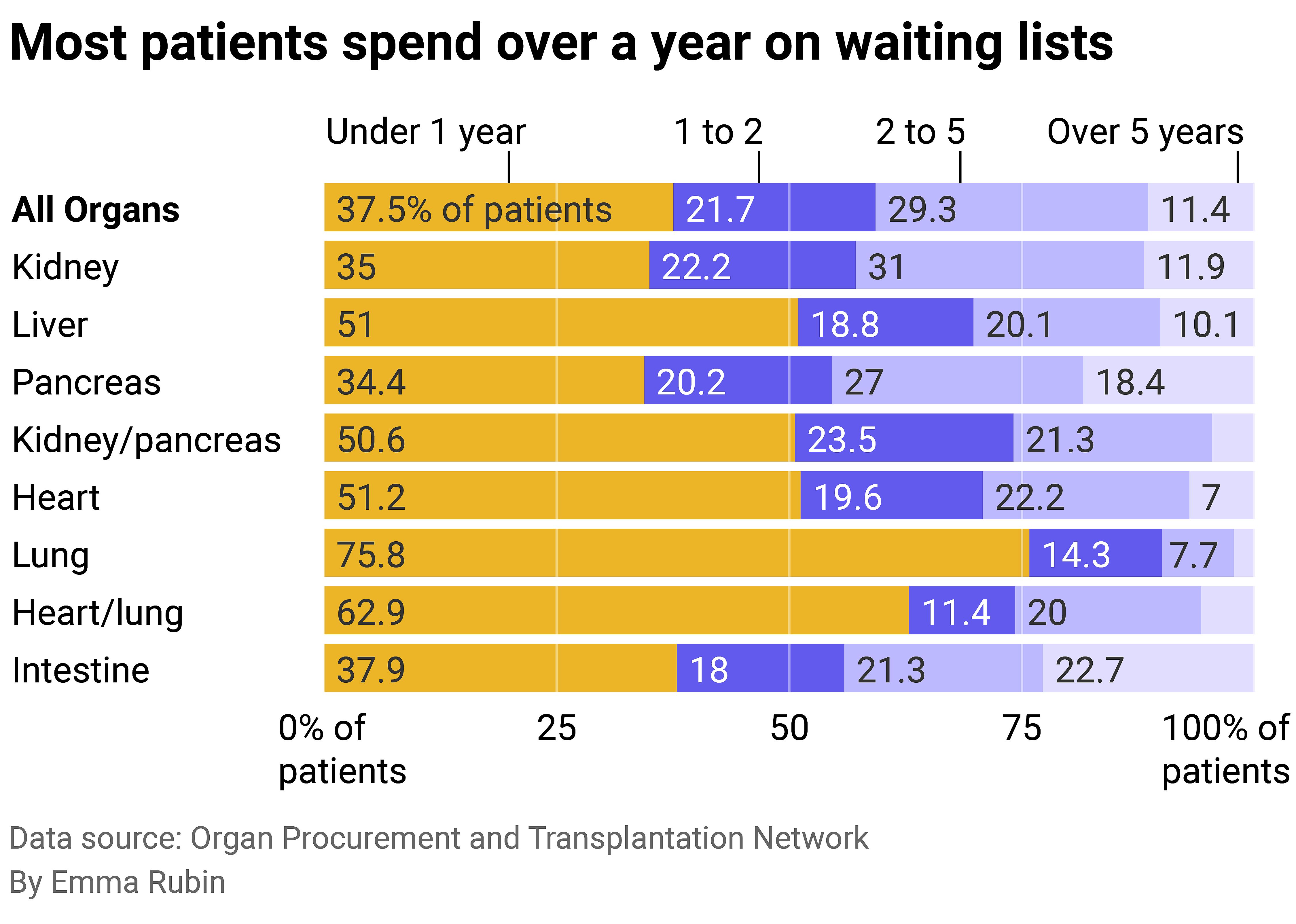
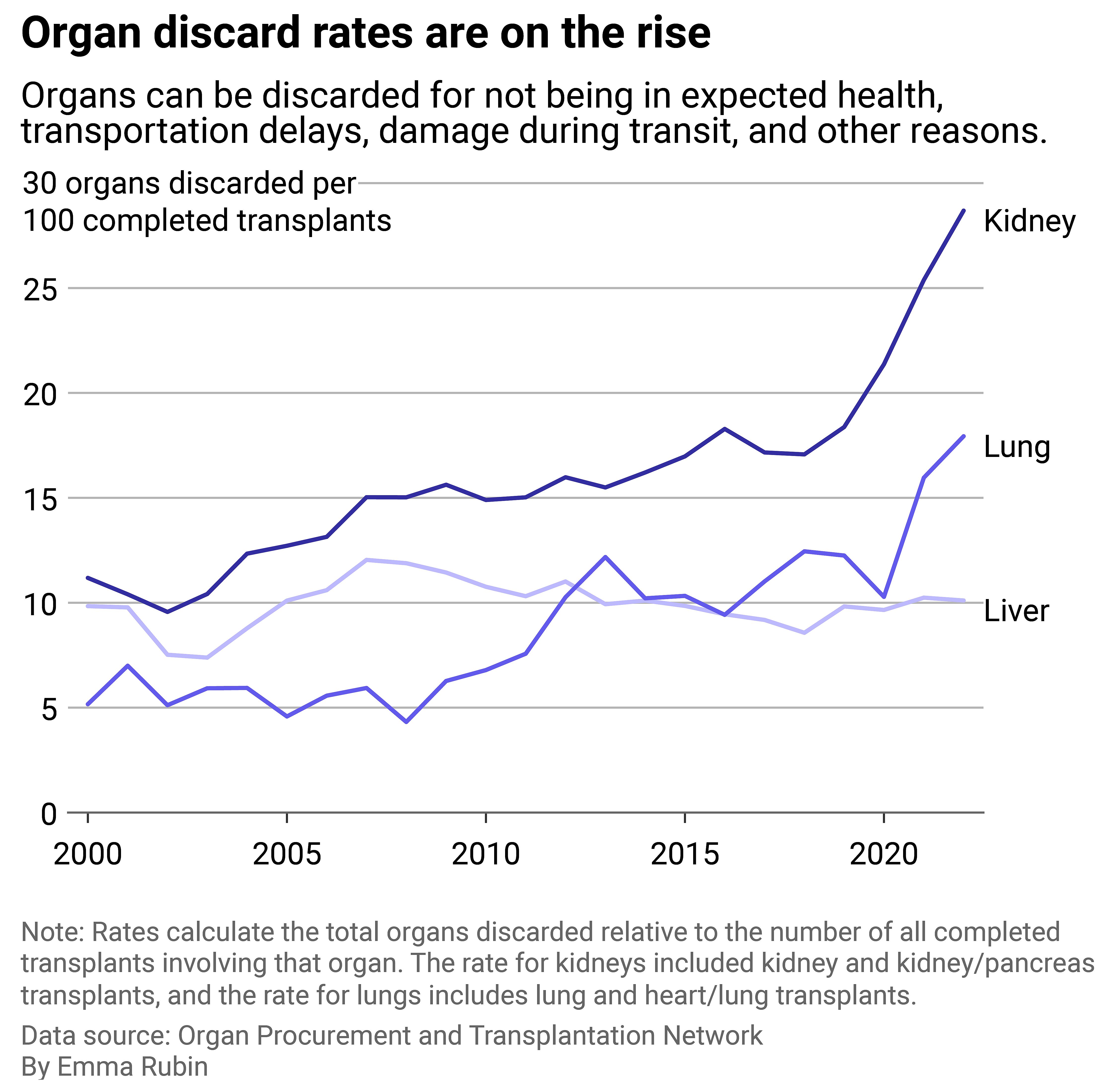
Unfortunately, just 23% of the people waiting for a kidney transplant are likely to receive one. A 2022 report from the OTPN stated 1 in 4 donated kidneys are discarded.
Most kidney discards occur after procurement biopsies, where organ procurement organizations examine a deceased donor's organ for damage or disease and assess its viability for transplant. Some researchers question the validity of these biopsies, arguing the results are not reproducible while pointing to research showing kidneys discarded as low-quality in the U.S. are similar to kidneys transplanted with acceptable outcomes in France. Findings from another study published in 2019 explained transplant centers in France would have transplanted more than 60% of the nearly 28,000 donated kidneys discarded in the U.S. between 2004 and 2014.
In hopes of reducing discard rates and helping more patients in the U.S., researchers have called for better and more standardized evaluation methods to assess kidneys. Proposals include include incentivizing health care providers to consider the long-term benefits and cost-effectiveness of transplanting more types of kidneys. Others include diagnosing transplant viability at the molecular level and adopting a process used in Europe that identifies and expedites evaluation of kidneys at high risk of being discarded.