Anna Moneymaker // Getty Images
1 / 3After the end of Roe v. Wade, calls to protect IVF gain traction
"Babies are little miracles," Lindsey Pinkham, who paid out-of-pocket for IVF treatment in Orange County, California, told Stacker. After her first child was born, her second pregnancy was ectopic. Pinkham had surgery to end the nonviable pregnancy, and she said the damage to her fallopian tubes, her doctor told her, would affect her ability to conceive naturally again.
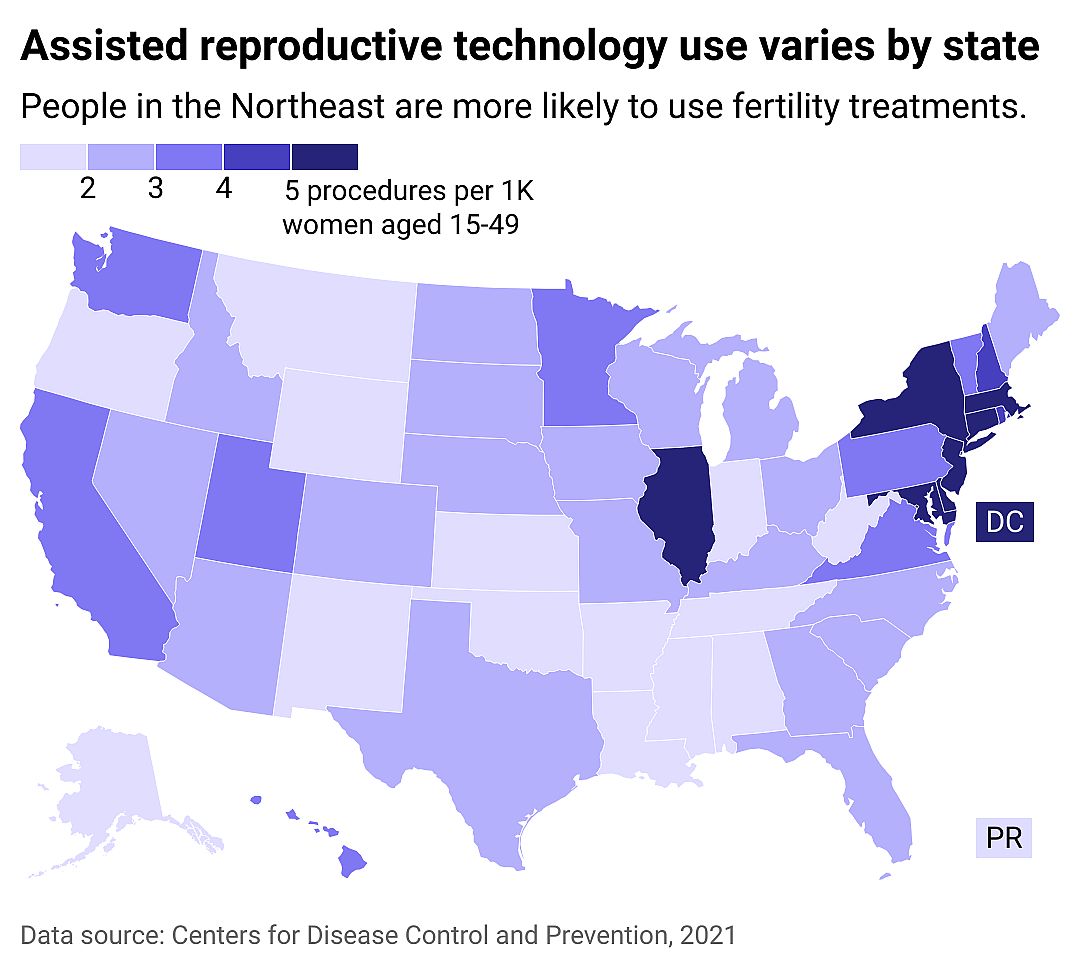
Pinkham, now 35, represents 1 in 6 impacted by infertility in the U.S. In 2021, 238,216 patients received ART treatments, averaging more than two IVF cycles each, according to the CDC's 2021 Assisted Reproductive Technology: Fertility Clinic and National Summary Report. These treatments resulted in 189,034 live births, 112,088 clinical pregnancies, and 167,700 frozen eggs or embryos for potential future use.
Assisted reproductive technology refers to all fertility treatments that involve manual handling of eggs or embryos. This includes egg removal from a person's ovaries, combining eggs with sperm in a laboratory to create an embryo, implanting the embryo in the patient's body, or donating the eggs or embryos to another patient. The use of frozen eggs and embryos enhances the chance of pregnancy, but multiple cycles of retrieval, fertilization, and implantation are commonly needed. In most states, unused eggs or embryos can be donated or destroyed if the supply is no longer needed.
"I think going through a traumatic experience and loss really opens your eyes to the perspective that they are truly hard to come by for a lot of people—myself and a whole bunch of people I know—that needed the extra help," Pinkham told Stacker. "It's just a miracle that we have the technology to allow people to be able to create a family and be successful in that."
In February 2024, IVF was thrust into the national spotlight when a ruling by the Alabama Supreme Court granted embryos the same constitutional rights as a person. The court's "fetal personhood" decision "essentially gives frozen embryos in test tubes and freezers and fetuses the same legal rights as born children," Melissa Goodman, Executive Director of the UCLA Center on Reproductive Health, Law and Policy, told Stacker. In other words, any embryo potentially damaged or destroyed during a procedure could make a patient and their doctor liable.
Several IVF clinics in Alabama suspended their activities after the ruling, but most have resumed in vitro fertilization services after the governor signed legislation to provide criminal immunity to patients and providers who "facilitate the in vitro process" or "transport of stored embryos." The law does not address the question of personhood in embryos.
After the 1973 Roe v. Wade decision, a third of states included fetal personhood into their criminal statutes—with at least 14 more introduced in the last year—which could be leveraged to directly target bans on IVF. Additionally, a guide by UCLA Law, last updated February 2025, shows that 28 states lack "shield laws" designed to protect people from out-of-state criminalization of reproductive health services.
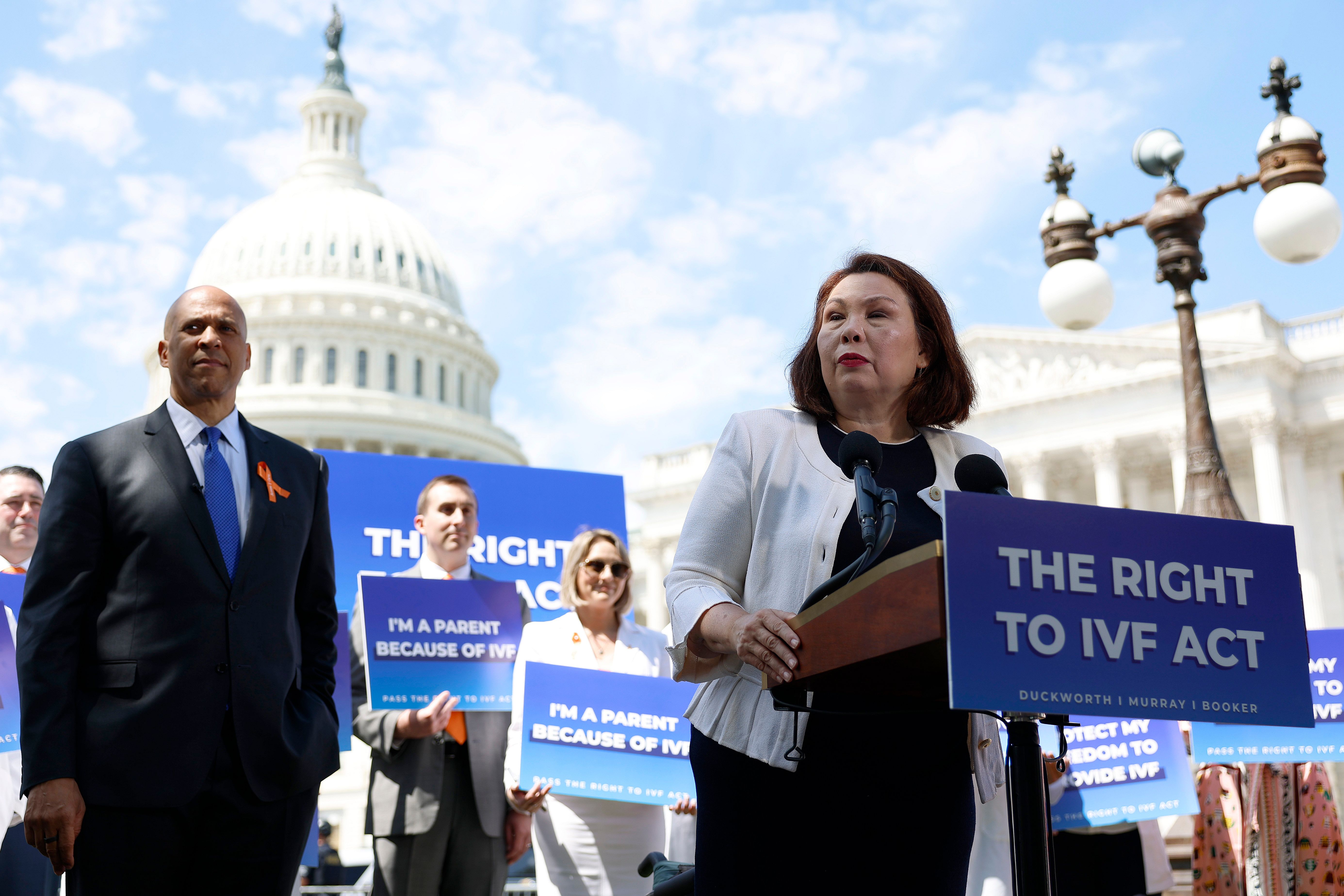
Despite widespread disagreement with the ruling, including from the Medical Association of the State of Alabama, some legislators continue to push for IVF restrictions. Jason Thielman, Executive Director of the National Republican Senatorial Committee, urged the Senate to support government efforts to protect IVF access. He argued that 4 out of 5 evangelical Christians supported some form of IVF. Still, Republicans voted to block federal protections for IVF in June 2024, following a Supreme Court decision to protect the use of a widely used abortion medication, mifepristone.
"IVF is most certainly at risk," says Goodman.