Brookings Institution
1 / 2Engagement Gaps in K-12 Education
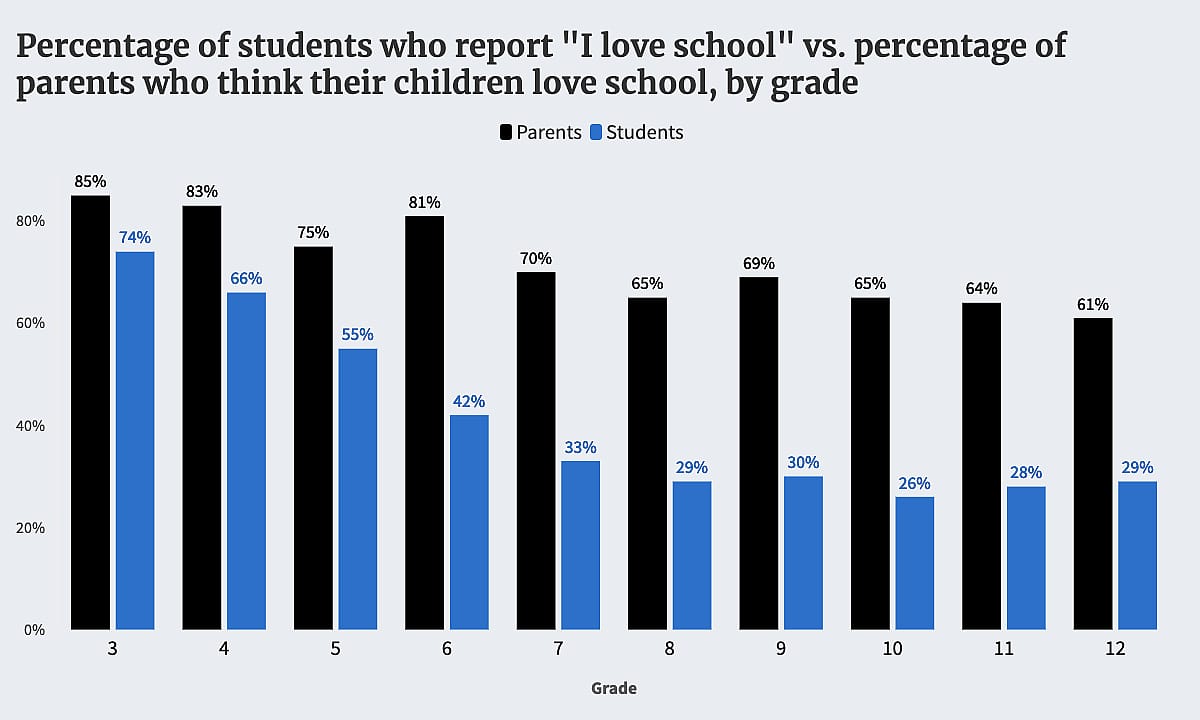
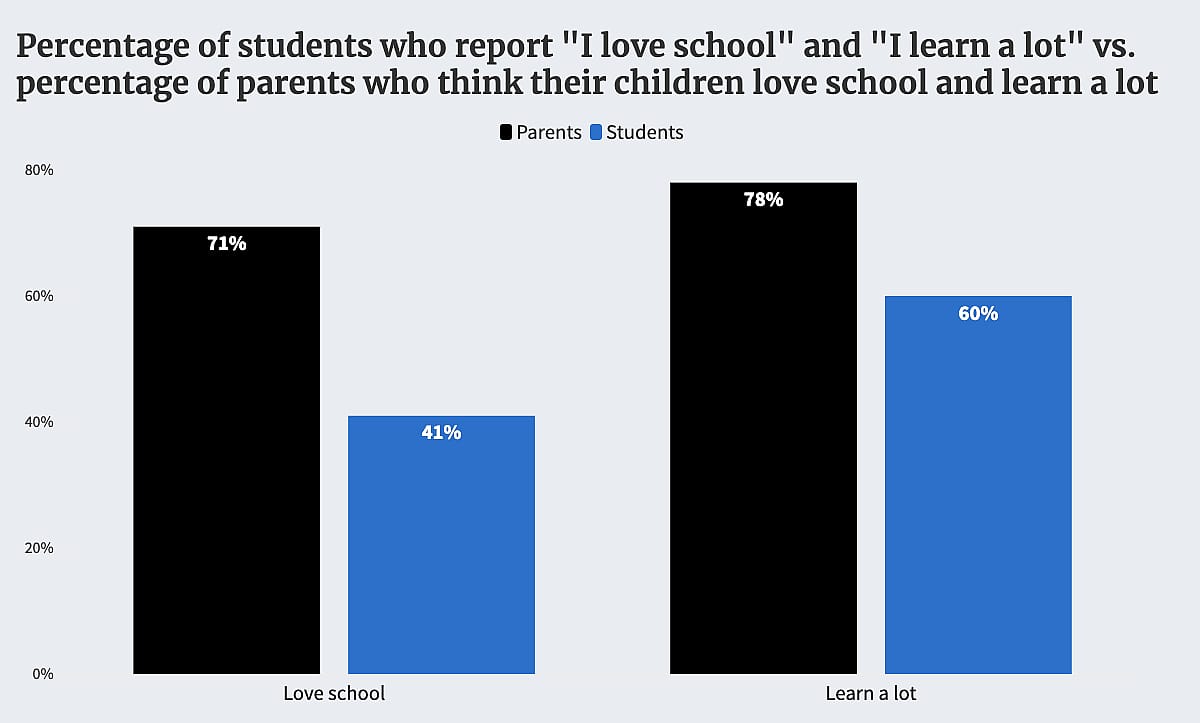
The figures point to a failure not only to keep students engaged in school, but also to keep families informed about the true state of their children's learning, said Rebecca Winthrop, the report's lead author and a Brookings senior fellow. Parents themselves, she added, find it "hard to admit" that K–12 education isn't offering all that it should.
"It is psychologically hard for parents—and I say this from personal experience—to send their kids to school every day knowing that they are just not being challenged, not interested, and not enjoying their time," said Winthrop.
Data for the report were drawn from the nonprofit Transcend Education, which conducts an ongoing Student Voice Survey querying pupils in public, charter, and private schools around the United States. A nationally representative sample of over 66,000 students from grades 3–12 was asked about their time at school—including their feelings of self-direction, community ties, and the relevance of the material they studied—between 2021 and 2024.
Additionally, Transcend contacted nearly 1,900 parents of school-aged children in 2023 and 2024, generating a trove of responses that has not previously been shared with the public. The findings, along with five years of personal interviews and reporting, have also been compiled into The Disengaged Teen, a book recently released by Brookings.
The data highlight a profound degree of academic and social disengagement among teenagers. While students report comparatively high levels of enjoyment and agency at school, less than one-third of middle and high schoolers said they felt that what they learned was relevant to life outside the classroom, that their classmates persevered "when the work gets hard," or that they had any say over what happened to them during the school day.