Kae Petrin // Chalkbeat
1 / 2Young Children Struggle With Social Skills Amid Staff Shortages
There's also a group of young children who don't have official delays, but missed out on basic social skills when preschool and playdates stopped during the pandemic. Preschool enrollment in Colorado's public schools dropped by more than 20% during the 2020-21 school year compared with the year before, according to the Colorado Department of Education.
Early educators say they're seeing more children who struggle with speech, communication, and managing their emotions than in years past. More students also now struggle with classroom expectations. Jennifer Lussier, a kindergarten teacher at Coyote Ridge Elementary in Broomfield, said a couple years into the pandemic she experienced an unfortunate first: A kindergartner told her, "I'm not doing that. That's stupid."
Some teachers and advocates say it's hard to untangle the effects of COVID from other factors, such as children's frequent use of smartphones and tablets—a phenomenon exacerbated by the pandemic.
Many schools and child care centers are working to meet students' extra needs. They've added more teacher training or hired new staff to work with children who hit, bite, or have tantrums. They devote more class time to social-emotional skills and call in mental health specialists when big problems erupt.
But some worry that chronic industry problems, including a shortage of therapists who work with young children, high turnover among early childhood educators, and a lack of funding for the field at large, are stunting recovery efforts.
The demands on preschool teachers and daycare workers have grown even as their resources have shrunk, said Lori Ganz, clinical director of The Resource Exchange, which provides early childhood services in El Paso County and nearby counties.
"Their classrooms are larger and the children are more challenging," Ganz said, "and some days they just can't do it."
New Parents in Pandemic Faced an Uncertain World
Chmura Smith was in her last semester of community college when the pandemic hit. She was also pregnant with her first child.
"The pandemic kind of shut down my whole life," she said.
Classes moved online, a format Smith didn't like. She remembers a chronic feeling of uncertainty. She worried about "getting COVID and it never going away and always being in lockdown."
A few days after her May graduation, she went into labor much too early. Her son Jadon was just two pounds and two ounces when he was born. He came home healthy after two months in the hospital, but as he grew, he struggled to pronounce words and would sometimes stutter. He'll say things like "Gween Gwoblin" when talking about his favorite Spider-Man villain.
Jadon, now 4, has a special education plan and gets speech therapy at Clayton Early Learning, where he attends preschool. His three-year-old brother, born full-term as the world was opening back up in 2021, never had any speech problems.
For Smith, it's hard to pinpoint the reason for Jadon's speech delay. She said her own stress during the pandemic could have sparked his premature birth, which in turn could have contributed to his speech problems.
"That year was a lot," she said.
Erin and JK Perry, who live in the western Colorado town of Eagle, also wonder about the effects of the pandemic on their four-year-old son. In so many ways, he's thriving. He's an outgoing child with a big vocabulary and good friends.
But he also struggles with anxiety at times—for example, if his parents switch off who's bringing him to preschool without telling him.
"He will yell. He will refuse to eat his breakfast. He will refuse to put his shoes on," Erin Perry said.
"I feel like some of that could have been me and JK and just the levels of anxiety we were dealing with," she said. "It wasn't just being new parents. It was being new parents in a pandemic. It was like being scared to go to the grocery store."
Erin Perry said teachers at their son's child care center talked of behavior post-COVID-19 that they'd never seen before. When their son was two, one teacher was responsible for shadowing a toddler in the class who continuously acted out. When that teacher turned her back momentarily, the toddler bit their son hard enough to draw blood, she said.
Fewer Young Children Flagged for Extra Help
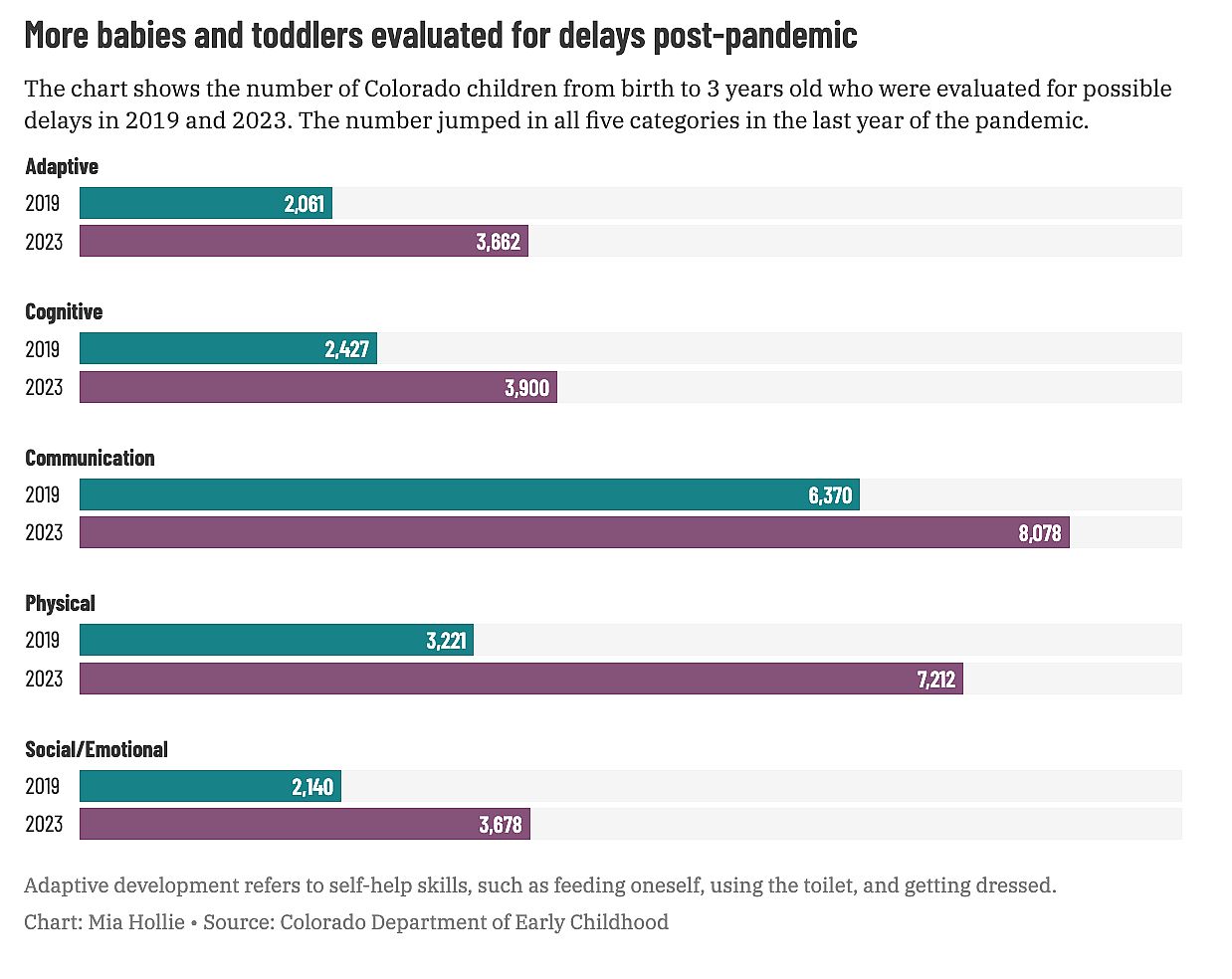
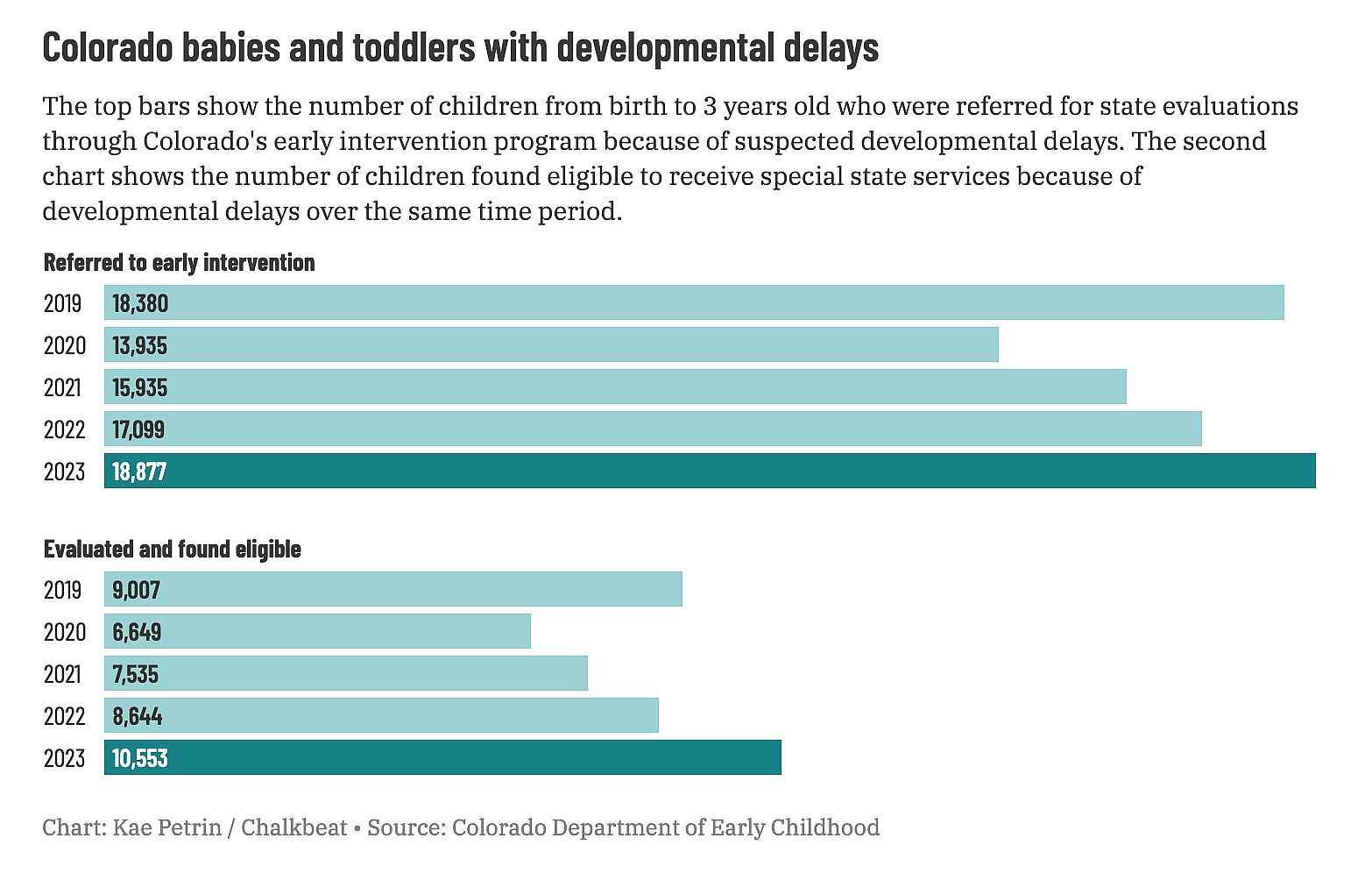
During the first year of the pandemic, thousands of babies and toddlers with delays or disabilities missed out on services that would have helped them catch up. They weren't going to the routine doctor appointments or to child care where professionals might have noticed an issue and referred them for a free state evaluation.
In addition, Colorado temporarily raised the bar in 2020 for the level of delay children needed to receive early intervention services because of a budget shortfall. A version of the earlier threshold was reinstated in 2023.
To make matters worse, early intervention services switched to virtual as the pandemic raged on. Some families opted out all together, while others tried them, but struggled to realize the benefits. A lag in getting kids set up with therapies and other services can compound their problems, experts say.