Arbor
1 / 2What's included in your power bill?
To help you get a better understanding of your electric bill breakdown, here's what you can find included in your power bill.
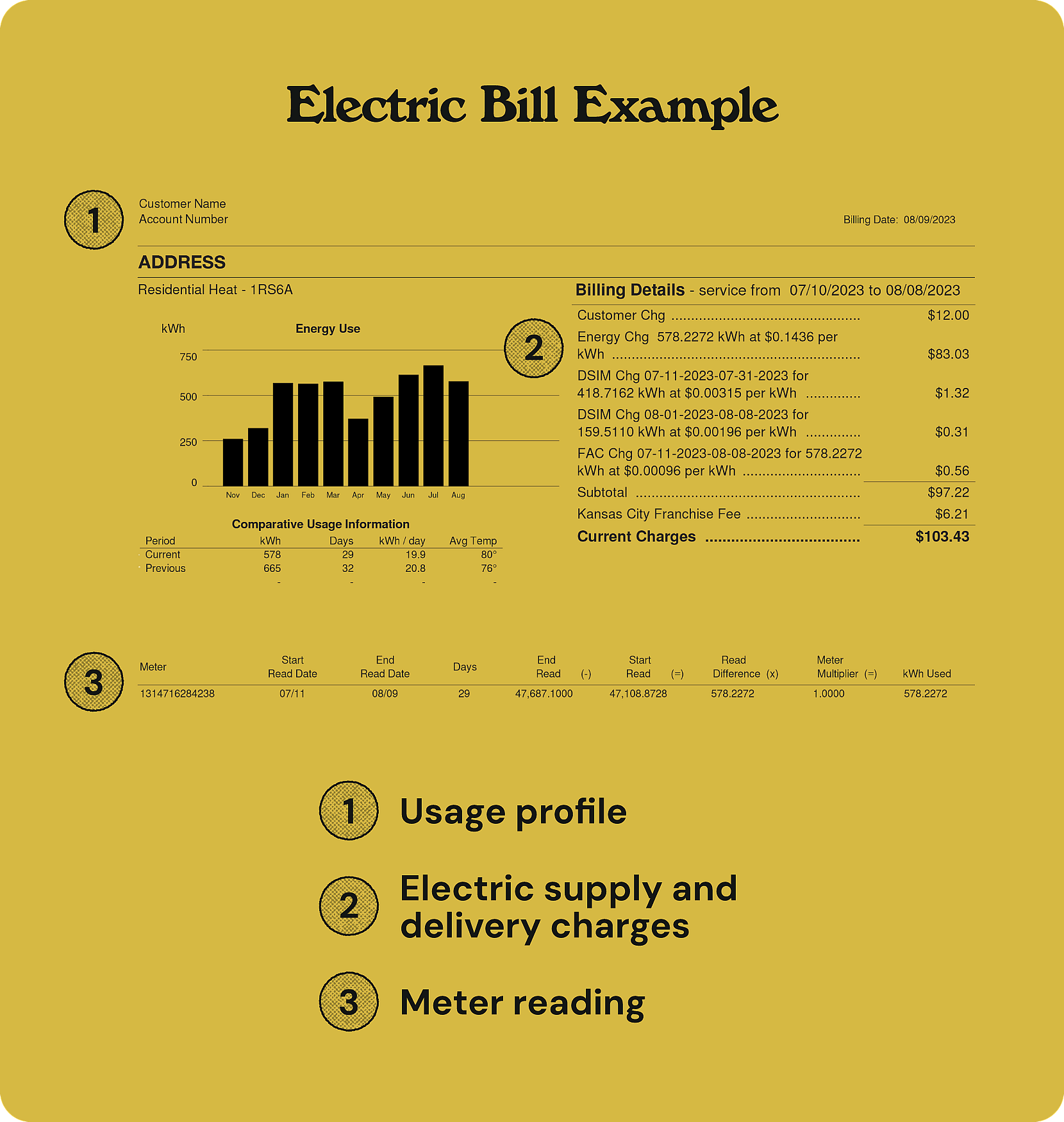
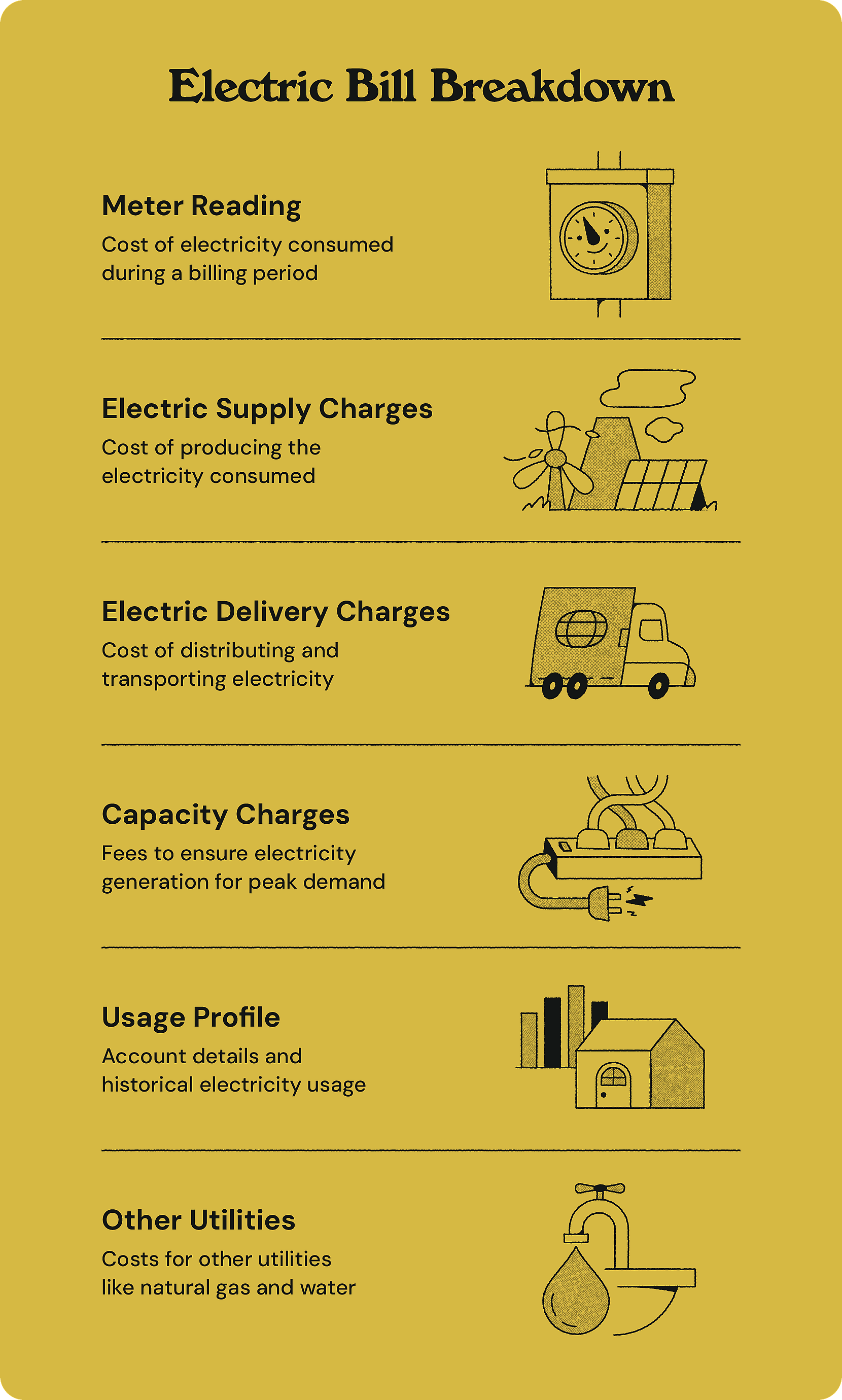
Meter reading
Your meter reading, also known as electricity cost, is the most fundamental charge on your electric bill. It represents the cost of the electricity you've consumed during the billing period and is typically measured in kilowatt-hours, or kWh. The rate you're charged per kWh is determined by your utility provider or your chosen rate plan.
Electric supply charges
Your electric supply charges cover the cost of generating or purchasing electricity from power plants. It includes the cost of producing the electricity you consume. This part of the bill is typically based on the rate per kWh.
Electric delivery charges
Electric delivery charges encompass several components, including:
- Customer charges: A fixed monthly fee for being connected to the electric grid and having access to electricity.
- Transmission charges: Cover the cost of transmitting electricity over long distances from power plants to local distribution networks.
- Distribution charges: The cost of delivering electricity from the local distribution network to your home or business.
- Transition charges: Charges that may relate to transitioning to cleaner or renewable energy sources and are intended to support environmental initiatives.
- Public policy charges: Fees that fund government programs or policies related to energy efficiency, low-income assistance, or other public purposes.
Capacity charges
Some bills may include capacity charges, or fees associated with ensuring there is enough electricity generation capacity available to meet peak demand. These charges essentially serve as insurance against potential power outages, which can occur when there's high electricity usage.
Usage profile
This section of the bill provides information about your account and historical electricity usage patterns. Here are a few things you may see on your usage profile:
- Your name and address
- Account number
- Your energy company's name
- The past 12 months of usage history
- Comparative usage information from the previous period
- Your billing cycle's start and end dates
This information may also be presented in charts or graphs showing your monthly or annual consumption, which can be useful for understanding your usage trends. You can use this section to help you track your monthly consumption.
Other utilities
While an electric bill mainly focuses on electricity charges, it may also include information about other utility services if your utility provider offers them. These services could include:
- Natural gas charges: If your gas service is provided by the same utility company, any natural gas charges may be included on the same bill.
- Water charges: In some cases, water charges may also be included if the same utility company provides both water and electricity services.