Wealth Enhancement
1 / 2How economists measure wage growth
There are several metrics economists use to compare wages to inflation.
The most common inflation metric is the Consumer Price Index, which measures daily living expenses and compares the price of certain goods and services over time. Personal consumption expenditures, meanwhile, look at how much Americans are actually spending. While both have similar goals, the results can vary, depending on how you slice it.
For example, the typical cost of public transit (which includes airfare, train tickets, and bus passes) is about 7% higher than the year before, according to the Labor Department. However, the amount Americans spent on these services fell about 8% over the same time, according to the Bureau of Economic Analysis. In other words, commutes may cost more, but since fewer people commute, they spend less money on average.
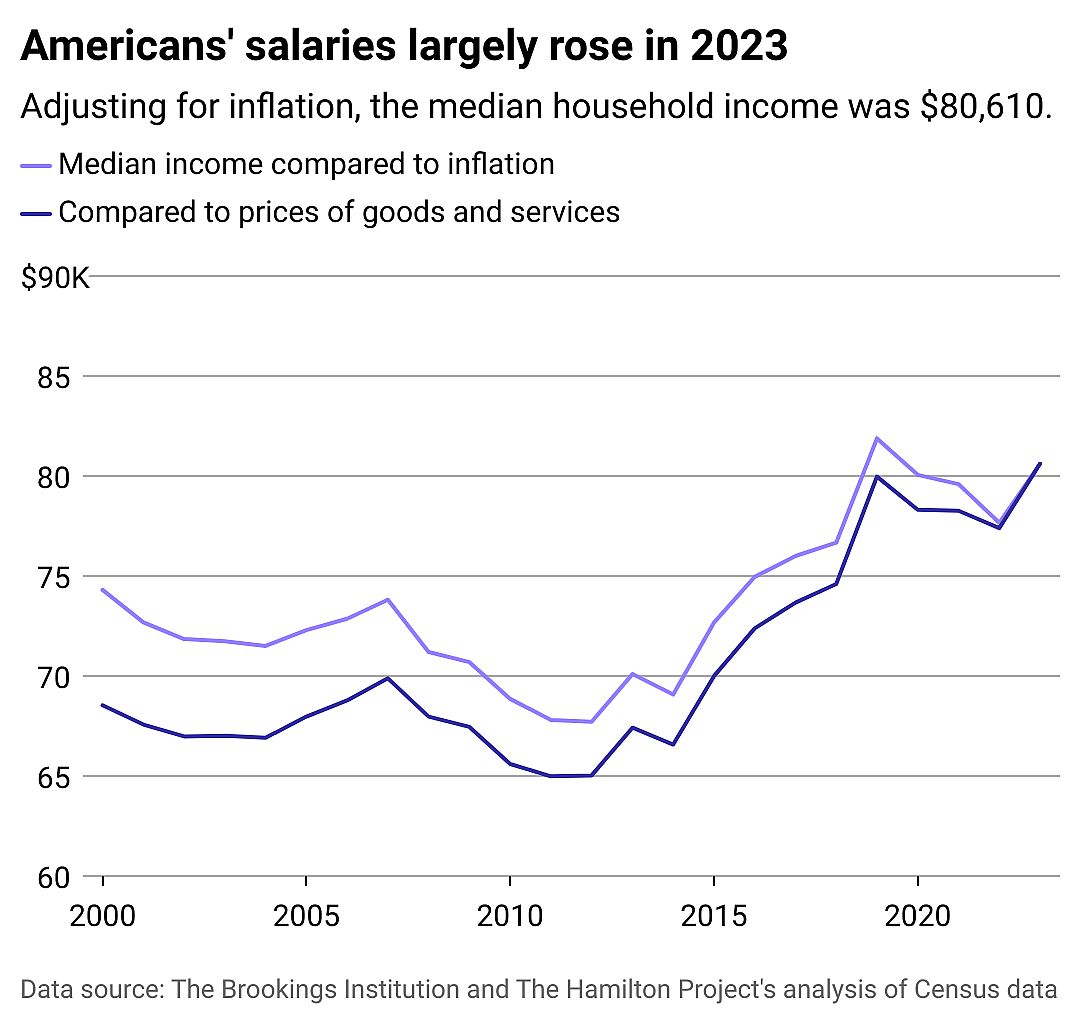
That's where wages come in. Using both measurements, the typical household earned more than $80,000 in 2023, according to analysis from the Brookings Institution and The Hamilton Project. That's a big jump from 2020, when the median household income was $68,000.
So why are so many Americans experiencing economic instability? Because everyone's situation is different and people get paid differently, there are different ways to calculate "real pay," or how much an individual makes after adjusting for inflation.
Looking at the average hourly or weekly wages, economists divide the total amount of money people bring home by the number of people working. However, this can be misleading.
For example, wages appeared to rise during the COVID-19 pandemic, but that was mainly because people with lower wages were more likely to be laid off. In other words, the people who remained employed during the pandemic were more likely to have high salaries. And since people with low-wage jobs were unemployed, they were no longer part of the denominator when determining the typical income of all Americans in the workforce.
Since then, the labor market has tightened, and wages have increased across all income levels. The biggest gains were among the bottom 10 percent of earners, whose real wages grew by 13% from 2019 to 2023, according to a 2024 Economic Policy Institute report. Still, even as some states have worked to increase the minimum wage, it hasn't been enough to make up for decades of stagnant wage growth among low-income workers, who continue to struggle to make ends meet. Nationwide, Census data shows that nearly half of renters are considered rent-burdened, meaning more than 30% of their income goes toward housing.
Another way to measure workers' earnings is the Employment Cost Index, which measures companies' employee spending. It includes the amount employers pay in wages and salaries and the cost of benefits, which is important for long-term planning but may not be felt directly in people's paychecks.
In September 2024, for instance, wages had grown 3.9% from the previous year, while the cost of benefits rose 3.7%.
That's why the data on its face can be misleading, and closer examination is necessary.