Ollie
1 / 2Pet ownership is on the rise, but dogs are more popular
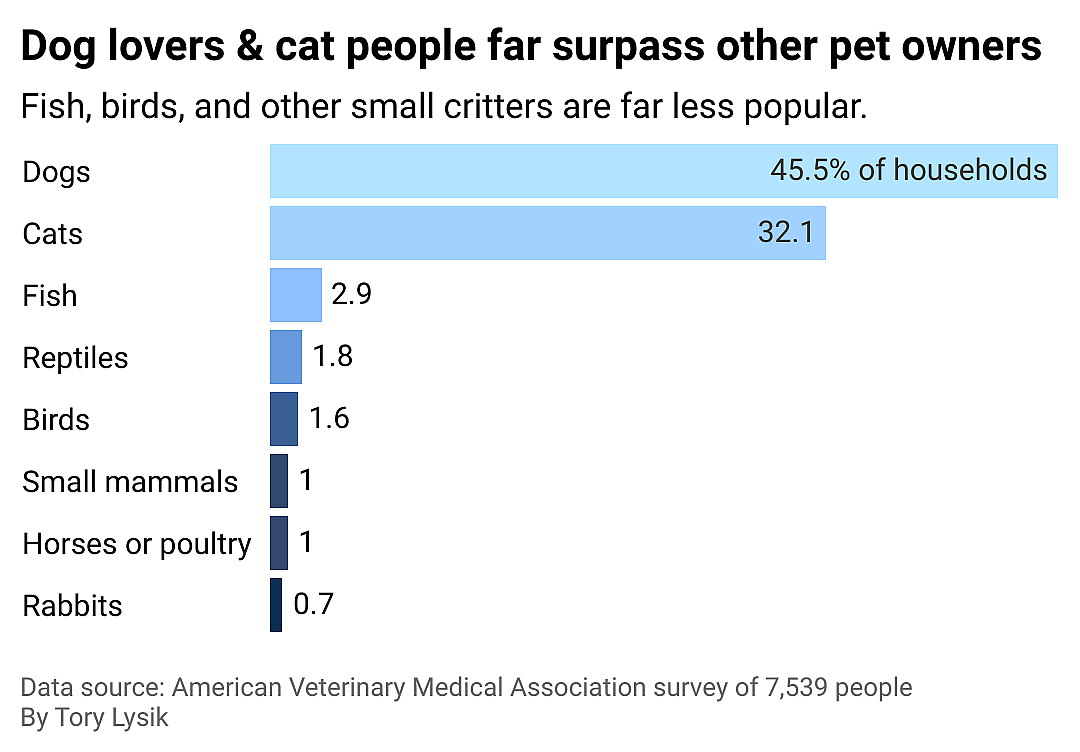
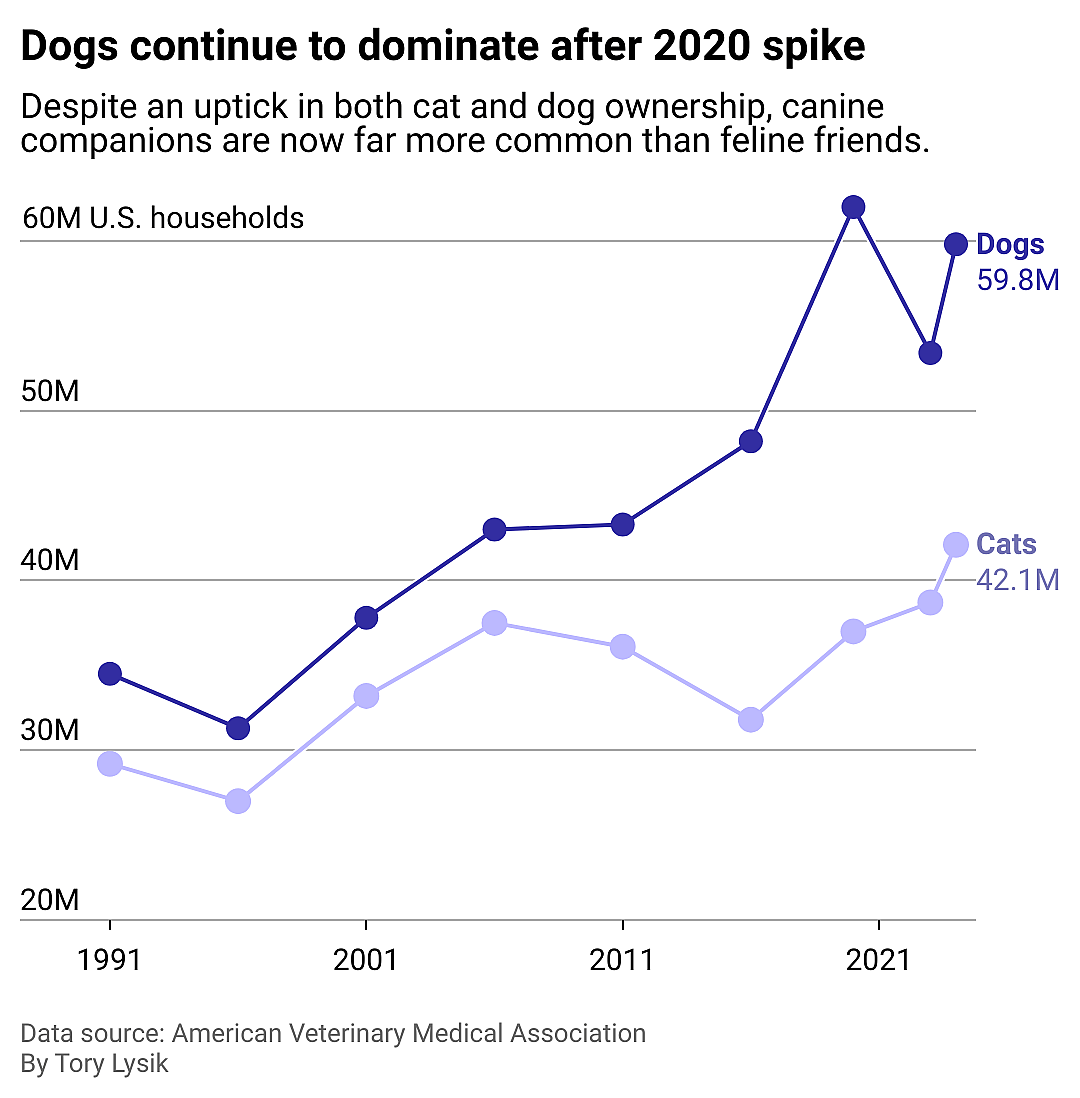
Pet ownership has steadily grown over the years: According to the American Pet Products Association, approximately 66% of households in the United States have a pet as of 2023, compared to 56% in 1988. While dogs are in more homes overall than cats, those with cats are more likely to have more than one at a time: per pet-owning household, there are an average of 1.5 dogs compared to 1.8 cats.
The COVID-19 pandemic and the ensuing shift to remote work drove much of this growth, with 1 in 5 American households adopting a new cat or dog between March 2020 and May 2021, according to the American Society for the Prevention of Cruelty to Animals. While these numbers have since dropped from the 2020 high, pet ownership remains significantly higher than at any other time since the 1990s.
Research also shows that household critters are rising in number and in the family pecking order. According to a 2023 Pew Research Center survey, 51% of pet-owning respondents said their pets are as much a part of the family as their human counterparts. Dogs, again, outperformed cats in this area as well: 5% more dog owners consider their pets equal members of the family compared to cat owners.
While pets are increasing in population and family rank, they are simultaneously decreasing in size. Living spaces are trending smaller, according to the National Association of Home Builders—and so are the pets that populate them. In 2022, the American Kennel Club reported that labrador retrievers had lost their 31-year streak as the most popular dog breed in the U.S., surpassed by the French bulldog in 2022; Chihuahuas have since overtaken both breeds as of 2024.