CitizenShipper
1 / 3Intakes are up, but adoptions aren't keeping up, causing populations to grow
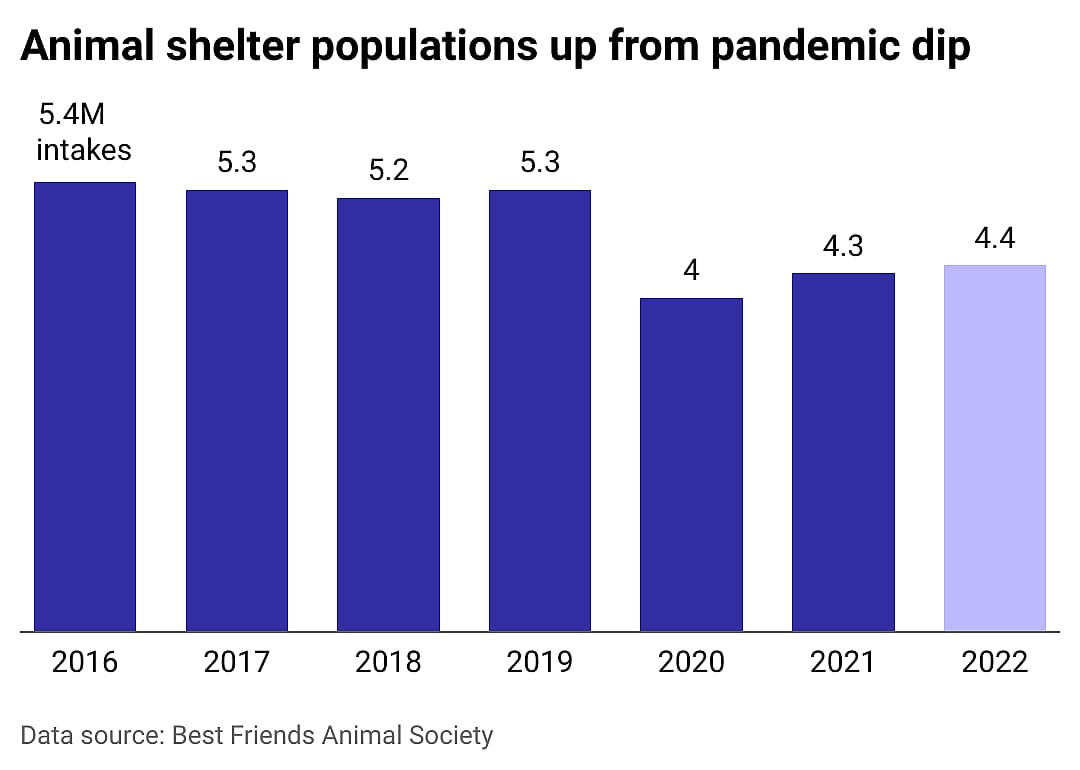
According to Best Friends Animal Society, the number of animals taken in by shelters has actually increased every year since 2020, from 4 million to 4.4 million. Most animal surrenders are linked to their owner's circumstances rather than the behavior or other traits of the animal. For instance, 16.1% of cat and dog shelter surrenders stem from having too many other animals in the household, while 7.2% were compelled to surrender their animal due to financial constraints.
Sadly, dog adoption rates have not rebounded from pandemic lows, thus failing to compensate for the increased amount of intakes. Therefore, shelters with limited capacity must resort to dangerous and ill-advised husbandry practices to limit euthanasia or maintain county and state contracts. In Texas, one shelter in Dallas at 70% over capacity began doubling up large dogs in kennels, and an Austin-based shelter lined its hallways with pop-up crates.
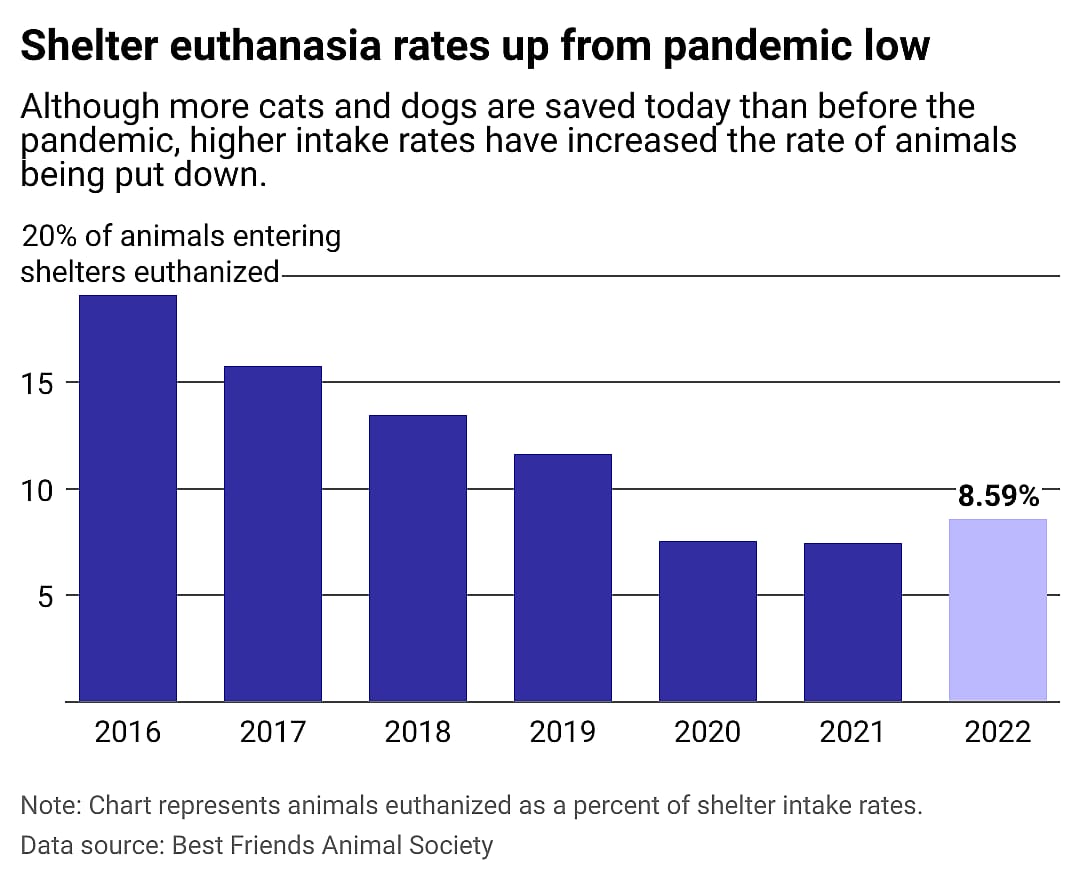
Unfortunately, this strain is not expected to let up any time soon. A Shelter Animals Count report found that animal intakes at shelters will reach a three-year high this year. Best Friends Animal Society further reports that dog adoptions dropped by 26% in 2020, culminating in 170,000 lost canine lives in 2022. The number of lost cat lives declined to 208,000 that same year, saving 10,000 more cats than in 2021. This brings the number of euthanized shelter dogs closer to cats than ever before.