Meowtel
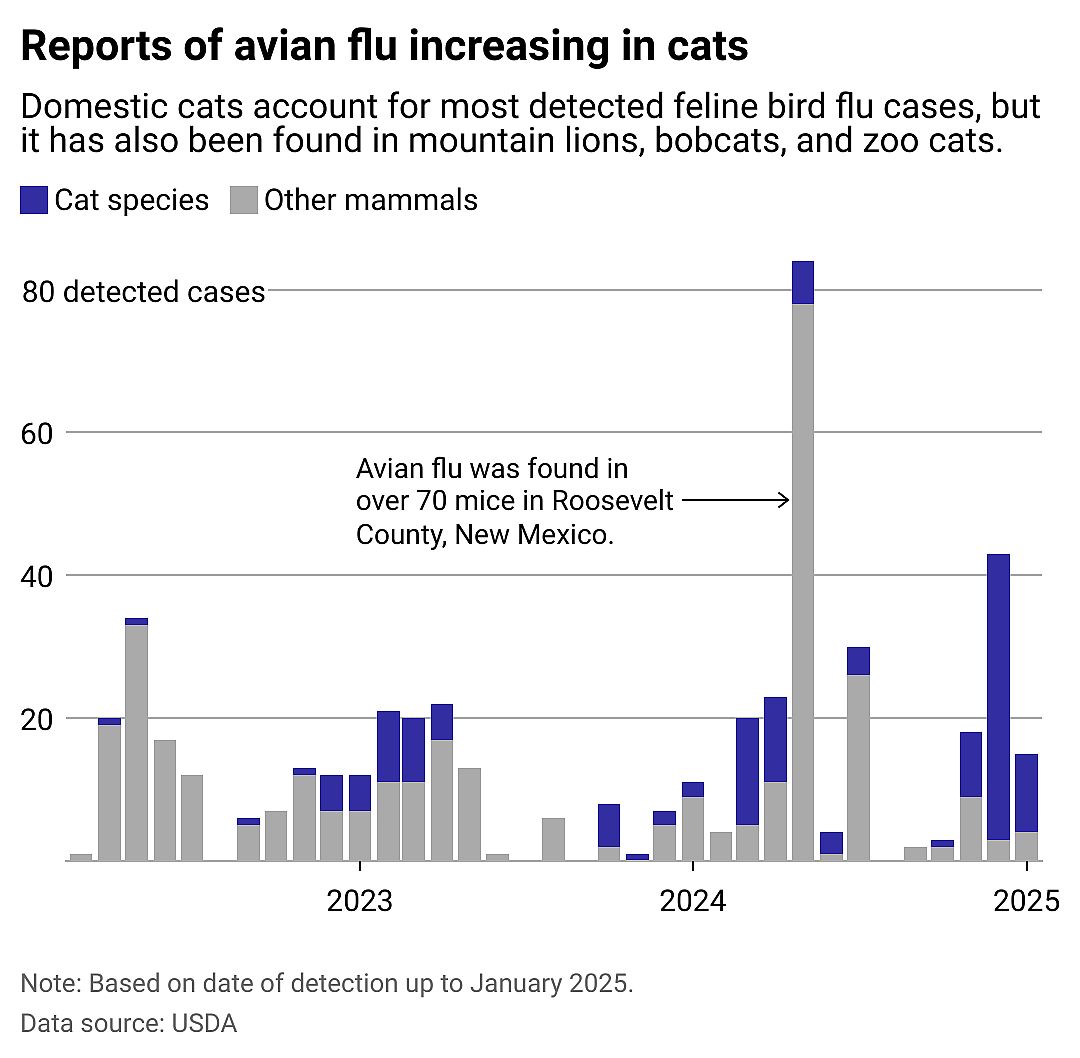
1 / 2An uptick in feline bird flu
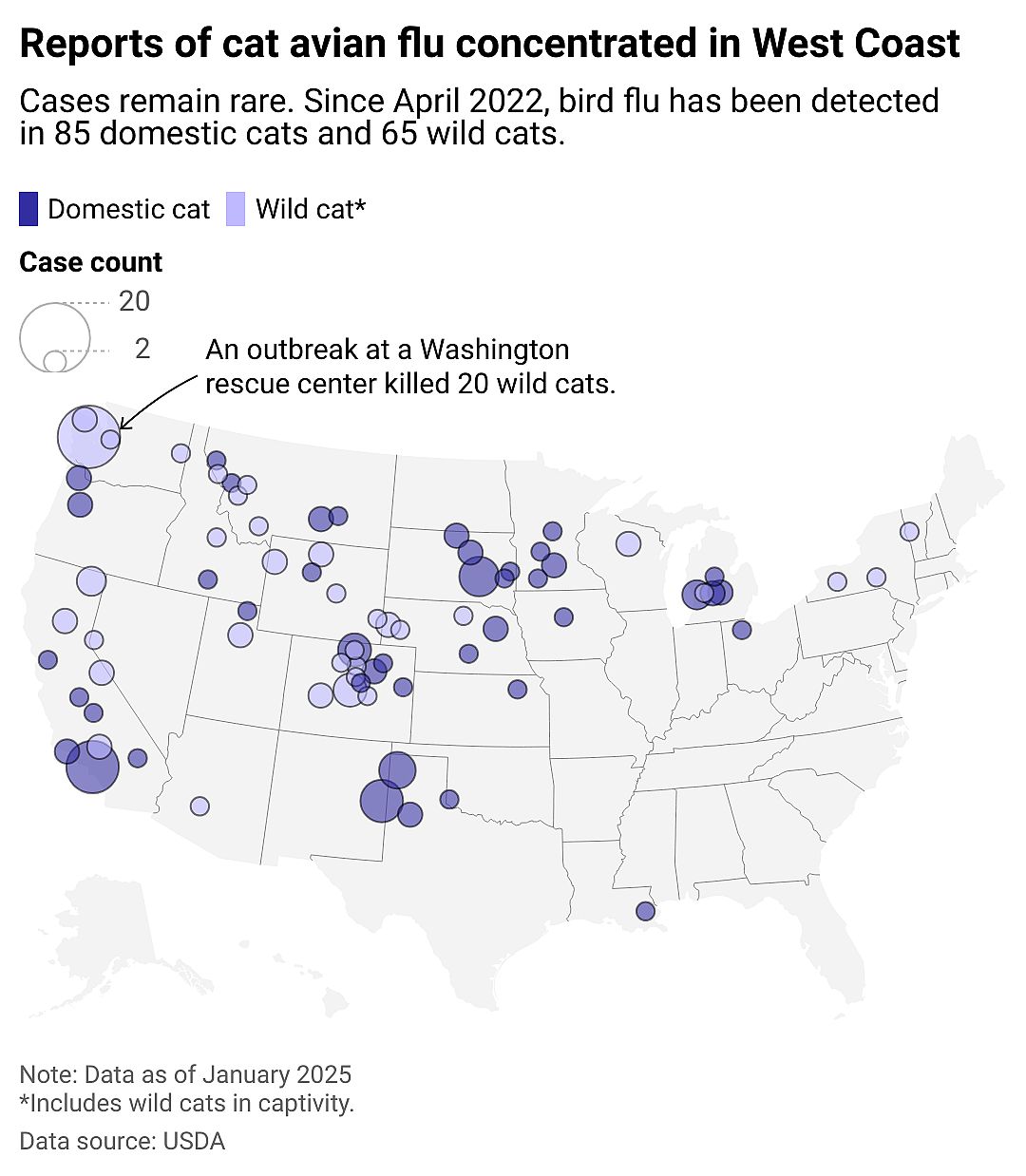
Researchers continue to learn more about the risks of bird flu in domestic and wild cats and how to mitigate infections. However, it seems most felines develop bird flu after consuming or interacting with wild birds or rodents or consuming raw food, particularly raw meat products, and unpasteurized milk and eggs.
So far, contaminated raw food products have caused illness in at least 13 domestic cats, prompting the voluntary recall of at least one product. In one household in Los Angeles, five indoor-only cats developed bird flu after consuming contaminated commercial raw cat food, of which four developed severe symptoms and two died. Five house cats also died after drinking contaminated milk meant for human consumption.
The Food and Drug Administration has said it is now actively investigating how H5N1 entered the pet food supply chain and requires pet food manufacturers to reassess pet food safety.
How can you tell if your cat has bird flu? Experts say to look for warning signs like fever, respiratory symptoms, lethargy, a loss of appetite, jaundice, red or inflamed eyes, and neurological signs including tremors or seizures.
While bird flu in domestic cats is still extremely rare, seek emergency care if you suspect your cat may have been exposed to bird flu or is experiencing symptoms. It's also wise to isolate potentially infected cats from other animals and immunocompromised humans.
Bird flu primarily spreads through bodily fluids like feces, urine, and saliva, which poses a risk to humans, who tend to cuddle or sleep with their fur babies. While experts don't think cat owners should be very concerned about transmission, they should still exercise caution.
While cats are typically considered "dead-end hosts" in terms of bird flu, meaning they are unable or unlikely to pass the disease to other animals, there have been a small number of recorded cases of bird flu transmission between cats. However, the culprit was a less infectious strain of the virus, H7N2. A veterinarian who came into close contact with the cats also contracted the virus. There are no confirmed cases of H5N1 moving from cats to humans during the current outbreak.
When it comes to protecting your beloved fur baby from bird flu, the experts are clear: Do not feed your cat raw food, whether it be commercially available food or raw meats, poultry, dairy products, or eggs. Stay updated on which pet foods or products have been recalled.
To reduce your kitty's risk of developing bird flu infections the American Veterinary Medical Association recommends keeping pets indoors and preventing their exposure to birds, other wild animals, livestock, and feral animals. The AVMA further suggests practicing strict hygiene measures if you work with or are around wild or farmed animals of any kind.