Jaromir Chalabala // Shutterstock
1 / 2High costs but high rewards
Azuara heard about the program from service members who had previously been deployed at the base. After she bonded with Fent, she submitted her application to bring the kitty home to the U.S.
"I was a little skeptical at the beginning, to be honest, because I was like, 'Oh, I don't know why would they do it for free,'" she said, "but I don't lose anything by just checking it out."
The "War Torn Pups & Cats" program costs nothing for service members—donors primarily fund it. In 2023, Paws of War raised over $4 million from contributions and grants.
After a soldier like Azuara applies, Paws of War volunteers and staff members all around the world team up to work on the logistics, exploring how possible it is to bring the pet to the United States. Dogs and cats need to see a qualified veterinarian for documentation and rabies vaccines before traveling internationally, but sometimes that vet is located hours away. The care can also vary in cost, depending on local currency and pricing.
"Recently we had a dog in Africa and we've done a few from bases there," Baumann said. "It literally takes a donkey cart, a boat, couple cars and then, usually a motorcycle, something that can go through a little bit of brush to get these the dogs or cats to the city where we can get them to a vet and start processing them."
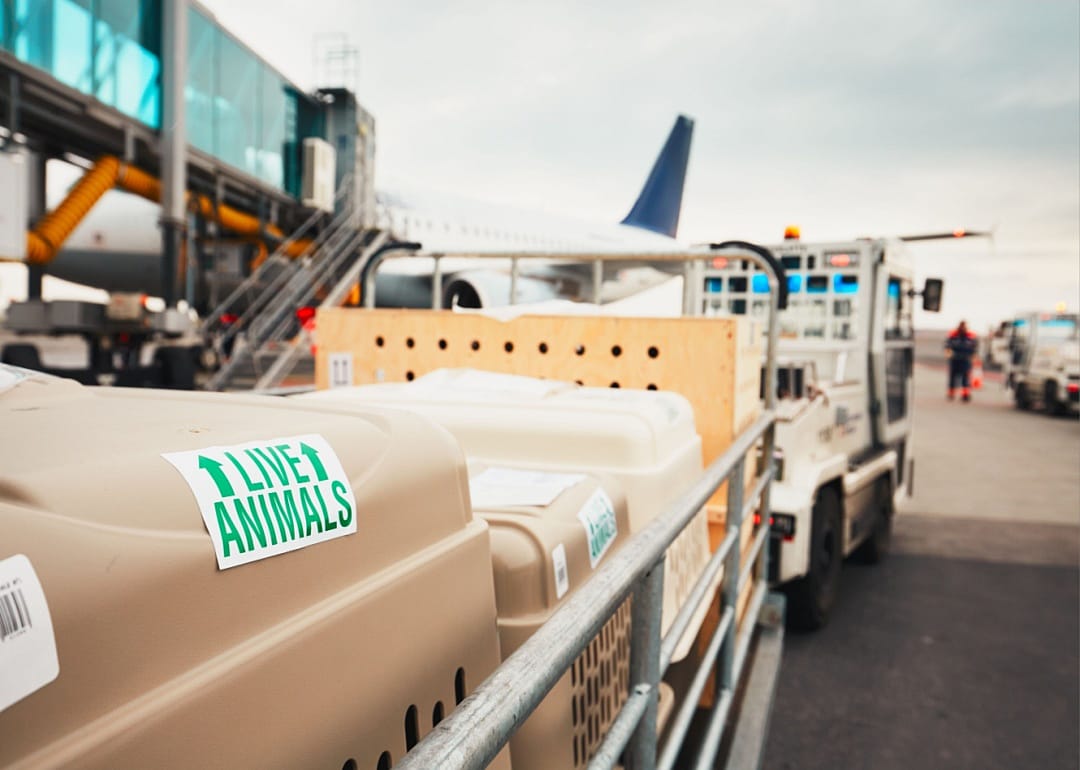
The most expensive part of the process is transporting animals to the U.S. It often involves flying them in a plane as cargo, which can cost around $4,000 or more. The pet also must enter the country at a government-authorized airport.
For instance, cats from other countries can enter the U.S. through several airports, but the CDC only allows dogs from high-risk rabies countries to enter through six, including John F. Kennedy International Airport in New York City and Los Angeles International Airport.