Kae Petrin for Chalkbeat
1 / 2Arizona Struggles With Election Translations for Native Languages, Mostly Done in Private
Over the years, courts in Arizona and elsewhere in the country have found that election officials haven't done enough for such voters and have ordered them to do more.
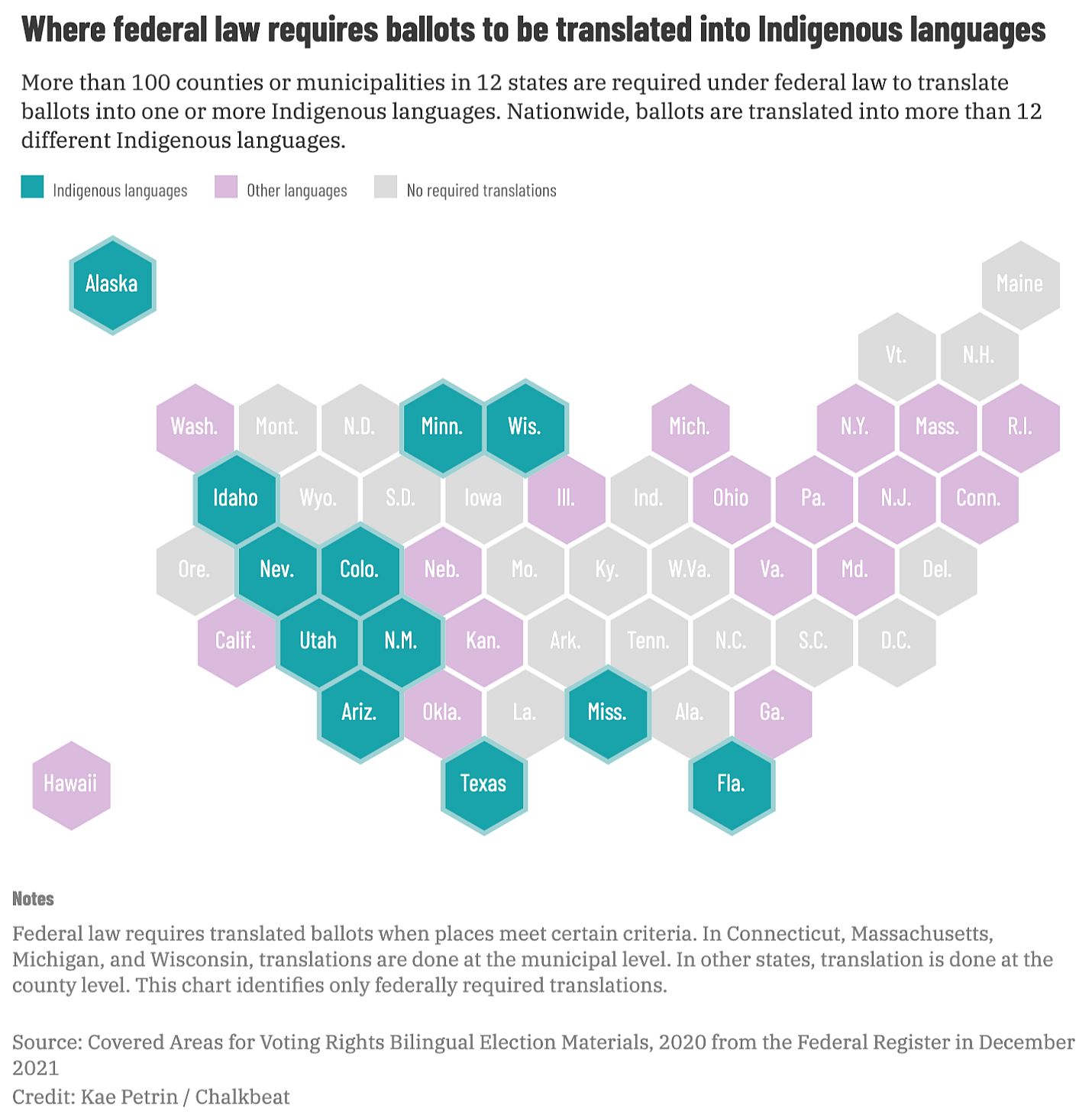
Multiple Arizona counties fall under the law, including seven counties subject to Native language requirements. Some counties are required to translate into multiple Native languages, including Navajo, Hopi, and Apache. Some exceptions have been granted to counties for Paiute and Pueblo translation requirements, officials said.
This year, the translation work in Arizona largely took place in private meetings, such as the Navajo gathering, held over two days at the Coconino County Elections Center.
The public's view of the translation process is limited. A Votebeat reporter accompanied by a videographer obtained advance permission from the Arizona Secretary of State's Office to sit in on the second day of the Navajo meeting, and were allowed to watch, after briefly being barred from attending.
The meeting provided a window into the complexity of the process, as well as the limits of Arizona's efforts to make elections fully accessible to Navajo speakers.
Navajo Vote is Pivotal in Arizona
Navajo-speaking voters are a closely watched group. High turnout from the Navajo Nation—which sweeps across the entire northeast portion of Arizona before stretching into Utah, Colorado, and New Mexico—has heavily influenced the outcome of some statewide elections. In 2020, Indigenous voters were a critical voting bloc that helped decide the presidential election in favor of Joe Biden in this swing state, and their choices could determine the fate of high-profile ballot measures this year.
Around 71,000 Arizonans of voting age speak Navajo, and about one in 10 of them aren't fluent in English, according to a Votebeat analysis of 2022 Census estimates.
Navajo voters who don't speak English may get less information this election than voters who do. A 2019 settlement agreement between the Arizona Secretary of State's Office and the Navajo Nation requires the office to use certified Navajo translators to "coordinate and make available" a translation of all text describing each proposition that is included within each election's publicity pamphlet, an English-language guide the secretary of state sends to all voters before each election.
The full text in that guide includes not only the text of the ballot measure as it appears on the ballot—which has to be very short, under state law—but also a full separate description of what a "yes" or "no" vote on the measure would mean. Those yes/no descriptions are also provided to voters in their mail ballot packet, or as a handout at the polls.
But attendees at the Navajo translation meeting discussed only the proposition text on the ballot, not the additional yes/no descriptions. Secretary of State's Office spokesperson JP Martin said the counties were provided a translation of the yes/no section. It's unclear whether voters will be provided with a uniform translation in the form of an audio recording.
Asked why the Navajo meetings were closed to the public, Martin wrote in an emailed response that it "minimized disruptions and allowed interpreters to focus on their work."
Leonard Gorman, the executive director of the Office of the Navajo Nation Human Rights Commission, who is Diné, the word used by Navajo people to describe themselves, said he has repeatedly found problems with the state translations over the years. He wasn't permitted to attend the Navajo translation meetings.
Navajo-speaking voters "will not understand what they are voting for" if the translation is flawed, Gorman said. "That is not what Section 203 is about."
The Navajo Nation Office of the President did not receive an invitation to the meeting, either, according to George Hardeen, a spokesperson.
Sensitivity Over Abortion Complicates Translation Work
This year, Arizona's Secretary of State's Office hired translators and helped develop uniform ballot translations for Spanish, Navajo, and Hopi, but not for Apache. The three counties that must translate into Apache will handle the requirement on their own.
The Navajo translation is supposed to be used to train bilingual poll workers on the reservation. An audio recording of the final translation is also available on the accessible voting device at each polling location, so voters can listen to it if they choose.
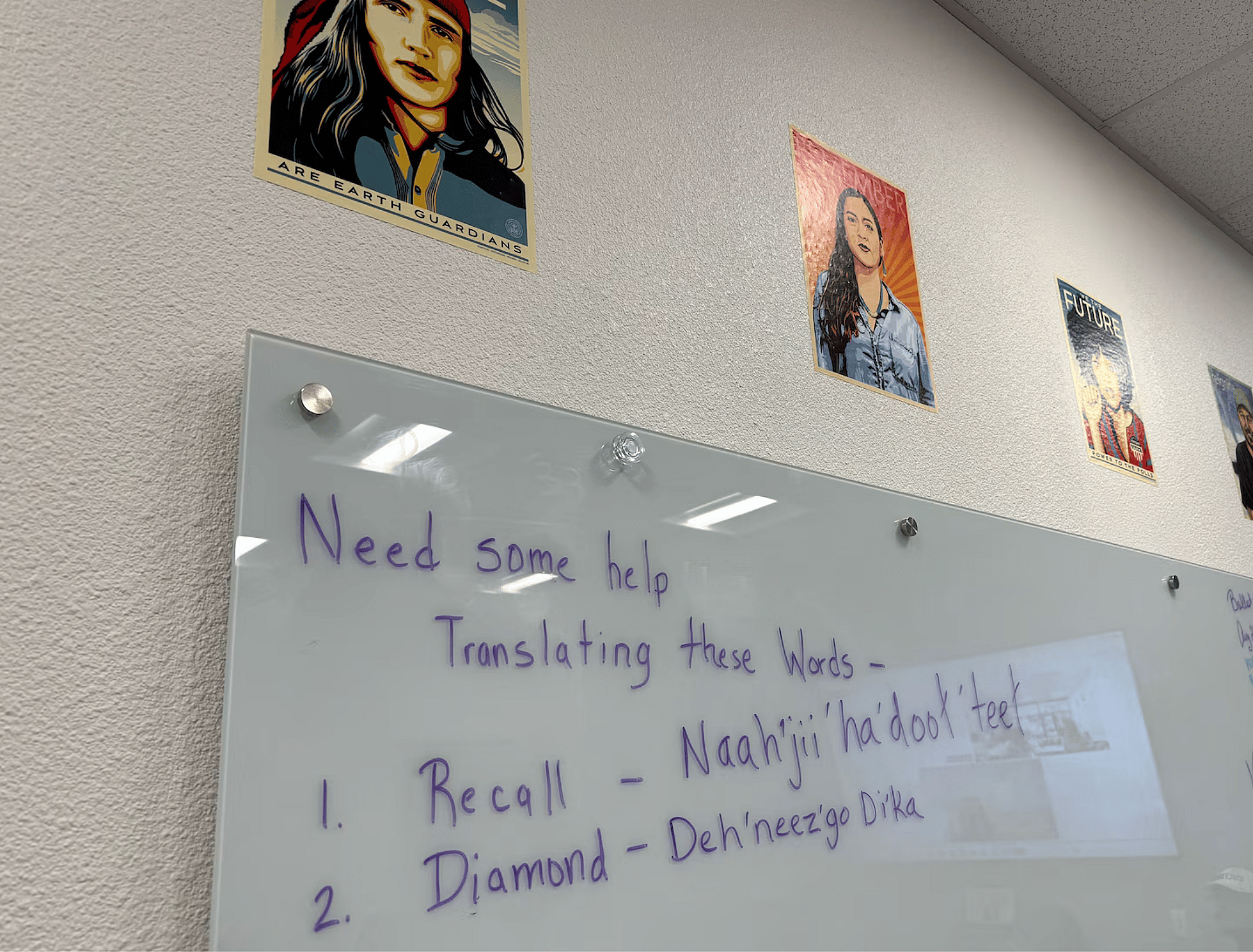
The careful conversations and sensitivity to language throughout the Navajo translation meeting hinted at the complications inherent in translating from English to Navajo. Translating one English word often requires creating a multi-word Navajo phrase that aims to capture its meaning. There are typically multiple ways to translate something, especially terms commonly used in elections.
The culturally sensitive topics on the ballot this year made agreeing on the proper Navajo translation even more complex, according to some of the county officials who participated.
Take Proposition 139, which would guarantee abortion rights for Arizona residents. Navajo culture traditionally does not approve of abortions, said Melvatha Chee, an assistant professor of linguistics at the University of New Mexico and director of its Navajo language program.
Some interpreters will intentionally soften language on topics such as abortion when translating into Navajo, in an effort to avoid offending anyone, Chee said. Chee, who is Diné and has helped translate ballots for New Mexico, but wasn't part of the Arizona discussions, said that could mislead voters about what the proposed change to state law would do.
Chee listened to a recording provided by Votebeat of the draft form of the Navajo translation of the abortion proposition discussed at the meeting. In it, the word "abortion," which doesn't have a direct counterpart in Navajo, was translated to awéé' t'óó átsą́ haal'eełjí.
Chee said she was concerned Navajo voters could believe the phrase referred to a miscarriage rather than an abortion.
"So this word, átsą́ haal'eełjí, is flushed out of the belly, like it flowed out like liquid. That is what that means. And that describes a miscarriage," Chee said. "That is not an abortion. An abortion is, someone goes in there, and they remove a fetus. So, right away, you can tell that cultural sensitivity, that cultural aspect of that, is already showing up in the first four words of this translation."
She said changing the verb construction would better convey the idea that a deliberate action was causing the fetus to come out.
She said that she frequently hears from Navajo interpreters that they don't want to use certain language.
Karen Shupla, who is Hopi and is the Coconino County Recorder's Office Hopi translator, said her own personal view on abortion meant she had a "mental block" as she tried to participate in the Navajo translation meeting, and she had to set aside her own feelings.
"I had to be open," she said. "I can't be personal on these propositions."
Isaura Nez, Navajo County's voter outreach coordinator, who is Diné, said there were also sensitive questions when translating Proposition 313, which would change the punishment for child sex trafficking. She said she didn't believe the description of sex trafficking should use the word for rape.
"We had to go back and revisit that one," she said. "We went round and round with it, because saying rape was a lot harsher, I thought."