Votebeat
1 / 3Survey Finds a Mix of Pride and Frustration
Paul Gronke, EVIC director and professor of political science at Reed College, said the center began conducting the survey in 2018, hoping to learn more about the field and the people in it, rather than just about how Americans were casting ballots. Until that point, said Gronke, surveys treated "administrators as if they were just cogs in a system."
In 2020, as the pandemic worsened and Trump intensified false rhetoric against election officials, the survey became a valuable window for political scientists and the media into how election administrators experienced that shift, said Gronke.
Gronke and Manson say they've uncovered a strikingly complex picture over the years.
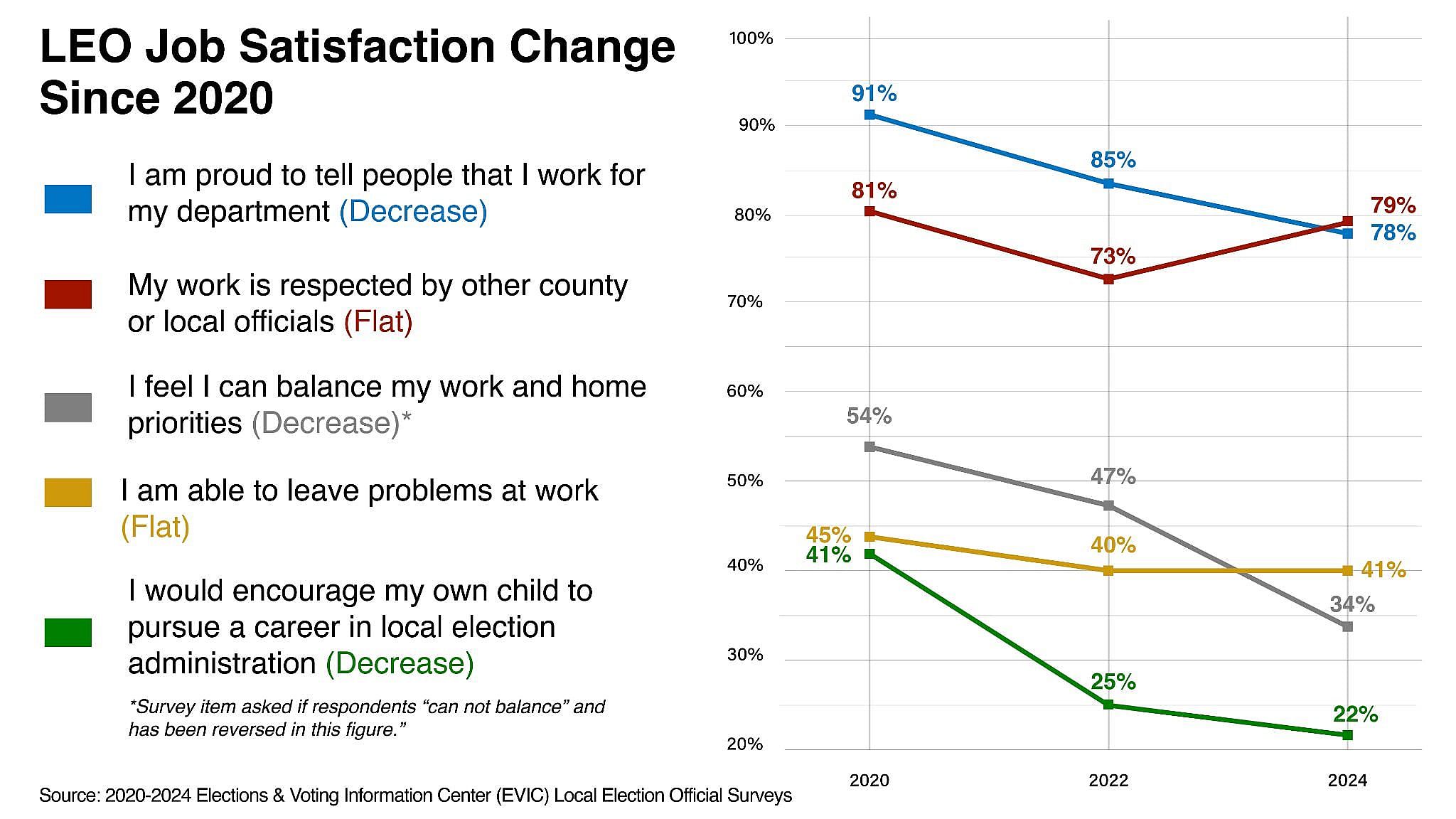
While election administrators express confidence in their own abilities and say they personally enjoy the work, they struggle to leave their problems at the office.
"While many of us in election administration view our jobs as incredibly important, and we value the choices we have made in our lives, we look at the wasteland that is our lives and we think, 'We wouldn't want this for our kids,' because election administration is so hard," Judd Choate, Colorado's election director, told Votebeat.
Choate—who teaches in the election administration program at the University of Minnesota and has helped craft questions for the survey over the years—said his own 17-year-old daughter has become more interested in elections, but still has no interest in doing the same job.
"I'm perfectly fine with that," he said. "Please, become a doctor. Become a lawyer. Be a mathematician. Don't do this. One hundred percent, that is the way I view this job."
Training Sessions Feel 'Like Group Therapy'
Melissa Kono is the part-time clerk for Burnside, a 500-person town in western Wisconsin. There, clerks are elected members of the town board. It's a part time job, paying only $6,000 a year. Kono is also a professor at the University of Wisconsin-Madison, where she teaches courses on community resource development.
For her, the combination makes sense—her professorship pays the bills, and the two jobs align nicely. As part of her work for the university, she travels around the state training other election administrators. But she understands that for many others, the bad is starting to outweigh the good.
"The pandemic and the volume of absentee ballot requests coupled with unnecessary criticism is what has led to this fatigue—just saying, 'I'm done with this,'" she told Votebeat. "People who I never thought would give up have left their positions because of the pressure and criticism and dealing with irrational people."
All of the anxiety and pressure have led some of her training sessions to feel "like group therapy," she said.
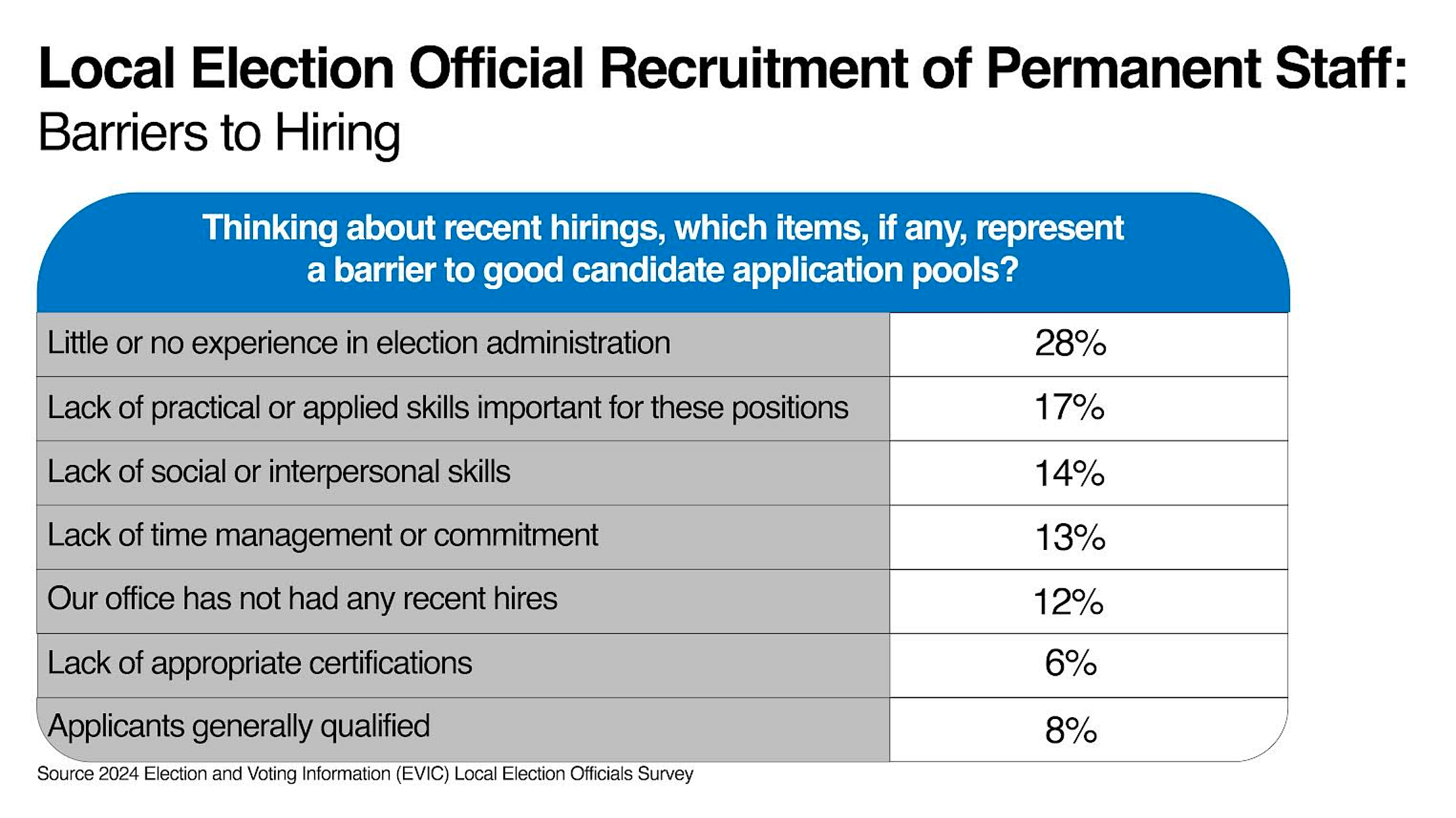
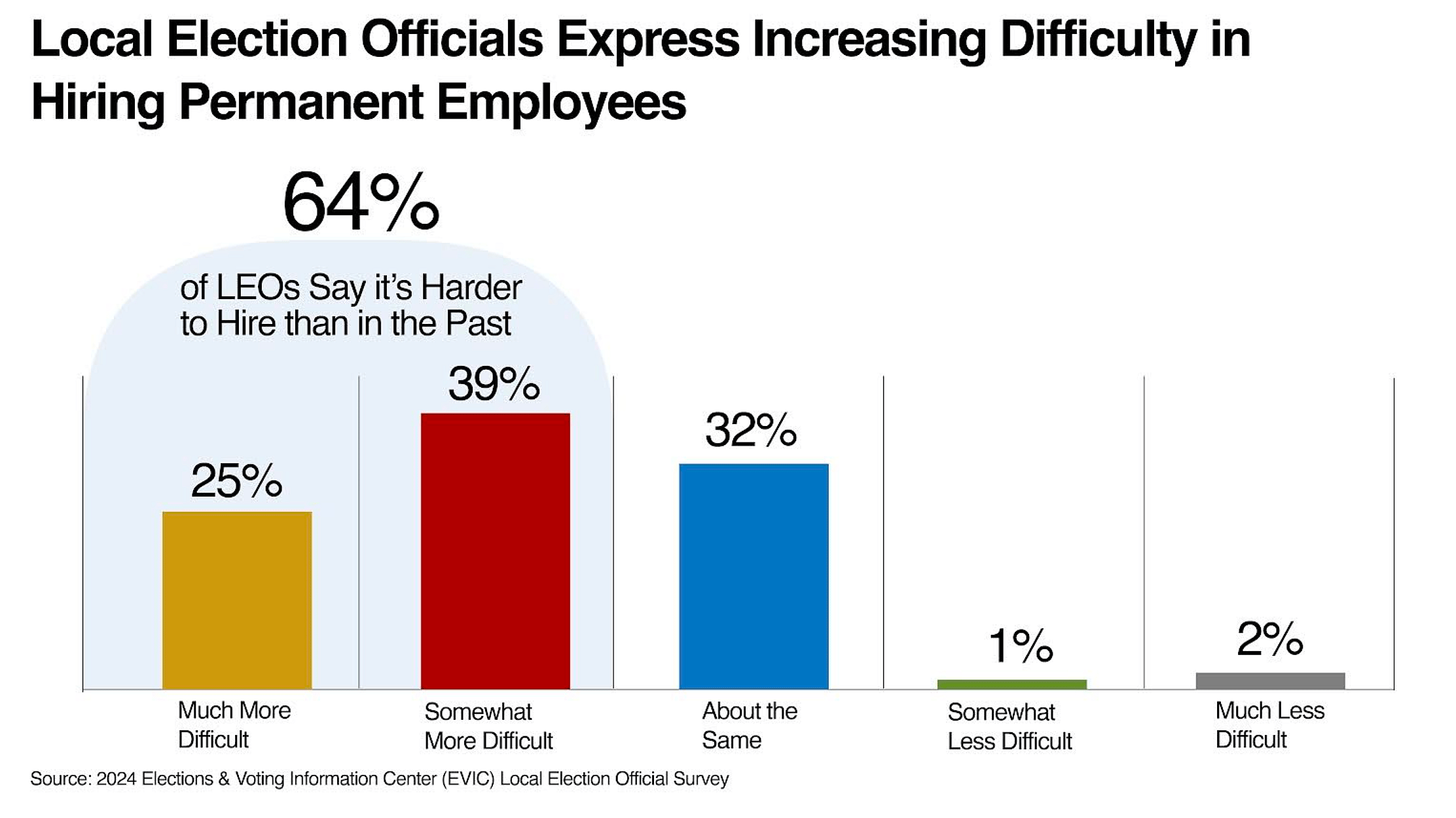
The survey also shows that election officials in small counties and large counties have very different experiences. In less-populated areas, officials are far more likely to focus on elections for only a small part of the year, while large cities and counties typically have full-time staff dedicated only to elections. Rural areas also have less of a problem recruiting poll workers.
Perhaps the most striking difference is the impact of the spread of false information. Only about 20% of administrators in jurisdictions of under 5,000 voters reported that misinformation was a serious problem. In jurisdictions of more than 100,000 voters, nearly half report that it is.
Kono said that because Burnside, Wisconsin, has so few voters, they are provided "white glove" service. She can interact individually with anyone who is experiencing a problem—whether that's cynicism over election integrity or a missing absentee ballot.
"In a rural area, we have the advantage of knowing our neighbors," she said.
By contrast, Heider Garcia in Dallas County, Texas, oversees voting for more than 1.4 million people. He is paid well for his job, which focuses entirely on voting and elections. His ability to pay his full-time staff a livable wage also makes it easier for him to attract candidates from other fields, which medium and small jurisdictions struggle to do.