Natalia Contreras for Votebeat
1 / 2All of the numbers didn't add up
But not everyone feels that way. Scott Netherland, the election judge for Precinct 6, turned in all of the necessary paperwork to the elections office just before midnight on election night, believing it all checked out. When he woke up the next day, he decided to double-check the results. He told Votebeat that 197 voters had cast ballots at his precinct on election day. For each race on the ballot, the total number of ballots cast should have totaled to 197, including, for example, instances when a voter skipped a race. But in one race, he'd reported only 160 votes. In another, 157. As he went down the list, he noticed he had 207 votes reported for a third race.
"My heart sank," Netherland said. He'd miscounted the totals in seven separate races.
Netherland said he immediately contacted Campbell, then rushed to the elections office to review tally sheets. In doing so, he realized that multiple other precincts also had reported clearly inaccurate totals.
If he hadn't done that, "we'd be still sitting on mistakes," Netherland, who's been working elections in Gillespie for more than a decade and did not support the hand count effort, told Votebeat.
Netherland said he still isn't confident the election results are accurate, based on the errors that he and others have found. On March 14, Netherland said the Republican Party in Gillespie has introduced human error into the election process with the hand count.
"We took something that worked and now broke it," Netherland said. "We failed to guard the purity of the election with this hand count. What we just did is evidence that this hand count was not accurate."
Other Republicans continue to tout the effort as a success.
One of them was David Treibs, a member of the Fredericksburg Tea Party who helped lead the effort to hand count. In a video interview posted on a social media platform created by Mike Lindell — a well-known election conspiracy theorist and the CEO of bedding company MyPillow – Treibs acknowledged he'd made errors but said they weren't a problem.
"So there were two ballots, and I just didn't add them up. So I would have had to add 450 and two, and it would have been 452 and I didn't. I just forgot to fill it in," Treibs said in the video posted just after the election. "So I don't really think that's something that's going to shut down the election and it's like, 'oh my gosh, he didn't add 450 and two and come up with 452 and now that means the whole election was a failure.' Well, that's ridiculous."
A long weekend reconciling errors
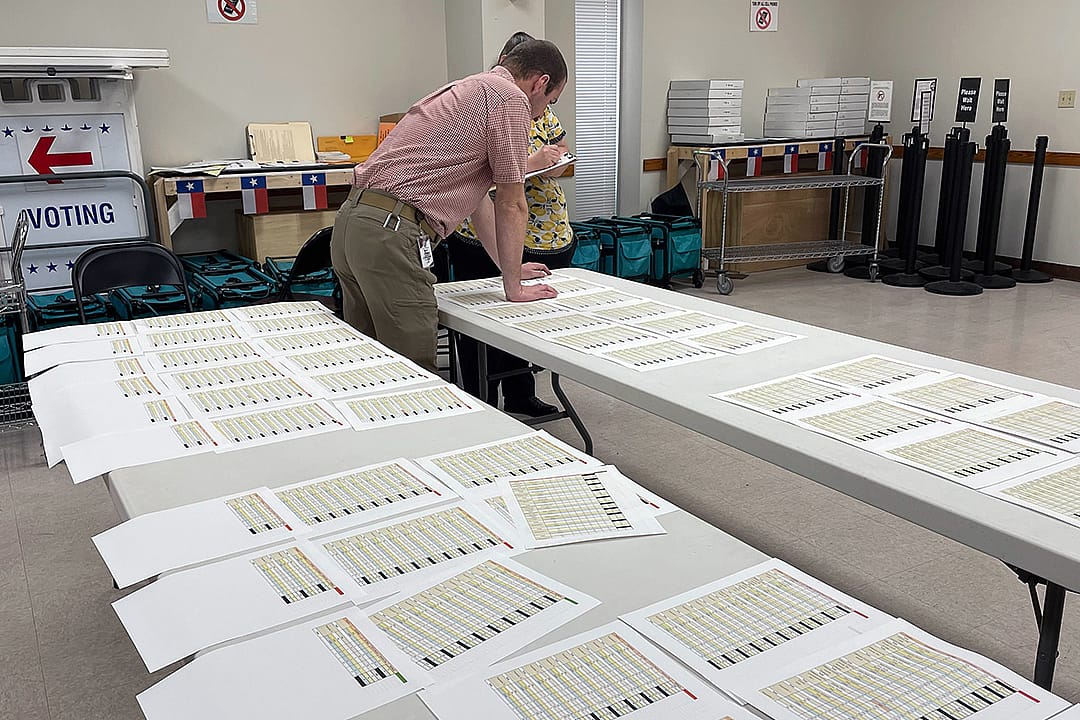
For his part, Campbell said he spent all weekend before the canvass going over tally sheets and double-checking vote totals on documents called precinct return sheets — reconciliation forms that election workers fill out with the number of votes cast for each race on election day. He repeatedly found errors. All but one of the county's 13 Republican precincts had reported incorrect totals on the official reconciliation forms.
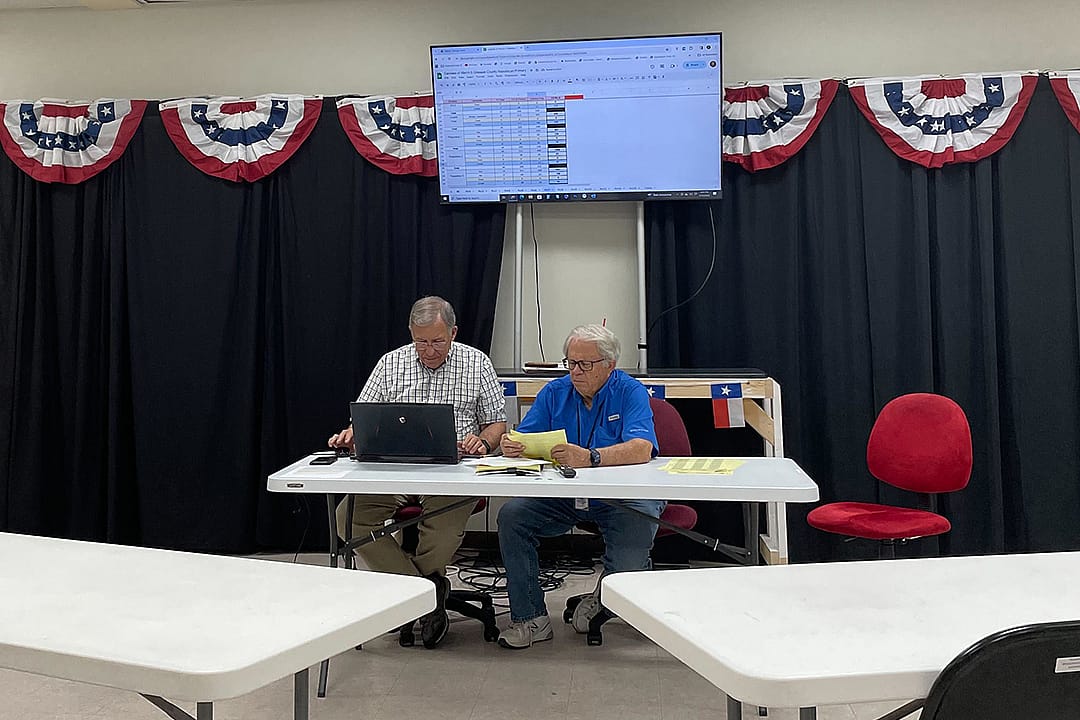
Campbell, by Texas law, is in charge of the GOP primary election in the county and responsible for attesting that the results are correct. He said he put together a spreadsheet with all the numbers from each precinct and each race. He consulted with the Secretary of State's Office and local election officials. He highlighted the errors he found in red and sent the spreadsheet around to the precinct judges, telling them they needed to correct the errors at the canvass.
On March 14, during the election canvass — the official examination of votes cast in an election — all of the precinct judges, who supervised each polling place, gathered at the election office to correct their errors. One by one, they called out the correct totals.
According to the precinct return sheets from election night obtained by Votebeat, Precinct 2 and Precinct 6 — Netherland's precinct — had the most errors with inaccurate vote totals reported in seven races. Precinct 12 reported errors in vote totals for six races. Precinct 9 was the only one with no reported errors.
Some judges quickly explained how errors happened during the canvass, reasons ranging from "poor penmanship" that was hard to read, to accidentally writing the wrong numbers, or miscalculations.
The short public meeting lasted around 30 minutes. After their mistakes were resolved and results were certified, some clapped and said, "We did it!" Soon after, all the precinct judges except for one went home. Campbell and the Gillespie County elections staff stayed behind to begin manually entering the official results into the state's reporting system.
That's when Campbell found yet another error, forcing him to call the early voting ballot board chair back to the elections office for another round of correction.
After that, entering the results in the state system posed yet another challenge. When ballots are scanned using voting equipment and software, a report of the totals is created in the same format the state uses. The state requires those results be manually entered, separated by candidate and proposition totals for the day of the election, early voting, and mail ballots. But in his spreadsheet, Campbell only had those totals broken out by candidate and propositions per precinct.