Today's Homeowner
1 / 7Main Findings
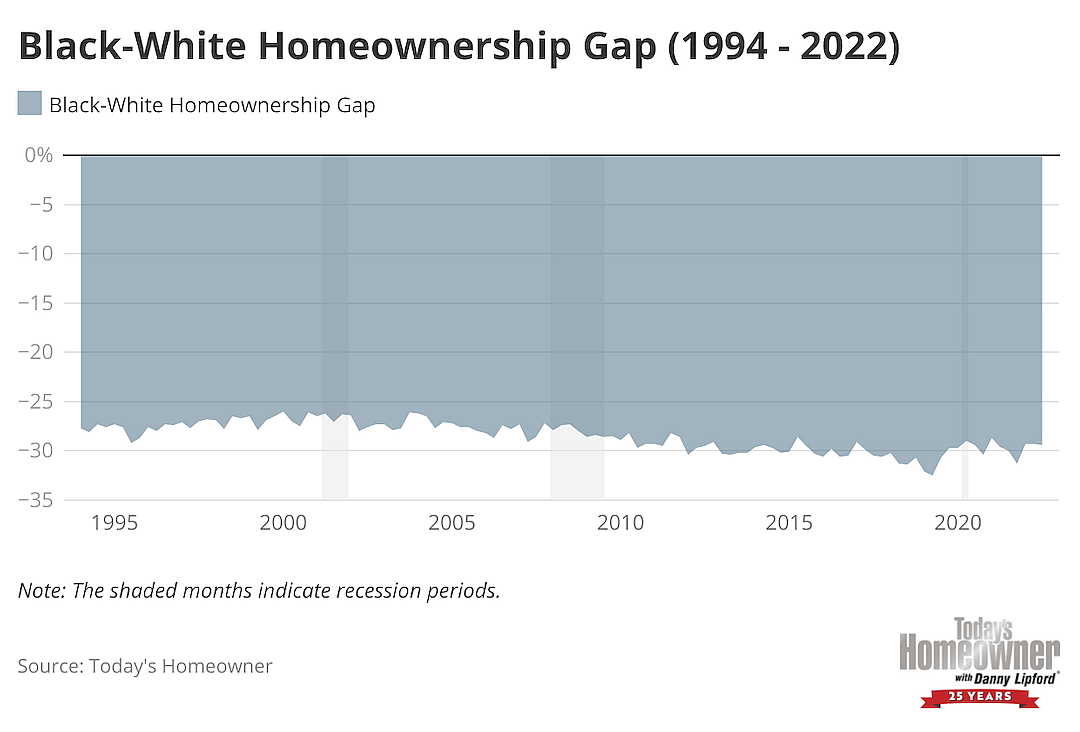
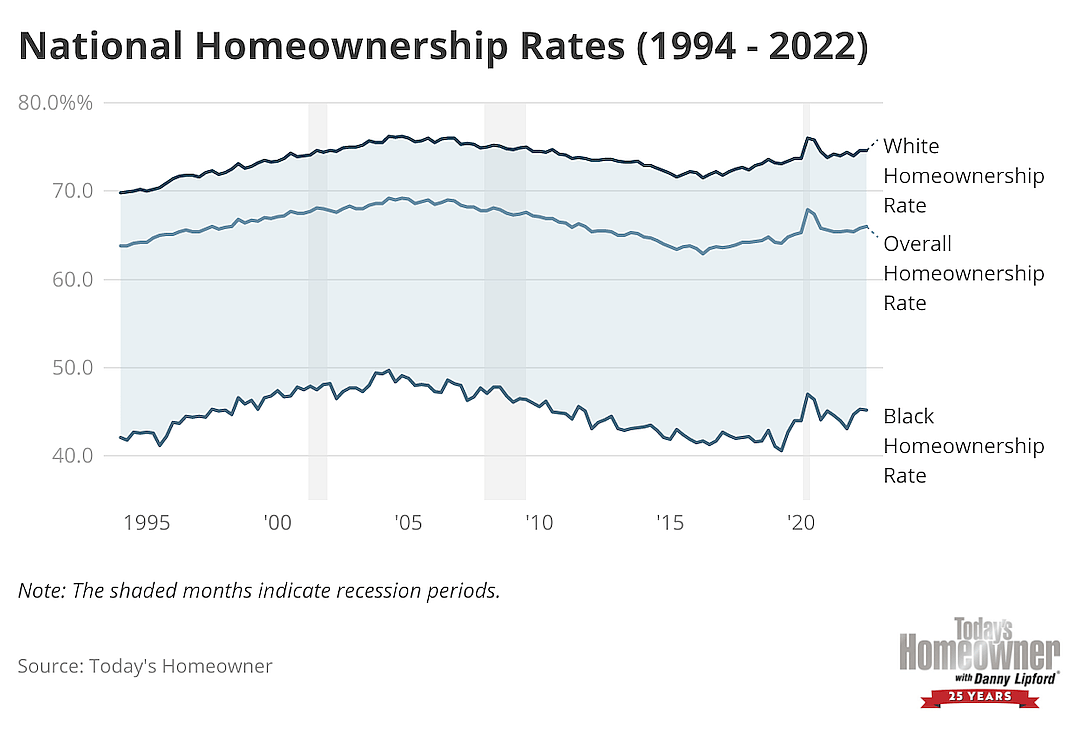
- Since 1994, the gap between Black and white homeownership rates worsened by over two percentage points. Most of this has occurred in the last decade – between 2010 and 2021, the gap grew by 1.5 percentage points.
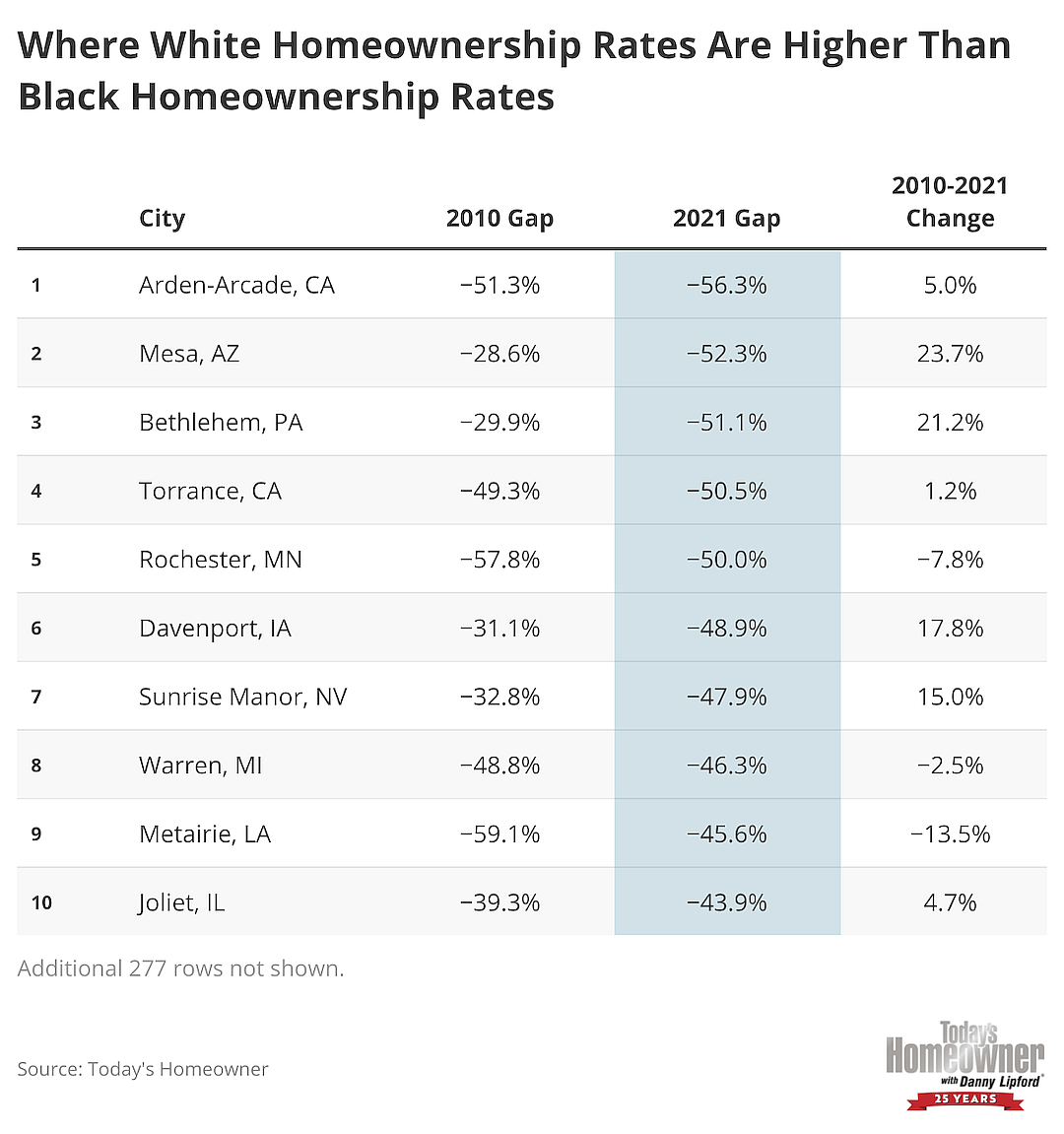
- 98% of cities still have a gap between Black and white homeownership. Arden-Arcade, CA; Mesa, AZ; Bethlehem, PA; Torrance, CA; and Rochester, MN have the widest gaps.
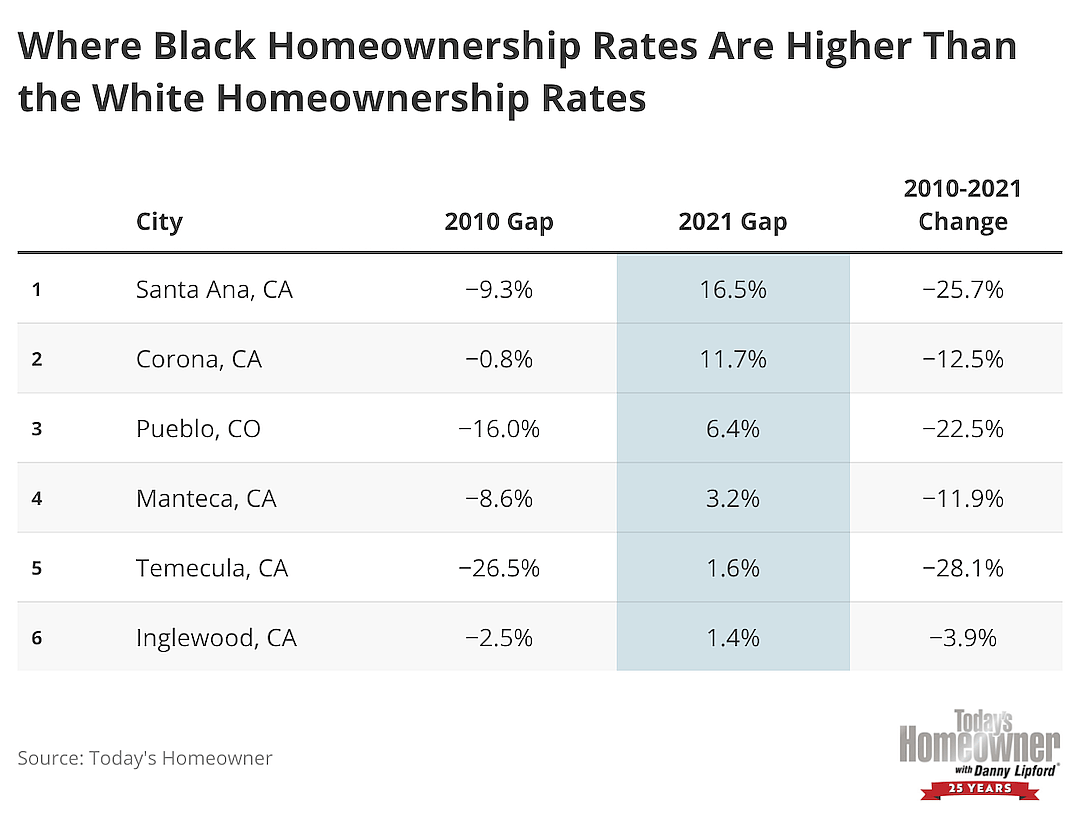
- A handful of Western cities have gaps in the opposite direction, with higher homeownership rates among Black residents than white ones. They are Santa Ana, Corona, Manteca, Temecula, and Inglewood, CA, and Pueblo, CO.
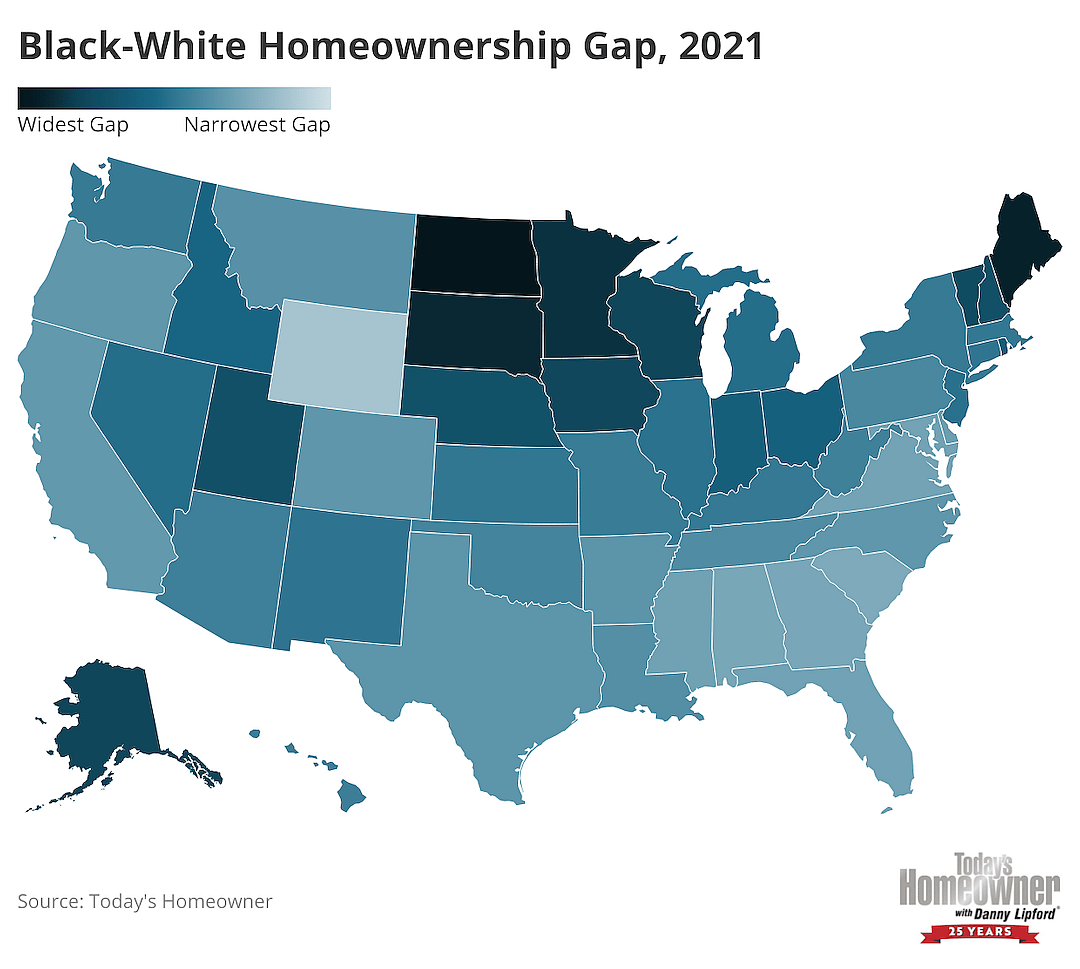
- States in the South had some of the narrowest gaps, including South Carolina, Georgia, and Alabama. DC has the smallest gap between Black and white homeownership rates at about half of the national average gap.
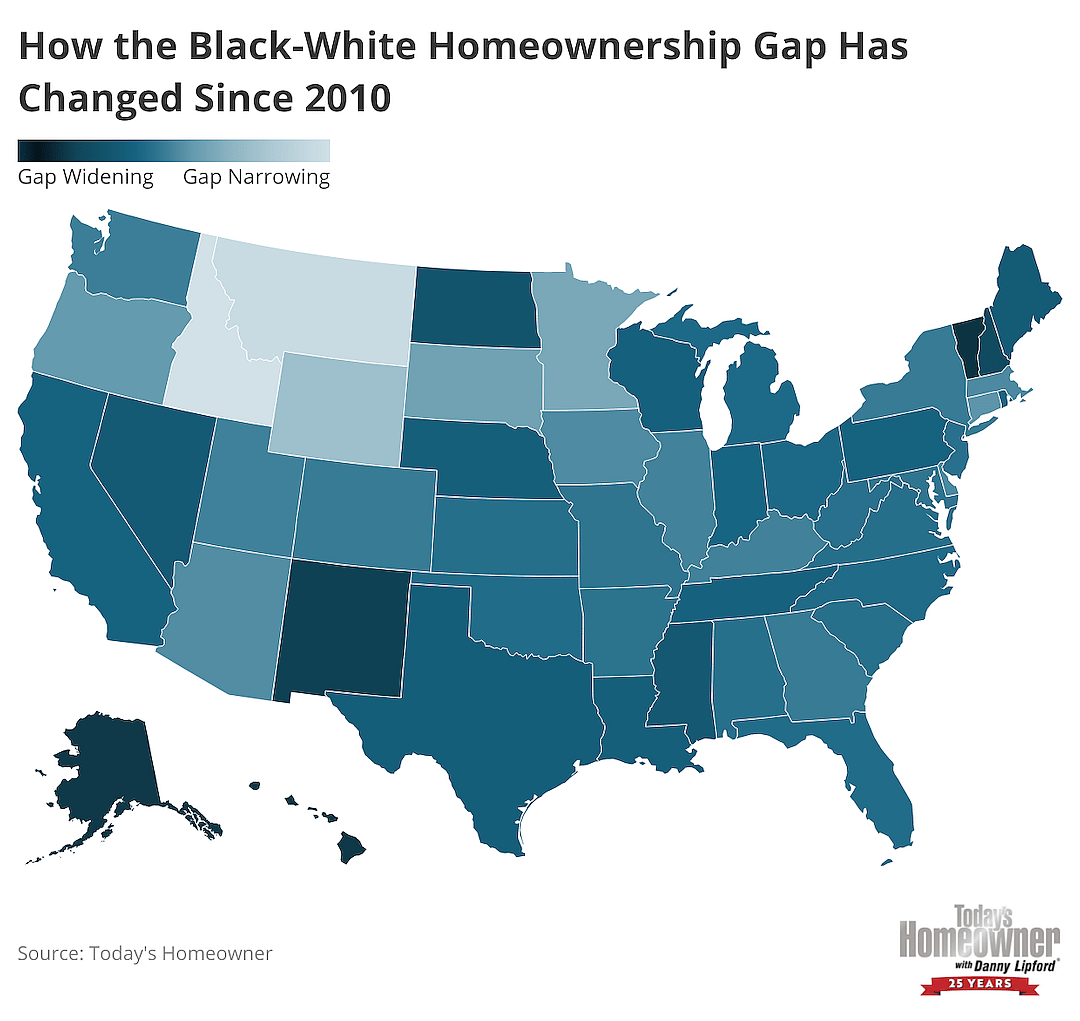
- Midwestern states had the biggest gaps: North Dakota, South Dakota, Minnesota, and Wisconsin have some of the widest gaps in 2021. However, both Minnesota and South Dakota have improved their gaps since 2010.
- Most states saw the Black-white homeownership gap worsen between 2010 and 2021. Vermont, Hawaii, Alaska, New Mexico, and New Hampshire all saw their gap grow by about 10 percentage points or more.
- Only 15 states narrowed their gap over that time period – the Rocky Mountain states of Idaho, Montana, and Wyoming led the way with double-digit reductions.