Spokeo
1 / 2What the most and least expensive places have in common
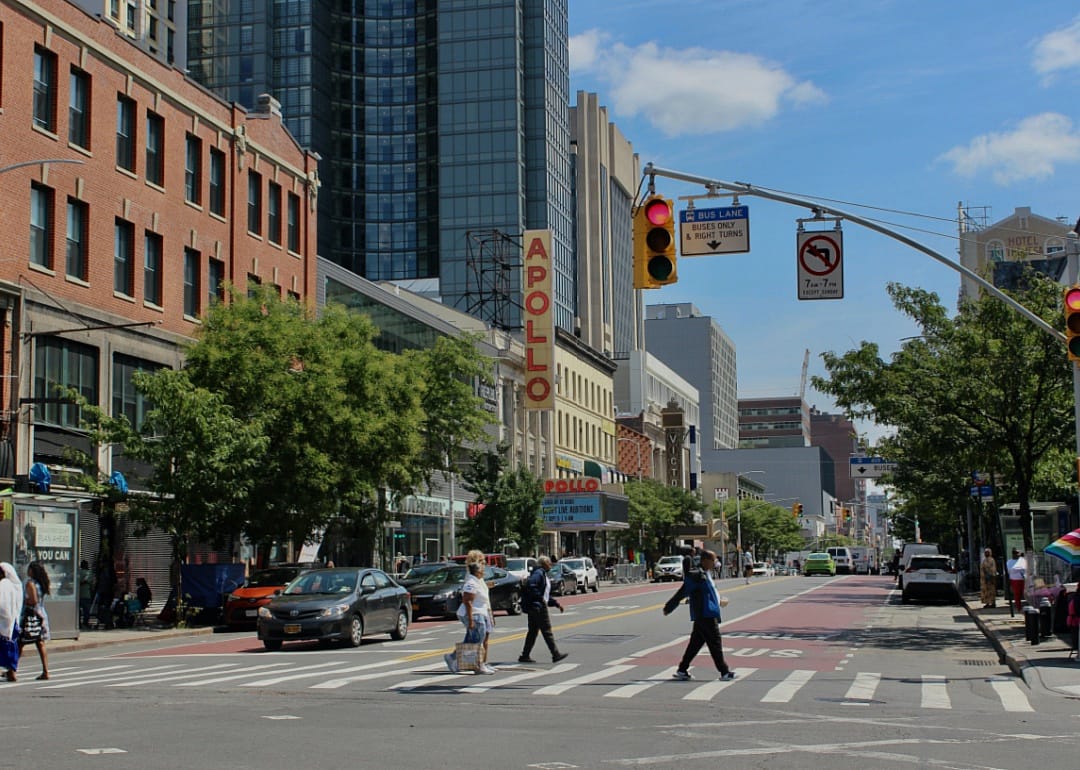
These days, you can't walk around a major city without entering an acronymized neighborhood. Like Oakland's NOBE, Seattle has SoDo, and Miami has SoBe. There's LoDo in Denver, SoWa in Boston, and NuLu in Louisville, Kentucky—and as for New York City, there are too many to count. Still, plenty of other rebrands and renaming conventions have impacted the perception of urban districts, neighborhoods, and even the streets inside them.
In 2015, Zillow surveyed how property values correspond to the street names they're on. As summarized by Business Insider, street names can determine "whether a neighborhood is old or new, rural or downtown and, often, expensive or cheap." It found that, outside of a few cities, on average, homes on named streets are 2% more valuable than those on numbered streets. Additionally, thanks to an analysis of Census Bureau data by Cinch, addresses that "evoked the beach or bodies of water also had high price tags." The average home price for streets with words like "Bayshore," "Island," and "Ocean" were usually priced around $2 million, $1.9 million, and $1.7 million, respectively.
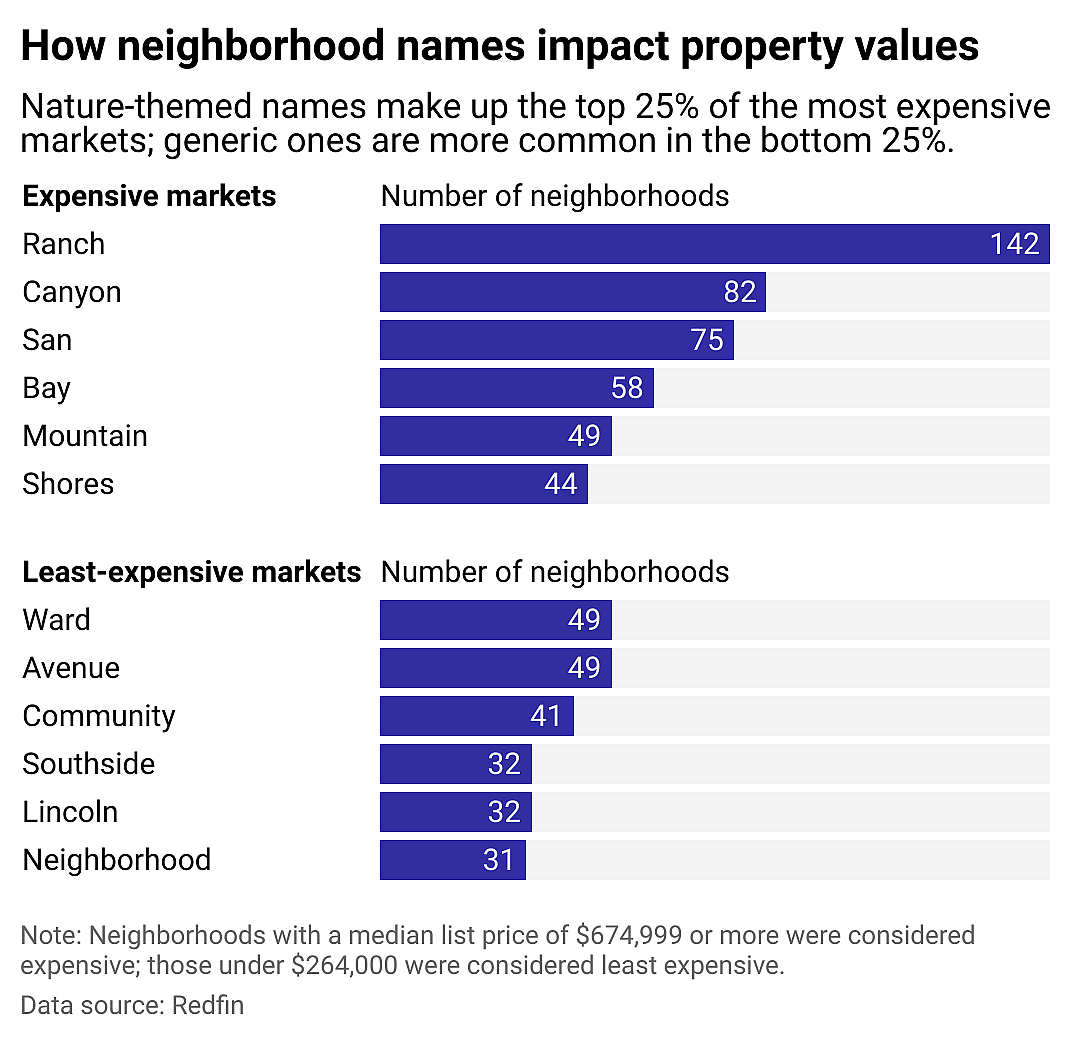
There are similar conclusions for neighborhood names. An analysis of Redfin data revealed that areas with names associated with nature—Ranch, Canyon, Mountain—comprise the top 25% of the most expensive real estate markets. You can see a clear economic difference between neighborhoods with those kinds of names (the existing homes in "Hope Ranch" in Santa Barbara, California, for example, tend to start at $3 million or more) and more generic-sounding neighborhoods, like Chicago's South Side, which has high poverty rates, specifically in areas with dense Black and Brown populations, highlighting a stark socioeconomic divided.
In addition to names, climate change can also impact city neighborhoods' makeup and property values. High-ground and storm-resistant communities in New Orleans, for example, became much more valuable (and therefore more expensive) after Hurricane Katrina. As a result of increased property taxes, one predominantly Black working-class tract in the Irish Channel neighborhood went from 74% Black in 2000 to 71% white in 2019.
However, home ownership costs can still rise in areas more prone to climate disaster, thanks to skyrocketing homeowner insurance. "In climate-vulnerable areas, homes are becoming nearly uninsurable because of the high risk of environmental disaster, whether floods, fires, or hurricanes," Fagundes said. "While the costs are highest for those in acutely climate-vulnerable areas because insurance is based on risk pooling, all owners' premiums are increasing as a result of this trend."