Truck Parking Club
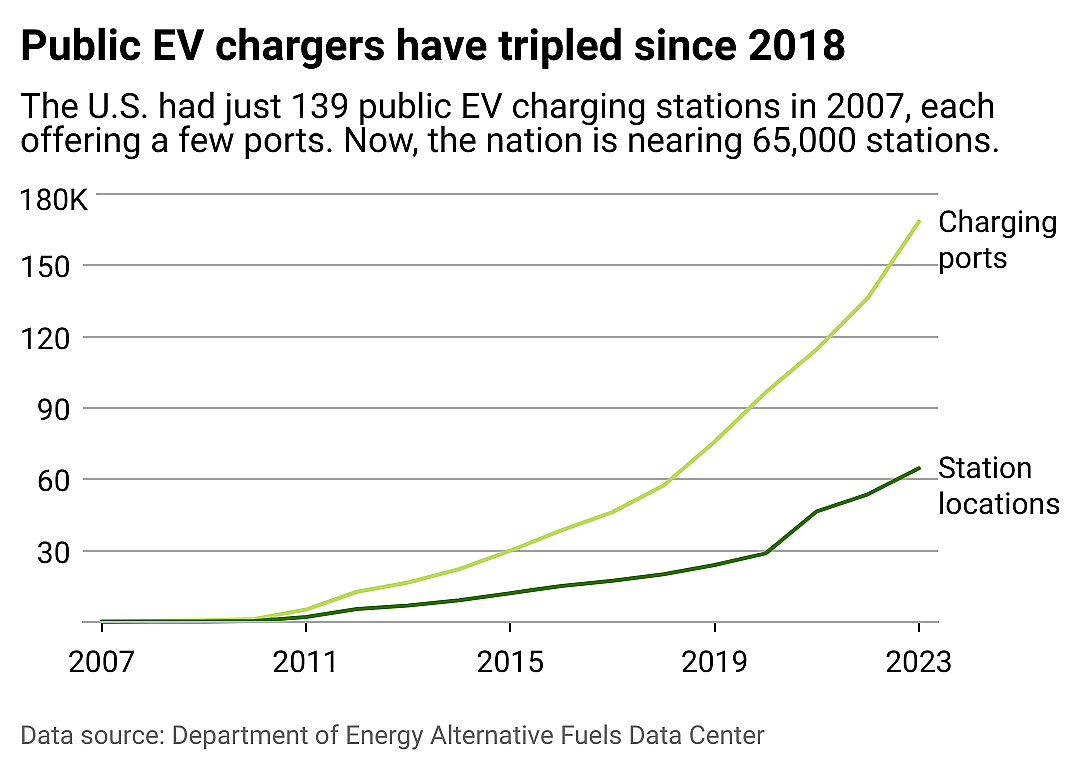
1 / 3EV infrastructure grows exponentially
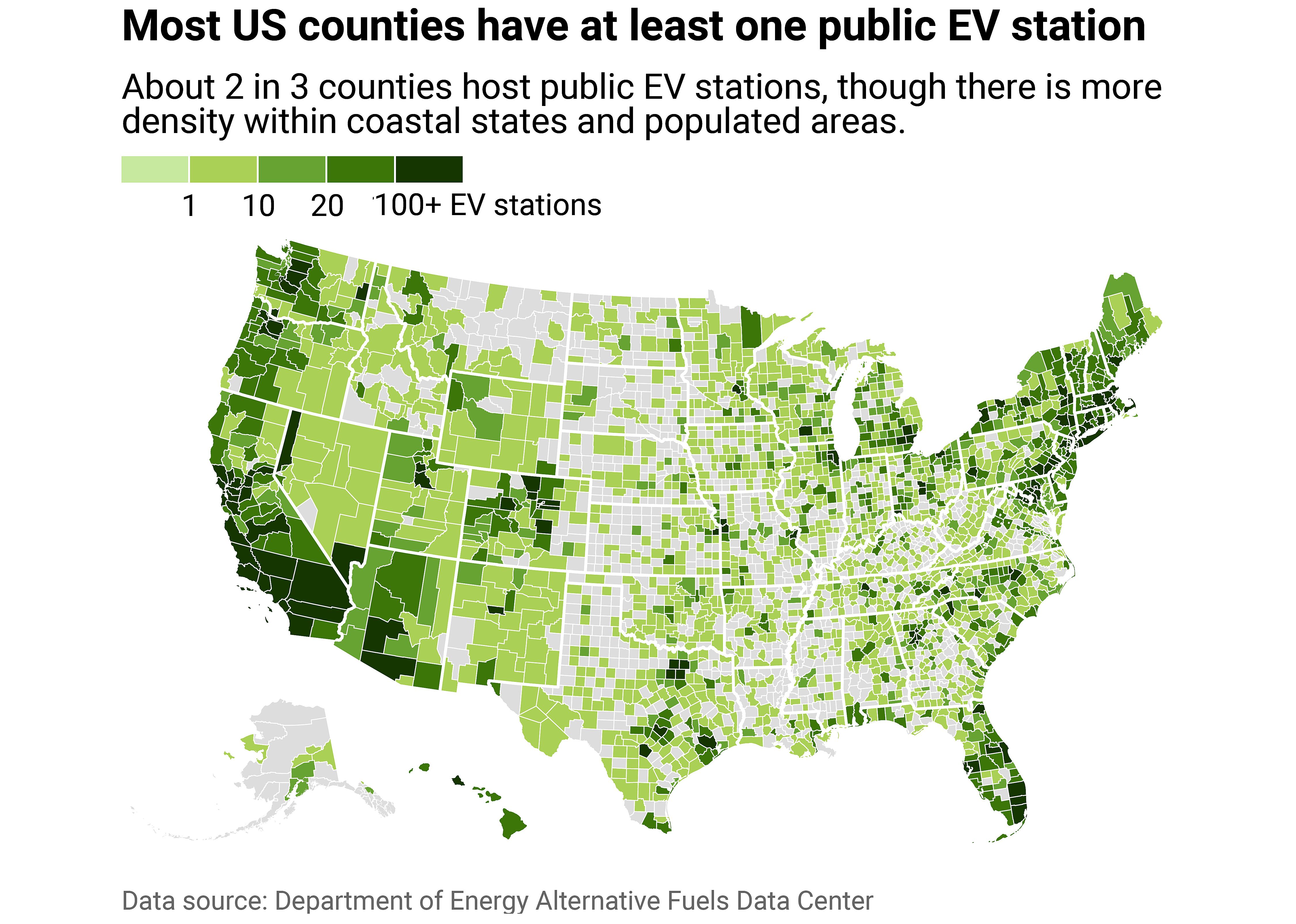
While most EV owners will predominantly charge their vehicles at home, public charging can save them in a pinch. At the same time, the presence of public chargers generates positive opinions of EVs among those who live nearby, Pew Research polling shows.
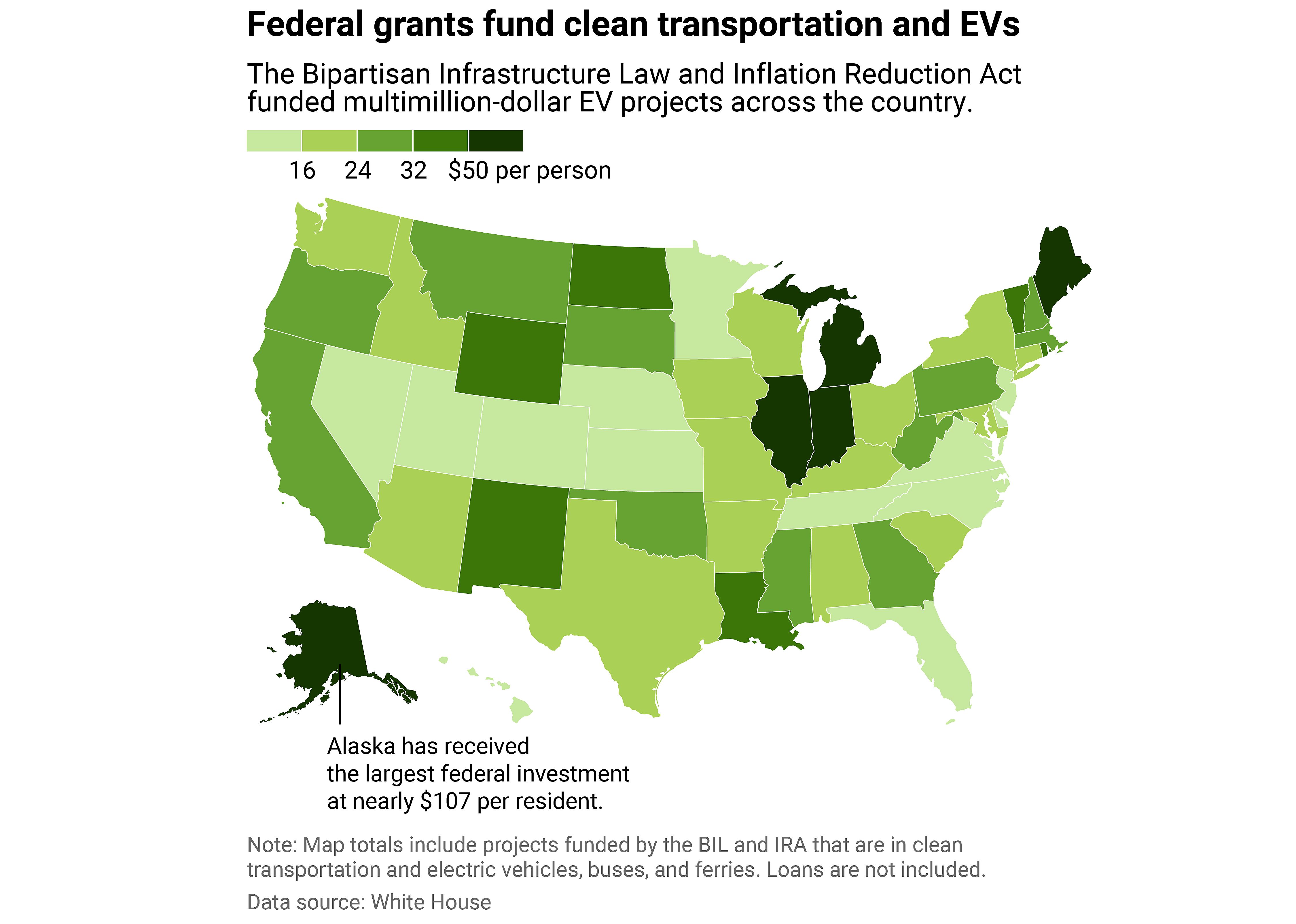
The biggest year for new public EV stations was 2021, when more than 17,700 public stations were added to the national footprint. That was the same year the Bipartisan Infrastructure Law provided $7.5 billion for states and communities to build out their charging infrastructure. However, the first BIL-funded EV charger didn't break ground until 2023, Politico reports.
Currently, much of the U.S. public EV infrastructure is privately owned—largely by EV market leader Tesla. Of EV stations mapped in the alternative fuels database, most didn't have owner information. Those that did mostly listed private ownership. Of 22,000 public fast chargers in the U.S. in 2022, nearly 3 in 5 were Tesla superchargers, according to the International Energy Agency's 2022 Global EV outlook.
EV companies have incentive to build out public infrastructure, as accessibility is a major draw for potential customers. Despite a slow start to government projects, other federal efforts have incentivized these expansions, such as IRA-funded tax credits for individuals and businesses to install EV chargers in certain areas.