Thatch
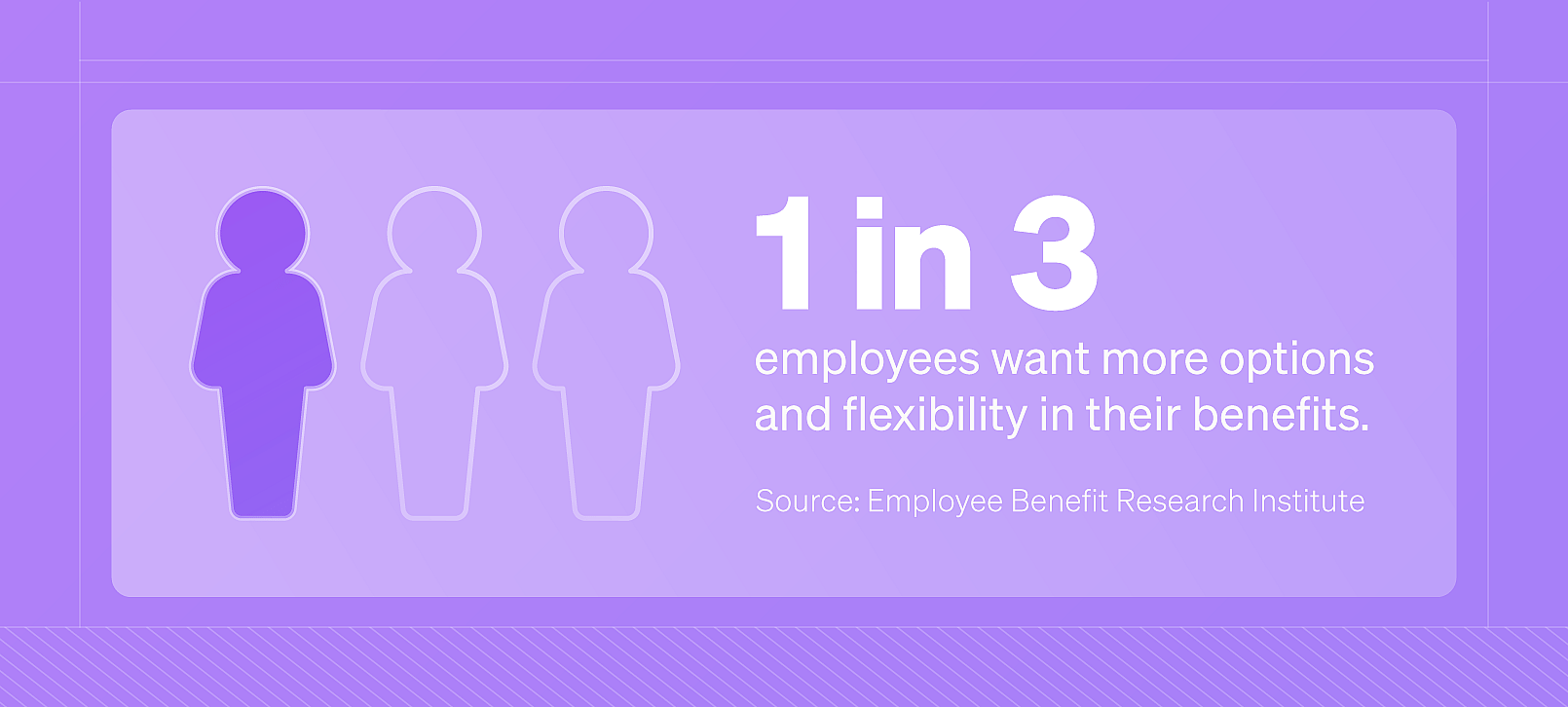
1 / 2Infographic showing percentage of people who want more options in benefits.
Some of the top health insurance alternatives for small businesses include Individual Coverage Health Reimbursement Arrangements (ICHRAs), health sharing programs, short-term health insurance plans, direct primary care (DPC), professional employer organizations (PEOs) insurance, and supplemental insurance plans.
Below, we'll go into more detail about each of these personal health insurance options.
1. Individual Coverage Health Reimbursement Arrangements (ICHRAs)
Pro: Affordability
Con: Potential administrative burden
ICHRA—also known as an Individual Coverage Health Reimbursement Arrangement—has become the top alternative to traditional health plans. It considers both employers and employees, which is one of the many reasons this type of health insurance is gaining popularity.
One of the primary benefits that ICHRA provides is its affordability. But it also offers flexibility, accessibility, simplicity, and much more.
The affordability of ICHRAs comes from their defined contributions, individual access, tax advantages, and cost control. The value of this Health Reimbursement Arrangement (HRA) comes from its:
- Flexible reimbursement amounts that allow small businesses to adjust contributions based on their budget
- Flexible benefit offerings that permit small businesses to customize benefits to suit a diverse workforce
- Growth flexibility that enables small businesses to easily scale their benefit offerings as they grow
ICHRAs are accessible due to their coverage options, insurance plan portability, and qualified medical expenses. And finally, ICHRAs have easy enrollment and transparent pricing.
But when it comes to small business owners, the pros heavily outweigh the cons. HRAs, like Qualified Small Employer Health Reimbursement Arrangements (QSEHRAs), are excellent health insurance alternatives for small business owners.
While both allow employers to reimburse employees for individual health insurance premiums, the key difference is that ICHRAs offer more flexibility. This allows businesses to provide different reimbursement amounts based on factors like employee class, whereas QSEHRAs have fixed contribution limits and are more uniform in structure.
Though ICHRAs may have some administrative complexity regarding setup and compliance, the customizable allowances they provide for employee healthcare needs far outweigh these challenges.
2. Health sharing programs
Pro: Lower monthly costs
Con: No guarantee of coverage for all medical expenses
A health sharing program—also known as a healthcare sharing ministry—is a health insurance alternative where members share medical costs by pooling their money to help cover each other's medical expenses. Typically, members will make monthly contributions instead of paying traditional insurance premiums.
These programs allow individuals to opt out of certain services and save on premiums because they're only buying a basic list of services with this program. Unlike traditional health insurance, a health sharing program can help members avoid high monthly costs—making this type of health insurance alternative an appealing choice for small business owners wanting to reduce their healthcare expenses.
Overall, health sharing programs can provide an affordable alternative to traditional insurance, but the trade-offs include limited coverage, lack of consumer protections, and uncertainty around which medical expenses will be reimbursed.
While they may work well for some people, they are not suitable for everyone, especially those who need comprehensive coverage or have ongoing medical needs.
It's important to note that these programs do not operate as insurance companies and are not subject to the same regulations or requirements as traditional health insurance.
3. Short-term health insurance plans
Pro: Lower premiums
Con: Limited coverage
Short-term health insurance provides temporary coverage for unexpected medical costs. This health insurance alternative is a great option for anyone transitioning jobs or waiting for other health insurance to start. It can also benefit healthy individuals who don't qualify for Affordable Care Act (ACA) subsidies and don't need group health insurance's full range of benefits.
However, because these plans are not subject to ACA regulations, they do not cover essential health benefits like mental health services, maternity care, or pre-existing conditions.
Designed for those between major medical plans, short-term health insurance offers an affordable solution when you need to bridge the gap while figuring out how to afford long-term coverage.
Overall, these plans are an option for those seeking affordable, temporary coverage, but they have some noteworthy limitations. We suggest weighing the reduced benefits against the lower premiums and ensuring you understand the renewal process, as short-term plans do not offer continuous coverage without requalification.
If you have many employees with extensive healthcare needs, this type of health insurance alternative may not be for you.
4. Direct primary care (DPC)
Pro: Personalized care
Con: Potential for high up-front costs
Direct Primary Care (DPC) is an affordable health insurance alternative that provides unlimited access to primary care services for a fixed and affordable monthly fee. They aim to ensure patients can directly pay for the services they need.
DPC practices limit the number of patients they see, which allows doctors to provide more personalized and comprehensive care to their patients. Patients of this health benefit type also have greater access to their physician—through multiple communication channels, such as phone, email, or even video calls, without additional costs or long wait times.
However, DPC plans do not cover hospital visits, surgeries, or specialist care. Additionally, since the model is not accepted by all employers or insurers, it may require a separate health insurance plan to cover non-primary care needs.
Ultimately, DPC works well for individuals who are looking for affordable, hands-on primary care. It's a great option for people who value having more time and direct communication with their primary care doctor, but it's not a comprehensive solution for all healthcare needs.
5. Professional employer organizations (PEOs)
Pro: Improved employee services
Con: Cost of services
Professional Employer Organizations (PEOs) are third-party companies that help small- and medium-sized businesses group together to access the benefits of larger organizations, such as better insurance rates.
Partnering with a PEO allows small- and medium-sized businesses to enter a co-employment arrangement in which the PEO manages HR functions like payroll, benefits administration, and labor laws compliance. This arrangement gives businesses the advantage of large-group insurance rates that may not otherwise be affordable.
Access to large-group insurance rates can help small- and medium-sized businesses provide competitive benefits packages without incurring the same high costs typically associated with traditional small-group plans.
Additionally, a PEO can handle administrative tasks for an additional service fee. These costs may include administrative fees, which could add up for small businesses, potentially outweighing the savings from improved insurance rates.
Ultimately, PEOs can provide a streamlined way to access comprehensive employee benefits, but the decision should be weighed carefully, considering both the potential savings on insurance and the costs of outsourcing administrative services.
6. Supplemental insurance plans
Pro: Lower premiums
Con: Out-of-pocket costs
Supplemental insurance plans—such as dental, vision, and accident coverage—are designed to enhance your existing health plan by covering specific health needs that may not be included in traditional insurance.
- Dental Insurance
- Covers: Routine care (cleanings, fillings), complex procedures (root canals)
- Benefits: Helps manage dental costs and ensures preventive care
- Limitations: Only covers dental needs, doesn't address broader healthcare needs
- Vision Insurance
- Covers: Eye exams, glasses, and sometimes LASIK surgery
- Benefits: Reduces the cost of eye care and corrective treatments
- Limitations: Limited to vision-related care, doesn't cover other healthcare needs
- Accident Insurance
- Covers: Injuries (hospital stays, treatments, rehabilitation)
- Benefits: Provides financial support for unexpected accidents
- Limitations: Covers only accident-related injuries, doesn't cover general health needs
In summary, supplemental insurance plans like dental, vision, and accident coverage can be a great way to fill in the gaps of your primary health insurance, providing more tailored protection.
However, they should be viewed as complements to, rather than replacements for, comprehensive health insurance. They work best for individuals or families looking to cover additional services or potential out-of-pocket expenses, but they are not designed to provide full healthcare coverage.