Daily Yonder
1 / 1Expanded child tax credit would reduce stress
A study from a Harvard University research center found that when families are given a higher child tax credit – as they were in 2021 during the temporary Covid-19 pandemic relief effort – depression and anxiety rates among parents were lower, possibly because of reduced financial worries.
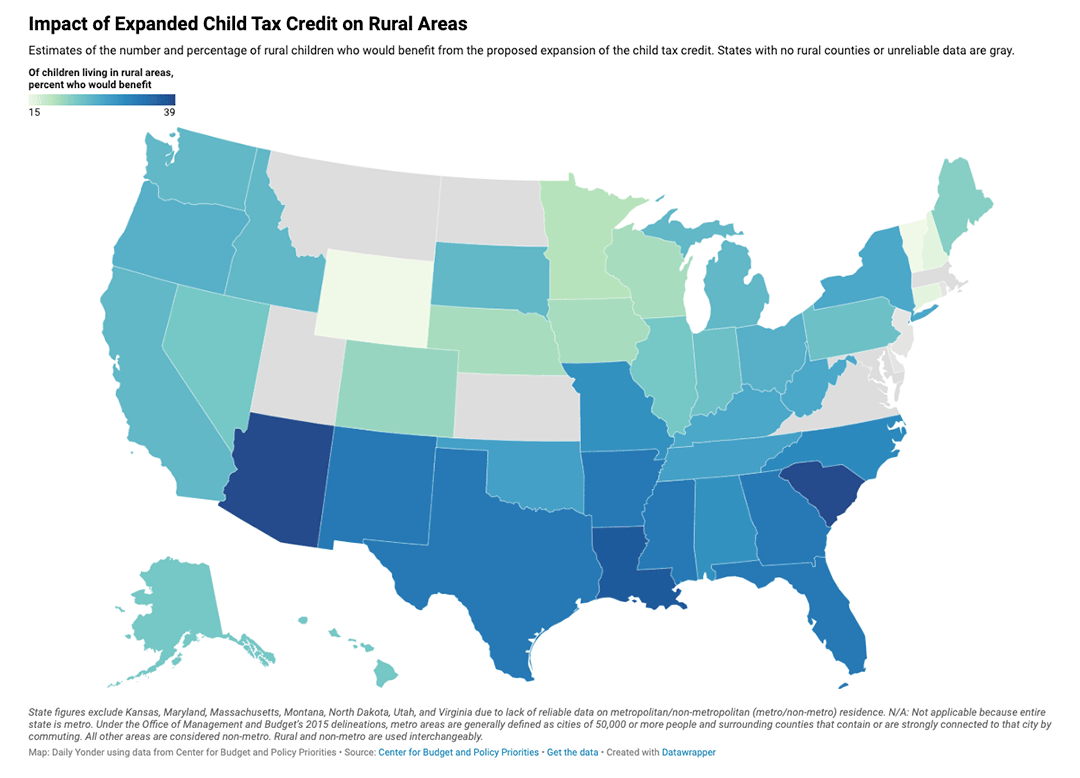
An estimated 27% of all rural children would benefit from the proposed expansion, compared to 22% in metropolitan areas, according to Center on Budget and Policy Priorities data.
The benefits could be even larger for rural families of color, who on average earn less than white families. In rural areas, 46% of Black children, 39% of Latino children, and 37% of American Indian and Alaskan Native children would receive more money under the Child Tax Credit expansion. For each demographic group, a significantly higher proportion of children from rural areas would benefit than children from urban areas, the analysis showed.
Last week, the House of Representatives passed the legislation in a rare bipartisan vote. Now the Child Tax Credit expansion is being considered by the Senate. If passed, the change would go into effect for the current tax filing season (2023) and continue for three years, ending after the 2025 filing season.
"This is Congress' only shot this year to pass legislation that would substantially boost the incomes of millions of children and families with low incomes and substantially lower child poverty," Hingtgen said.