Spokeo
1 / 2Mass adoption of biometrics
American views on biometrics use vary widely based on use cases and type of data. However, people tend to become more comfortable with technology the more they are exposed to it or use it in their daily lives. At its best, biometrics offer faster logins, better security, and greater accuracy than other authentication methods. The information is unique, universal, easy to store, and difficult to forge. Biometrics offer more streamlined authorization, eliminating the need to remember dozens of passwords—and the danger of password sharing across accounts.
Biometric technology hit the shelves in late 2011 with the release of Android's then-latest operating system, which let users unlock their screens using facial recognition. Apple incorporated fingerprint technology with its iPhone 5S in 2013 and later added facial recognition with the iPhone X in 2017. Today, about 4 in 5 smartphone users have biometric scan options enabled on their devices, according to a 2022 report by Cisco Duo.
With the growth of mobile shopping and digital wallets, people also use biometrics to complete transactions more frequently. Insider Intelligence eMarketer expects mobile sales to reach $558.29 billion this year, and to comprise more than 7% of total retail sales nationwide.
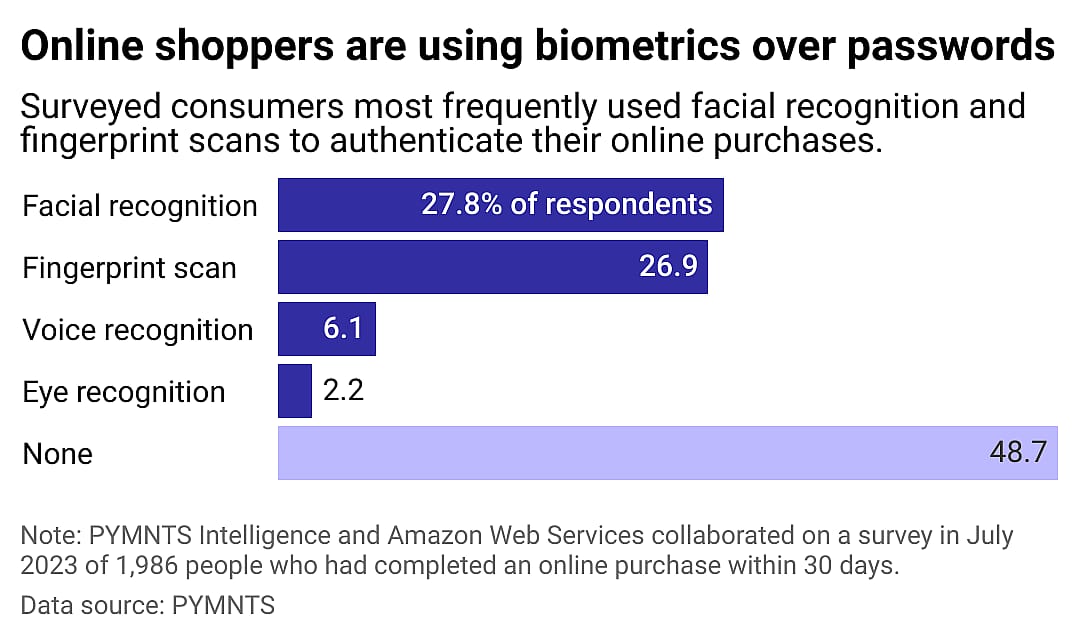
A PYMNTS Intelligence and Amazon Web Services report released in September 2023 found that over half of consumers who bought something online within a month-long period used biometric authentication to complete the transaction, primarily with facial or fingerprint scans.
Biometrics have become a part of in-store shopping, as well. In 2023, Amazon installed its Amazon One palm scan technology in all 500-plus Whole Foods Market stores. The technology is also present in its Amazon Go physical stores. The in-store hand scanners are much less popular among the masses, being relatively new and less ubiquitous than mobile phone usage. In other areas of the world, options are expanding for in-store biometric payments.
About 3 in 4 Americans are not comfortable using the hand recognition technology to make payments, according to a 2023 survey by CivicScience. Fewer than half of U.S. consumers said they would utilize palm-scanning payment devices if various retail stores installed them, including Kroger and Costco. However, a Pew Research study conducted in 2021 indicated half of Americans favored retail stores using facial recognition to enhance the security of credit cards by confirming account holder identities at checkout.