Spokeo
1 / 2Spam deluge fails to materialize this holiday season
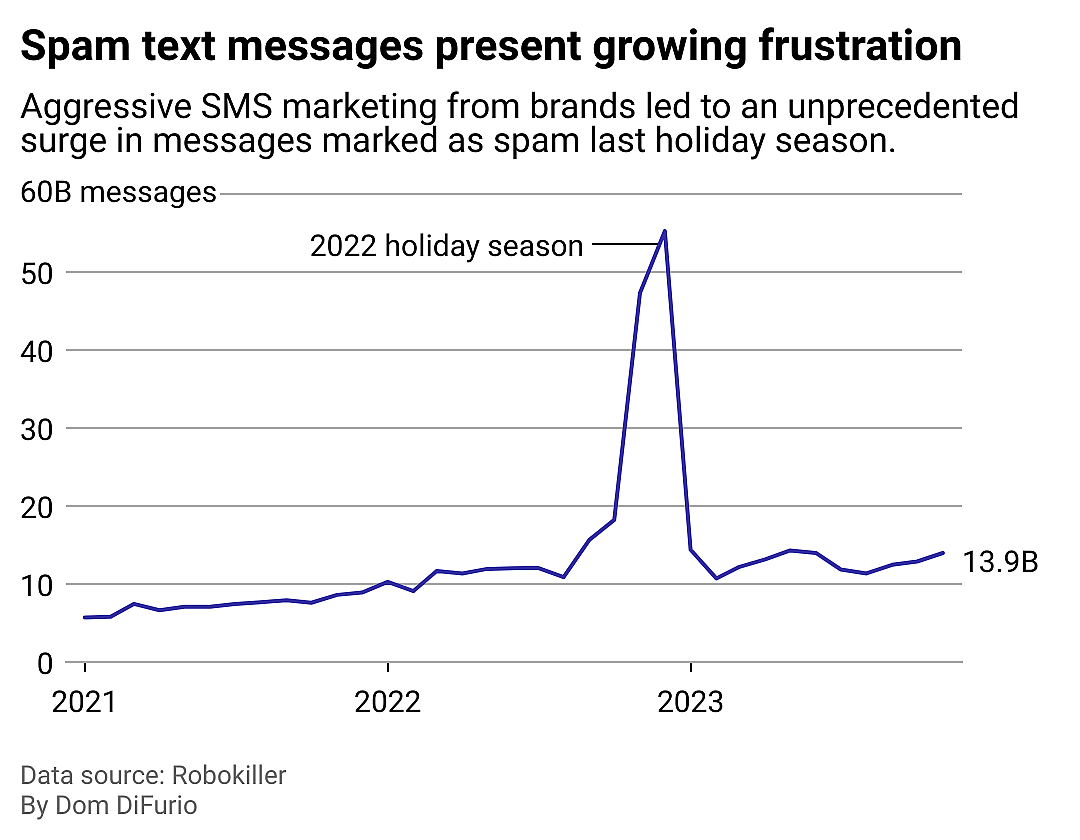
The reduction in spam text messages flagged this year is because of companies "striking a balance between promoting their products and respecting customer opt-in preferences," Robokiller said in a December 2023 release.
Last year, the company discovered that brands leaning heavily into a new channel for promotions and marketing were responsible for roughly 70% of spam, which consisted of robotexts. But consumers found them spammy enough to report.
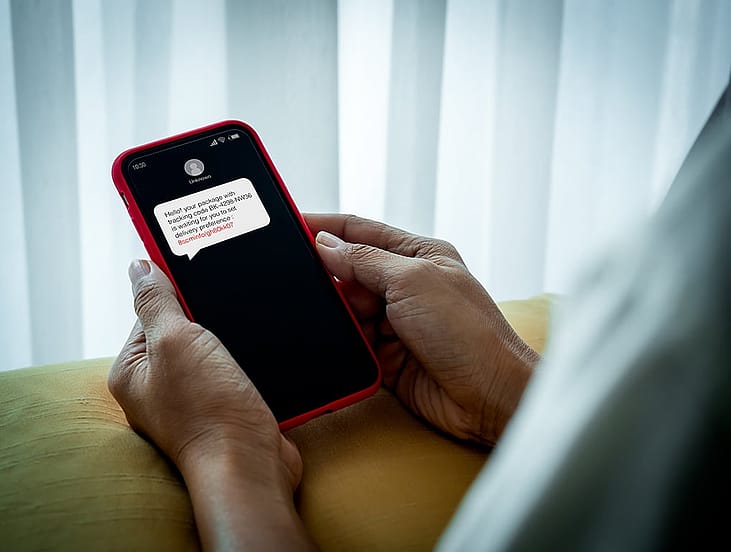
Potentially fraudulent scams accounted for the other 30% of last year's strange spike. Popular forms of text message scams include messages posing as a delivery update claiming a package can't be shipped properly unless you take action; fake offers for "free" gifts, like a phone bill paid in full, along with a link to redeem; and phony bank fraud-prevention alerts.
As of this year, surveys suggest most shoppers in the U.S. and Canada have encountered requests from e-commerce retailers to send them texts for discounts—a promotional method that gained steam in the wake of the COVID-19 pandemic.
A 2023 survey from SMS marketing firm Attentive found that most respondents, representing over 9 in 10 shoppers (93%) across the U.S. and Canada, were interested in or had already opted into receiving text messages from brands. Yet another survey attempting to drill into how consumers felt about getting texts from companies found that over 3 in 4 respondents (78%) found them annoying.
Fears of a looming recession marred the 2022 holiday season. Consumers were running low on the extra cash put in their wallets by government bailouts during the pandemic, and rising interest rates were making credit card debt more onerous.
Bucking economists' continued concerns about a potential pullback in consumer spending, Black Friday sales this year grew once again, with deal-savvy shoppers spending 7.5% more on online purchases, according to an Adobe Analytics report.
The scams and spam may be less frequent this year, but they're still out there, and consumers should not let down their guards.