OhmConnect
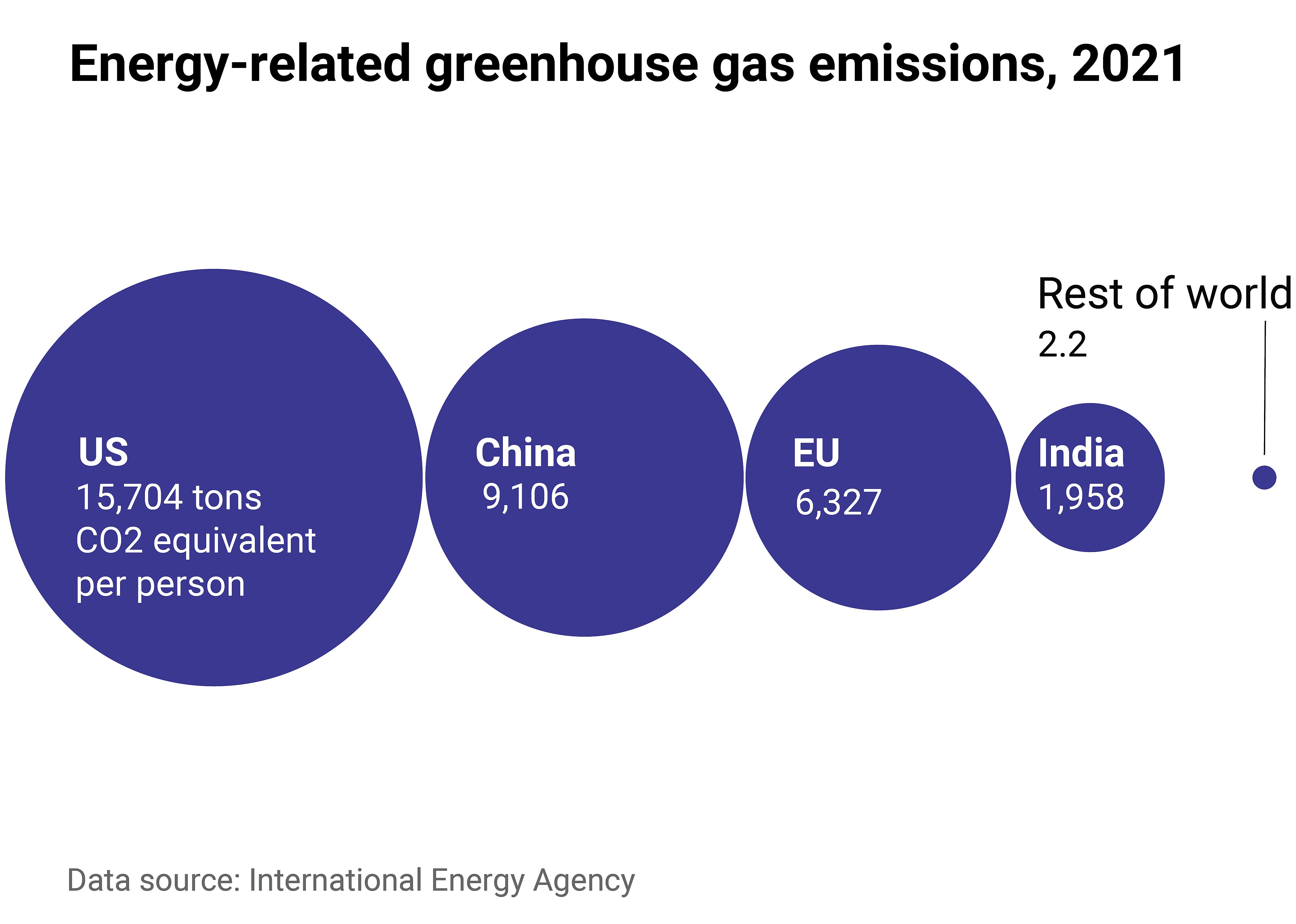
1 / 3The US, China, EU, and India accounted for 58% of global greenhouse gas emissions from energy in 2021
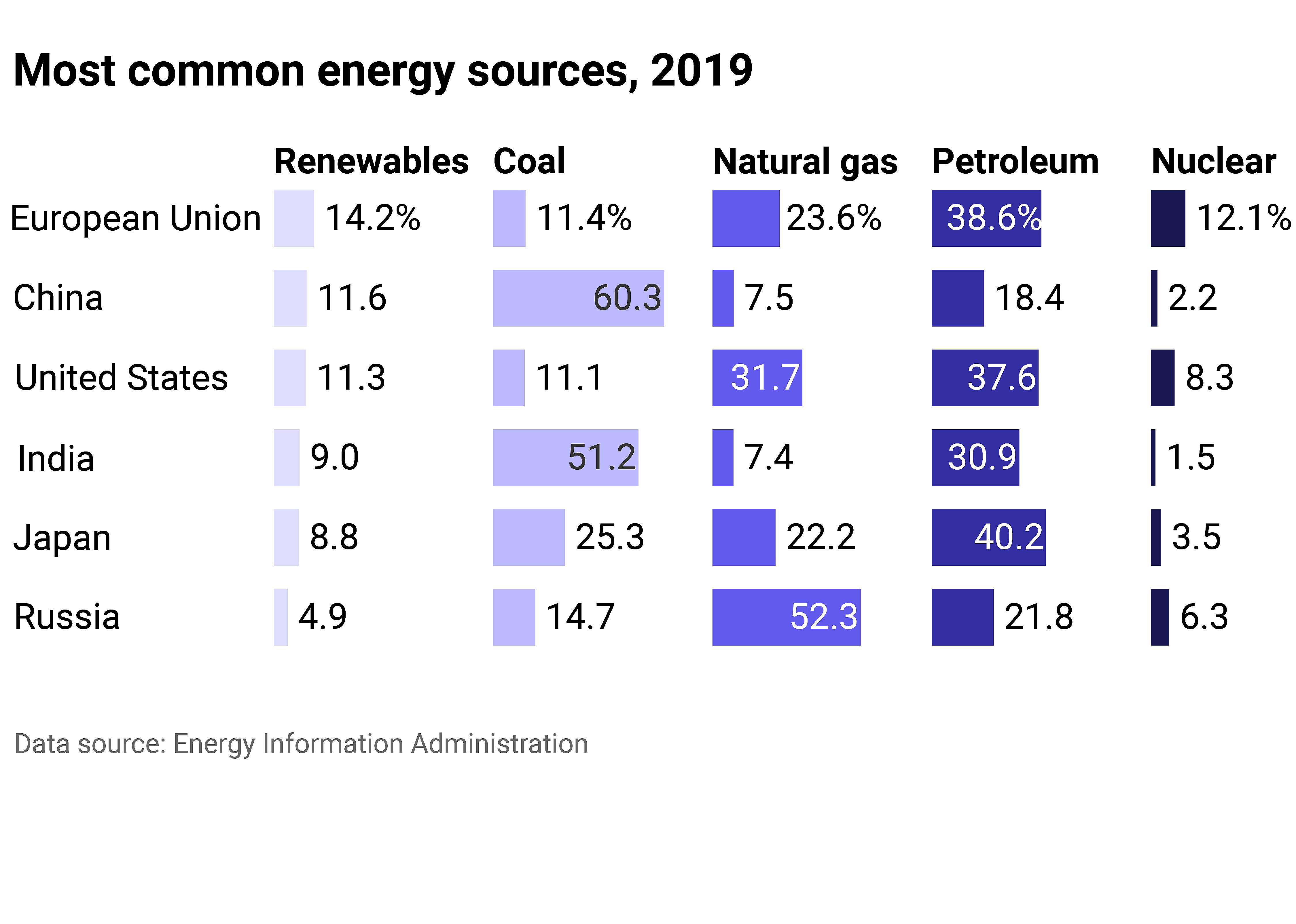
In the U.S., most greenhouse gas emissions come from burning fossil fuels for energy use. In 2021, the sources of total annual energy-related carbon dioxide emissions for the U.S. included petroleum (46%), natural gas (34%), and coal (21%).
In China, the primary CO2 emissions source is coal. The majority of energy (55%) that China generated in 2021 came from coal—and given that coal is carbon-rich, burning it in boilers, industrial plants, and power plants in China releases large amounts of CO2. However, the country has made strides toward reducing its reliance on coal in recent years— 70% of energy came from coal in 2001—though fossil fuels still make up the lion's share of energy consumption overall. Most recently, the country's overall CO2 emissions have begun to trend downward. In the three fiscal quarters leading up to Q1 2022, emissions have gone down after steady rises in the previous five quarters.
In the European Union, greenhouse gas emissions have dropped 31% since 1990, though this figure does not put the EU on track to meet its 2030 target. Power stations, industrial and large-scale heating plants, and aviation remain the top CO2 culprits.
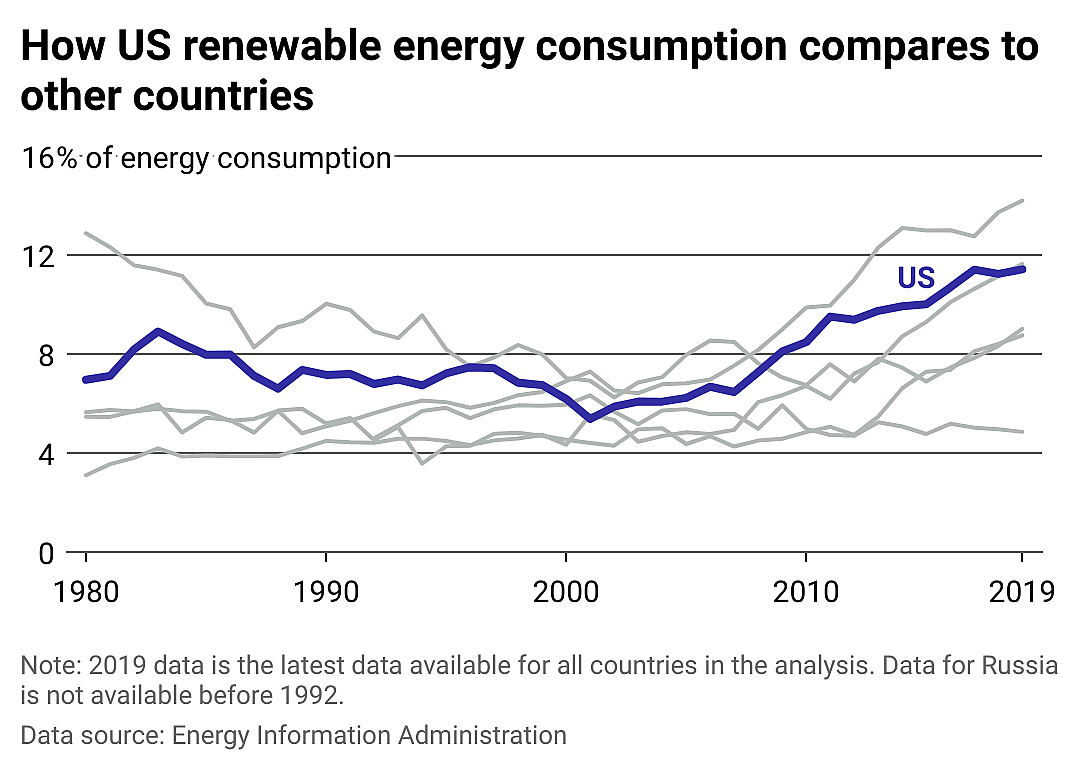
And in India, the significant sources of carbon emissions include coal power plants, the cattle industry, and rice processing plants. After China, India is the second largest consumer of coal in the world and the third largest single-nation emitter of CO2. Renewable energy sources such as wind and solar have yet to catch on in India; however, the country has set benchmarks to increase natural gas use to improve its reliance on cleaner-burning fuels.