Northwell Health
1 / 2Loneliness is common, even in highly populated cities
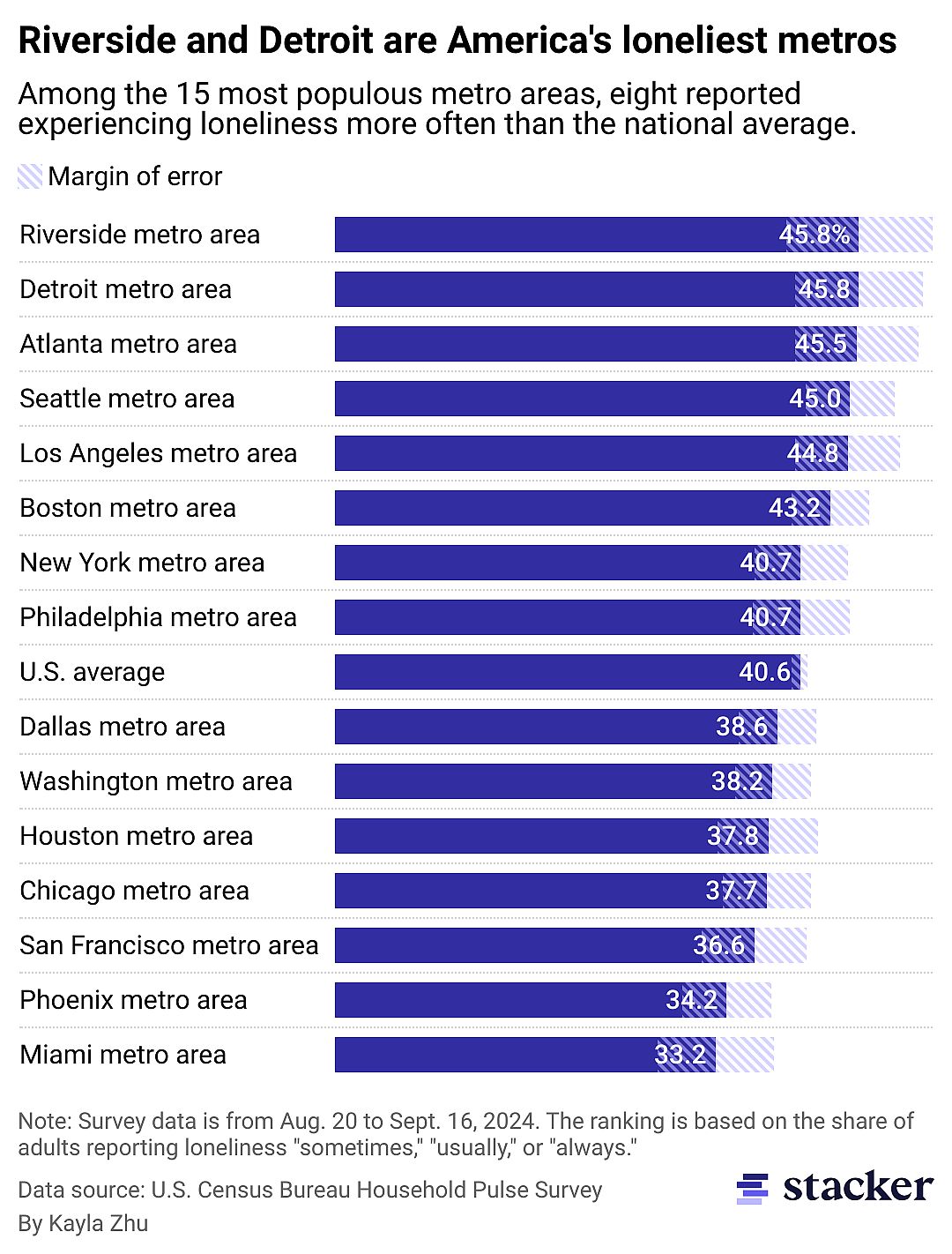
According to Census data from September 2024, the metro regions with the highest rates of loneliness are Riverside, California (about 55 miles east of Los Angeles), Detroit, Atlanta, and Seattle. They're followed by Los Angeles, Boston, New York, and Philadelphia, which all have higher loneliness rates than the national average. Why might some cities score higher than others in terms of social isolation and loneliness?
Many factors contribute to the rise of loneliness—along with the damage done by a global pandemic requiring social distancing, there are many other social, financial, technological, and environmental elements at play.
A study published in 2021 in the journal Scientific Reports shows that cities pose certain risks with overcrowding and population density associated with higher levels of loneliness. That may seem counterintuitive—shouldn't one feel less lonely with more people around? Research reveals that the presence of other people isn't always positive and that social isolation is more about a lack of connection than being physically alone.
As of 2018, 83% of the U.S. population lives in urban areas, a number that the United Nations Department of Economic and Social Affairs expects to reach 89% by 2050. As urbanization increases, the spread of metro centers into suburban and rural land results in changes in quality of life.
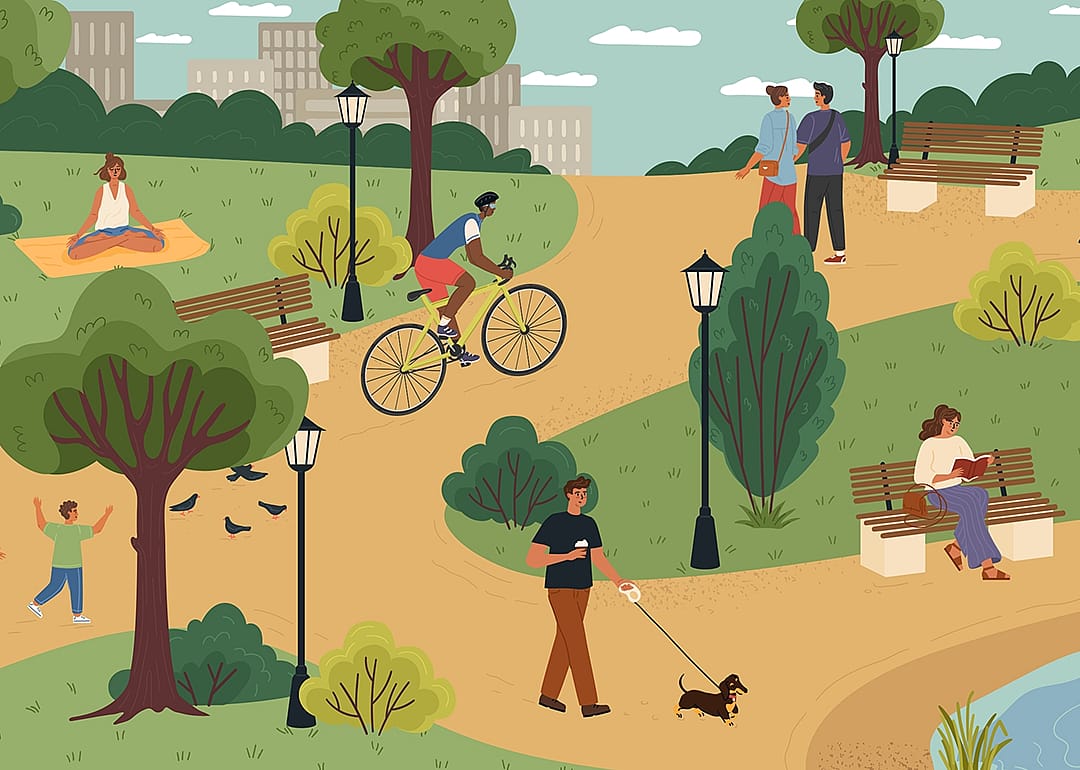
Sprawling cities demand more automobile dependency, increased traffic and energy use (with more pollution), fewer green and open spaces, and less access to those green spaces. The built environment influences social interaction. Feelings of loneliness can also change in response to environmental factors. Contact with nature, for example, has been proven to lower levels of loneliness.
Also, some populations are more vulnerable to isolation and loneliness than others. Along with older adults and adolescents, high-risk groups include people with disabilities, people living alone (a number that census data shows has increased significantly in both the U.S. and globally), BIPOC, and LGBTQ+ individuals.
According to a 2022 CDC report, among adults in 26 U.S. states, the prevalence of feeling lonely was highest for bisexual and transgender persons, who are also the groups with the highest rate of stress, mental distress, and instances of depression. Loneliness and a lack of social and emotional support are a major threat to the mental and physical health of queer communities.