Ryan Caron King // Connecticut Public
1 / 3Separation takes its toll on women and their children
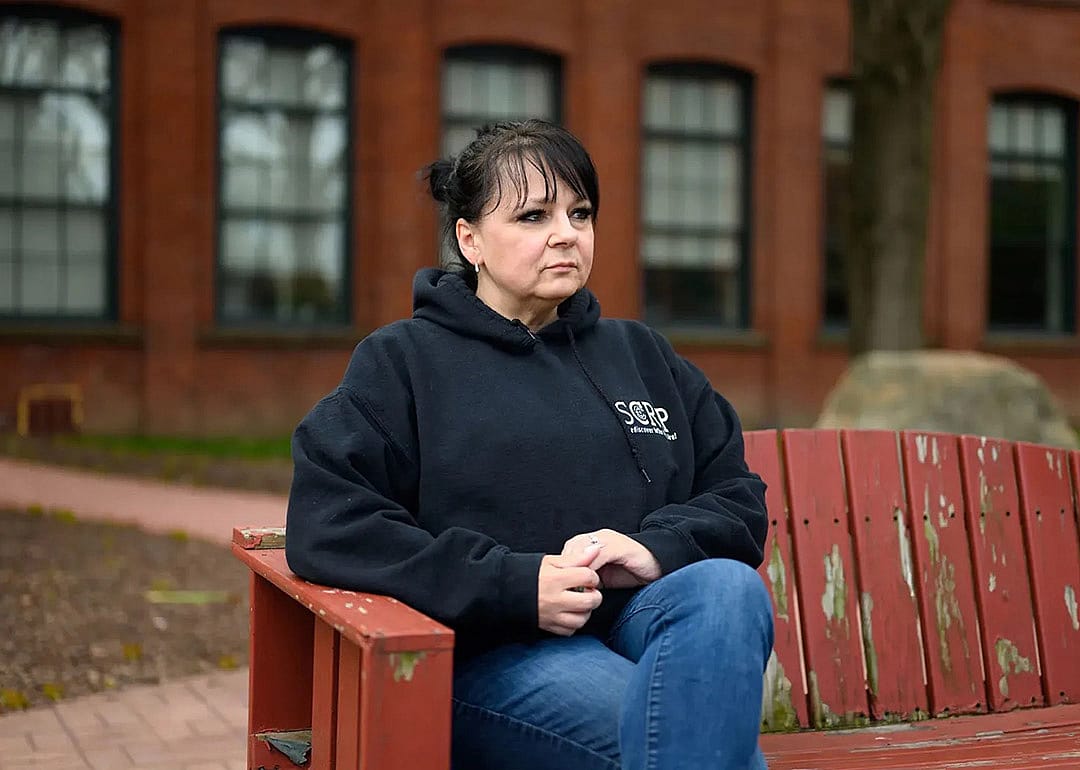
The free prison email and phone calls came too late for Tracy Shumaker, pictured above, and her three kids. She spent 18 years at Connecticut's all-women York Correctional Institution and was released in June 2022, less than two weeks before the changes to communication went into effect.
Her kids were 2, 7 and 12 years old when she was arrested. When she got out of prison, they were 20, 25 and 30.
In April, at her apartment in New Britain, Connecticut, 11 miles outside of Hartford, Shumaker rummages through a large plastic bin filled with photographs. Some of the images register experiences she lived, like a visit with her teenage daughter inside the prison. Other pictures — a small school portrait of her youngest son's first girlfriend and another of her oldest son with his high school prom date — capture moments she pieced together from stories family and friends told her over two decades.
Shumaker said she tried her best to maintain contact with family from prison, but her mother and sister lived paycheck to paycheck and could only afford a single 15-minute call once a week or once every other week when money was tight. That could only do so much to keep Shumaker informed as life outside moved forward.
"My sister had extra mouths to feed because she had my kids. My mother is working just to make ends meet. And then you only get like two minutes with each of your kids because you got a 15-minute phone call. When you got three kids and a mother that is crying, it's hard," Shumaker said.
As the years went on Shumaker felt distance growing between them. Soon, her children resorted to saying a quick "Hey mom, what's up?" before passing the phone to another family member. After everything her kids had been through surrounding her incarceration, Shumaker said she did not want to force them to talk to her — even if that meant allowing them to drift apart.
At one point, her daughter played lacrosse in an athletic complex next to York Correctional Institution. On days that she could hear children playing on the fields, she wondered if her daughter's voice was one of them.
As soon as Shumaker was released from York, she started to work on mending her relationships. Though things have been improving, the process is slow and complicated. There's anger, resentment and also general discomfort to work through. After the years of lost time, Shumaker has had to get to know her now-adult children again.
"We have to make room for each other. They lived this life for 20 years. I've lived a solitary life for 20 years behind bars. So I can't go, 'OK, now Mommy's home.' I'm just letting it naturally become what it is," she said.
Shumaker thinks that if she and her children could talk on the phone for free while she was in prison, things might have turned out a little differently today. The relationships with her kids could have been stronger.
Nearly 60 percent of women in U.S. prisons are mothers, and the separation is devastating for both them and their children. The Centers for Disease Control and Prevention classify having an incarcerated parent as an "adverse childhood experience," a traumatic event that can put children at risk for chronic health problems, mental illness or substance abuse during adulthood.
Limited phone calls or visits can worsen these issues, but the cumulative cost often leaves families with limited options, said Aileen Keays, manager of the CT Children with Incarcerated Parents Initiative at the University of Connecticut.
"Families were talking to us about having to make a choice about keeping the lights on, or keeping money on the phone tab so that their loved one can call them every day," she said. "These kids, they worry so much about their parents, so these phone calls are just essential."
Then, there's the profound mental health toll the isolation takes on mothers. Most women enter custody with a history of trauma like domestic violence or sexual abuse. They also experience higher rates of serious mental illness that put them at more risk of psychological harm behind bars.
"When I first arrived here at York I did not talk to anyone via telephone. All my contact was through mail and visits," wrote Vanessa Ortiz, who has been incarcerated in Connecticut since 2010 when her son was 3 years old.
Her family could not afford the calls, she added. "So many women including myself have tried to take their lives because the emptiness one feels is crucifying."
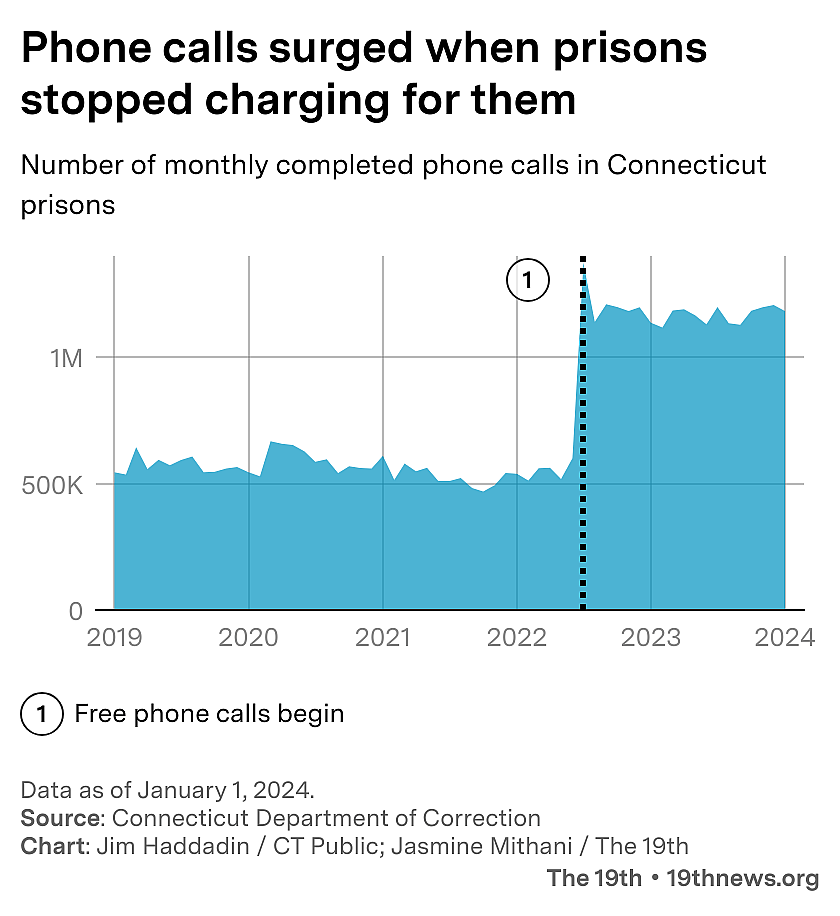
Worth Rises set their sights on reform in Connecticut after state Rep. Josh Elliott met Tylek at a conference in 2017 and suggested working together. At the time, Connecticut had one of the most expensive prison phone call rates in the country, $3.65 for a 15-minute in-state call. Elsewhere in New England, the rates were $1.50 in Massachusetts, $1.35 in Maine, $0.71 in Rhode Island, $0.59 in Vermont and $0.20 in New Hampshire.
In 2018, Connecticut families collectively paid about $13 million in prison calls to Securus. Of that amount, the company had an agreement that allowed the state government to take about $7 million.