Alex Brylov // Shutterstock
1 / 2A landscape of wins and losses in LGBTQ+ rights
According to the American Civil Liberties Union, 2023 was a record-breaking year for the number of anti-LGBTQ+ bills introduced across the U.S., and 2024 is set to continue that trend. As of June 2024, the ACLU is tracking 516 anti-LGBTQ+ bills, 2 in 5 of which target the rights and privileges of LGBTQ+ youth within U.S. public schools. While most of these bills do not become law, some do, and most states have a policy landscape that negatively impacts the lives of LGBTQ+ people, according to the Movement Advancement Project.
"It's really underestimated the impact of going from a president like Barack Obama—who openly supported gay marriage [and] who openly supported trans youth—to Donald Trump, a president, who not only seemed to relish in the opportunity to strip away as many rights and protections as possible," Silverman said.
Reports emerging from some of these states highlight the changing landscape around anti-LGBTQ+ harassment, from an increase in anti-LGBTQ+ remarks in a public school in Texas to the Oklahoma state superintendent's anti-LGBTQ+ statement following the death of 16-year-old Nex Benedict.
Despite the bleak outlook, there have been victories worth celebrating. In 2023, 238 LGBTQ+ candidates won their elections, according to the LGBTQ+ Victory Fund. LGBTQ+ performers have also recently won recognition at marquee awards events, such as the Tony Awards and the Grammys. Even more promising, a study by NORC at the University of Chicago found that the rest of the country has largely caught up to the progressive stance and support for LGBTQ+ rights of residents of California, which continues to have the largest LGBTQ+ population, according to Williams Institute data.
Such stories illustrate both the resilience of LGBTQ+ youth and their allies despite inhospitable environments, as well as the challenges they face as the U.S. education system becomes increasingly politicized around gender and sexuality.
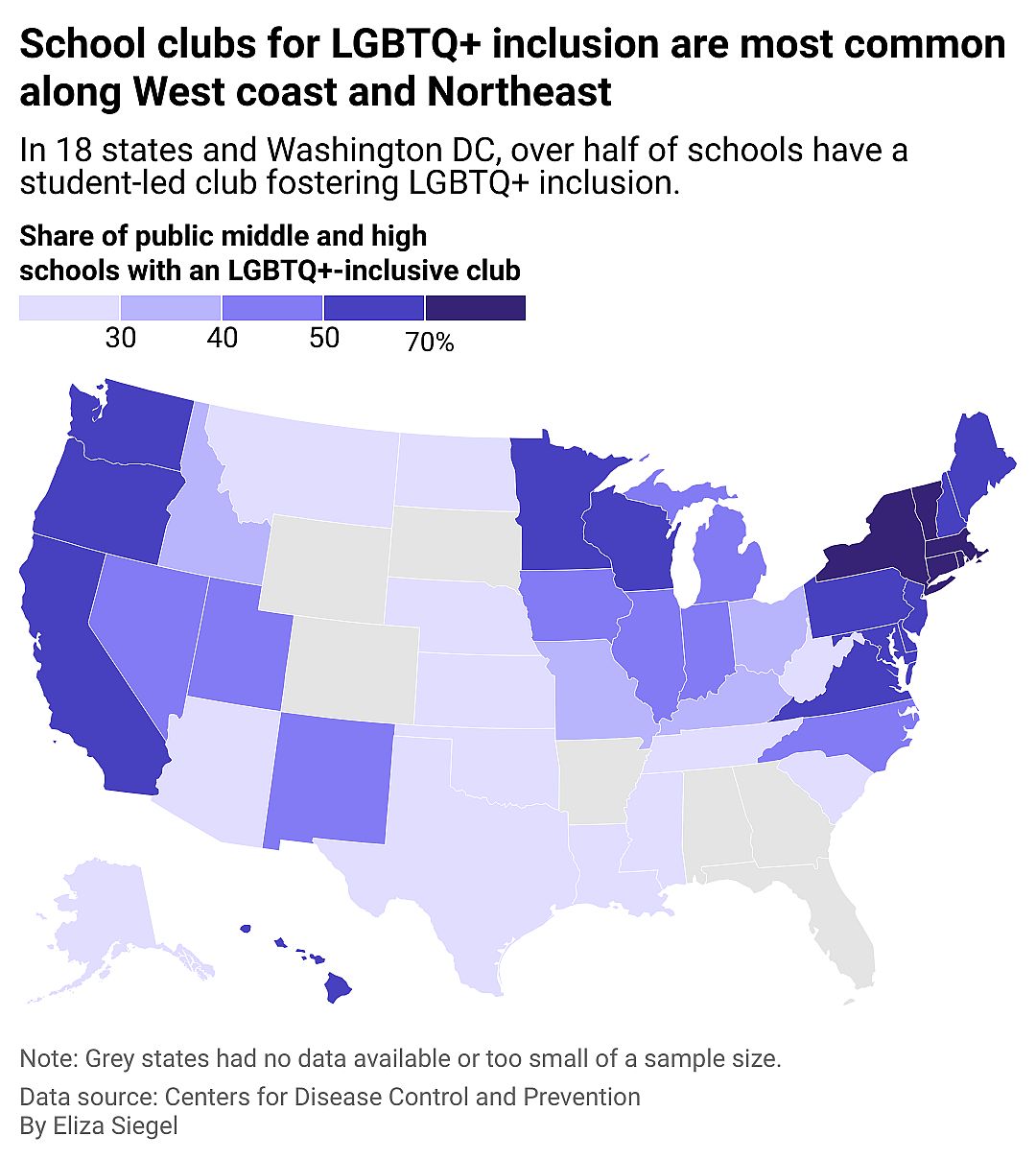
Queer-allied school groups have historically played and continue to play a critically important role in the fight for greater LGBTQ+ visibility and support within the U.S. public school system. The most common term for these groups is gay-straight alliances or genders and sexualities alliances. While GSAs started to become truly widespread in the late 1980s, perhaps the first GSA to form in a public school was the Gay International Youth Society at George Washington High School in New York City in 1972.
The Gay International Youth Society was situated in a diverse community, with many Black, Puerto Rican, Cuban, Mexican, and Dominican families in the surrounding neighborhood. It was also part of an era of revolutionary gay liberation movements that began with the Stonewall uprising in 1969. In this context, GSAs and similar school clubs served to increase LGBTQ+ visibility while creating safe spaces for LGBTQ+ youth within existing institutions.