Eliza Siegel // Stacker
1 / 5Voter ID laws make voting difficult for over 11% of Americans
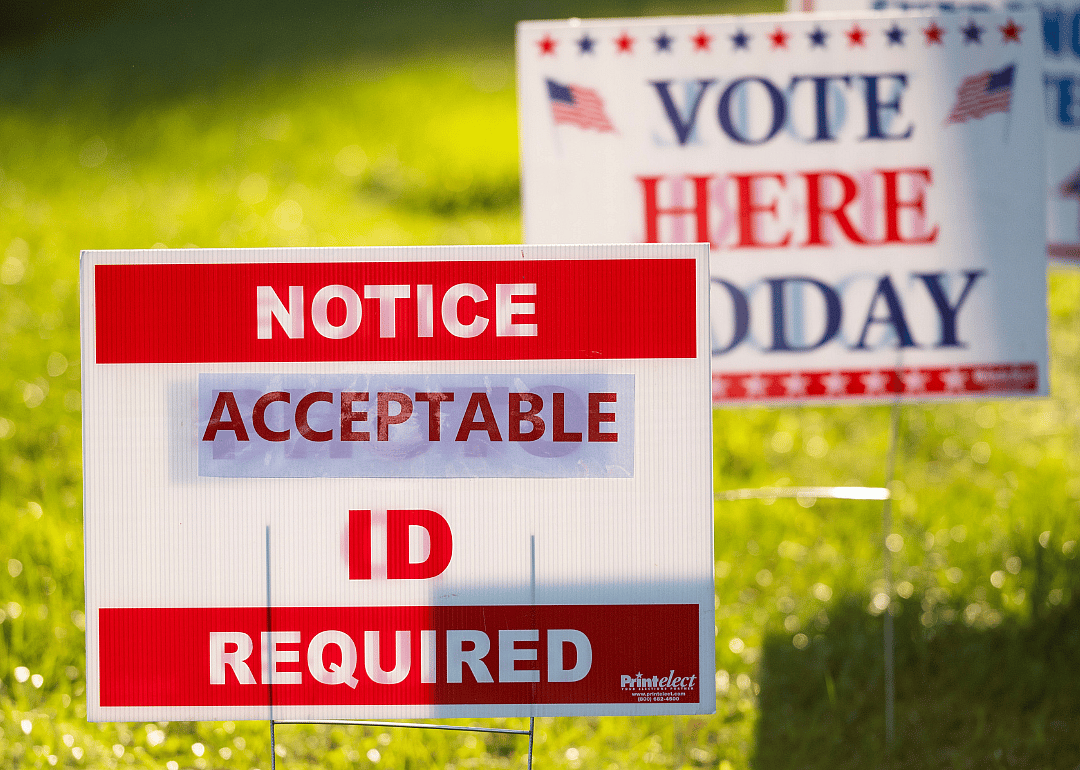
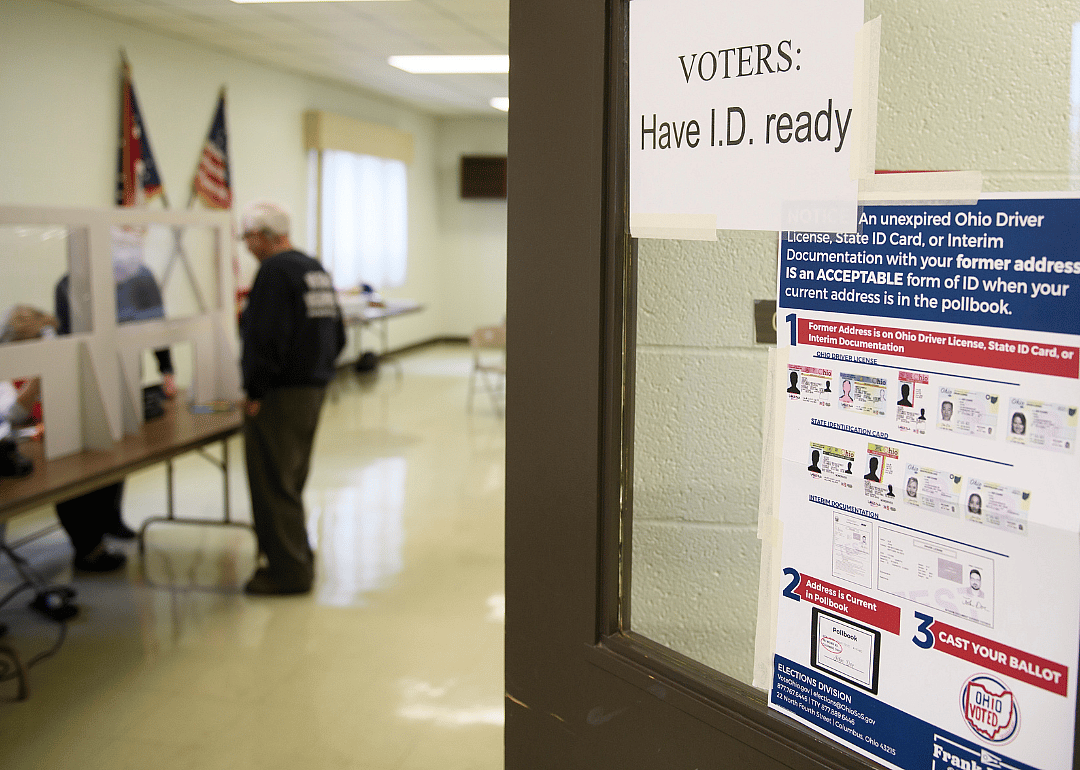
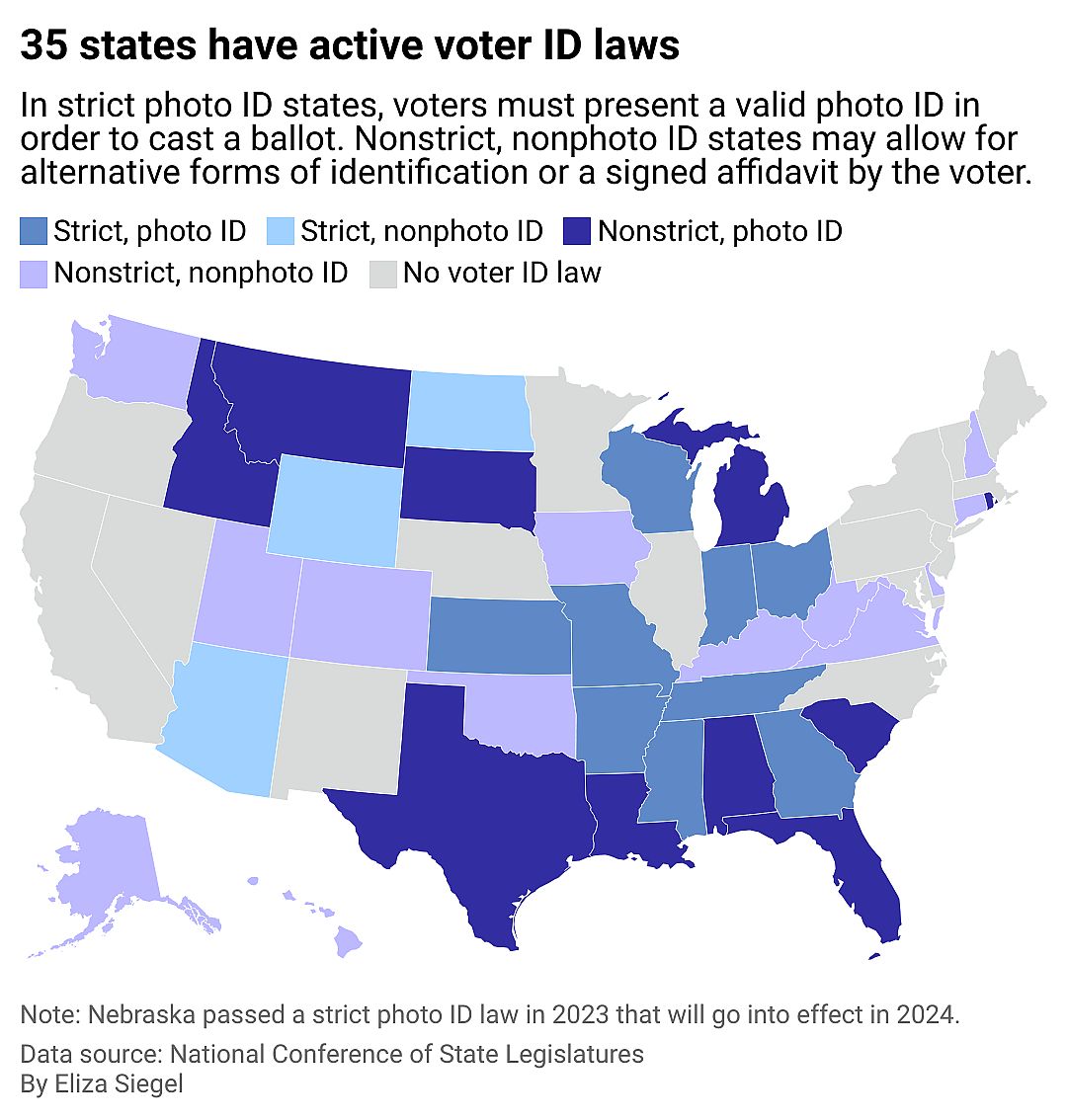
Voter ID laws vary in type and level of strictness but are generally intended to verify the voter's identity against registration records. Depending on the law, they can require someone to present a form of photo or nonphoto identification at the polling place. Some stricter laws require a government-issued ID and do not offer other options, like provisional ballots, to those who don't have the proper documentation.
The current prevalence of voter ID laws—which exist to various extents in 35 states—can lead some to believe they are ordinary or at least have a well-established historical precedent. On the contrary, these laws are a modern phenomenon; the first voter ID law was implemented in 2006 in Indiana and required voters to present an up-to-date photo ID at the polls. The Supreme Court upheld the law's constitutionality in 2008, and a cascade of other states implemented versions of the same policy in the following years.
Prior to 2006, the only time ID was required at the polls was when first-time voters did not include a form of identification when registering to vote.
Proponents of the laws argue that they work to prevent voter fraud and ensure election security. But those who oppose voter ID laws say these play on fears of demonstrably rare fraud to keep some of the nation's most marginalized people from exercising their constitutional rights.
"Voter ID laws are a solution in search of a problem," Jody Herman, senior scholar of public policy at the Williams Institute, told Stacker.
She pointed to several studies that have concluded voter fraud in the U.S. is infrequent. An early study by the Brennan Center for Justice found the rates for voter fraud were as little as 0.0003% and 0.0025%. Particularly rare are instances of voter impersonation, the type of fraud voter ID laws are purportedly in place to prevent. A comprehensive 2014 Washington Post study found that, out of 1 billion ballots cast, only 31 instances of impersonation fraud were credible. Even then, the number is likely inflated since any and all credible claims were counted—not just prosecutions or convictions.
"One has to wonder—if there really is no voter fraud problem—then what problem are voter ID laws trying to correct?" Herman said.