Wysa
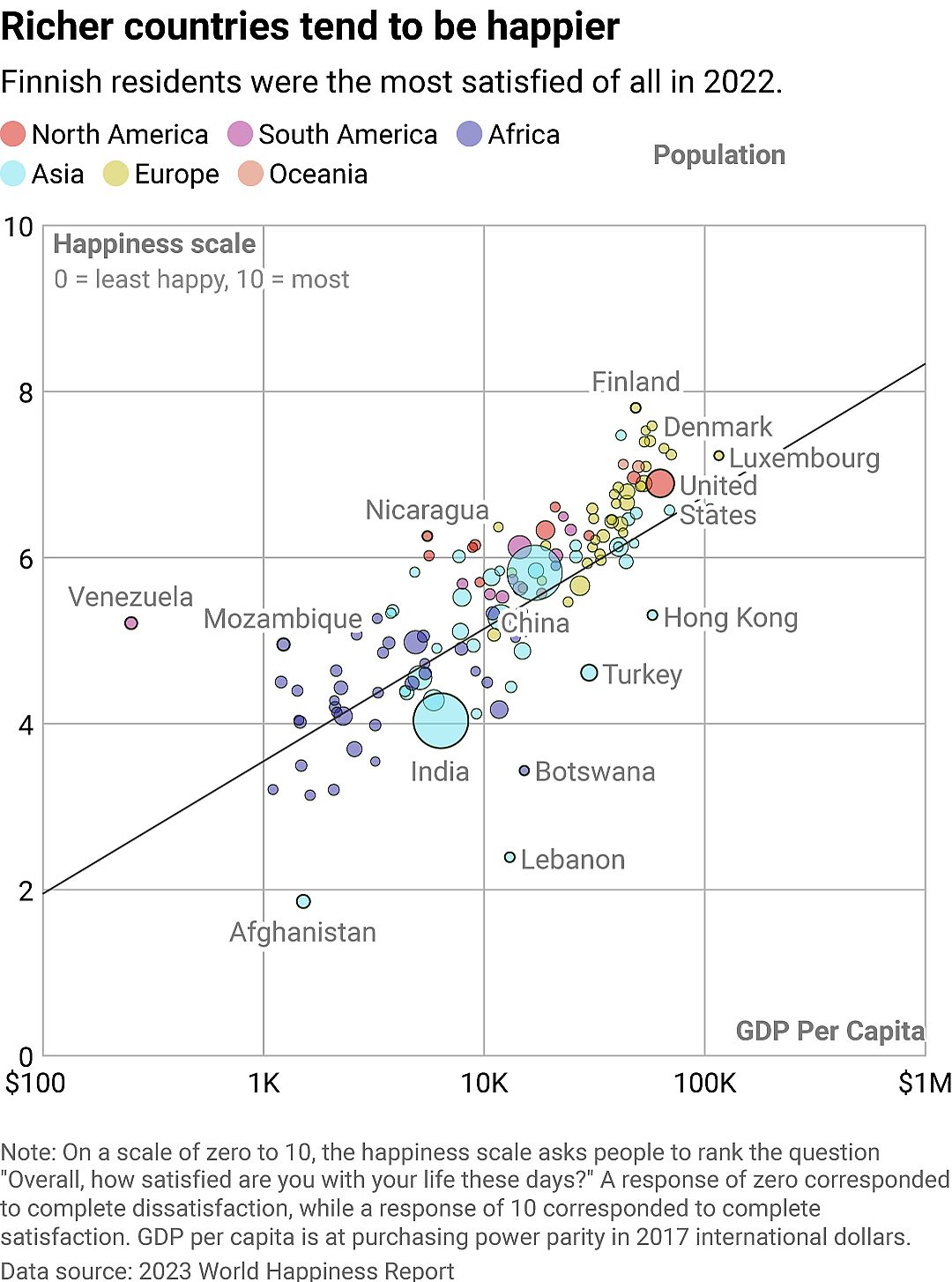
1 / 2National happiness is strongly correlated with income
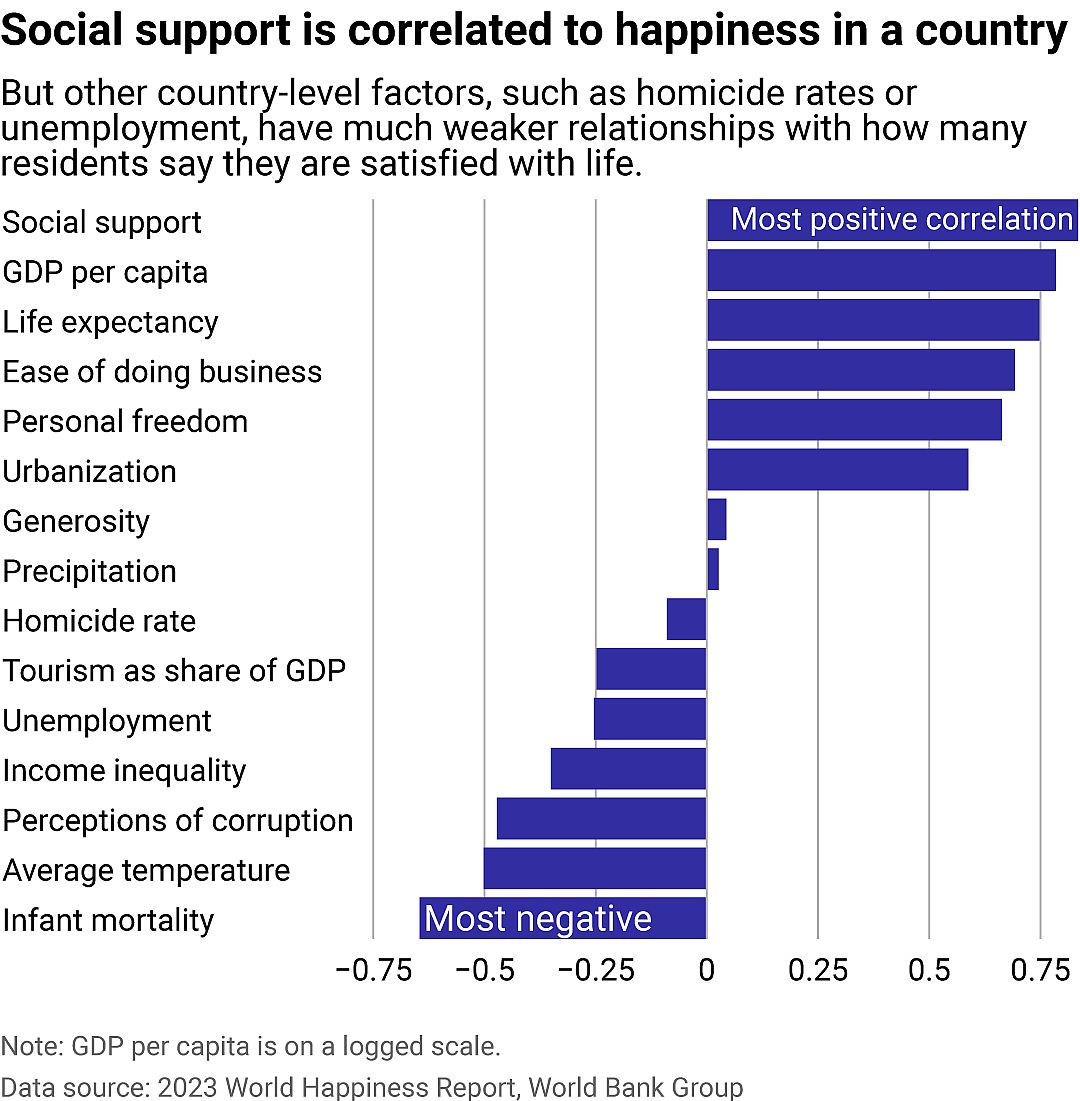
The most common way to gauge a country's wealth is to look at its gross domestic product, which tracks the nation's total economic output, including government spending. Plotting the countries' average happiness levels against their average incomes (as measured by GDP per capita) reveals some striking patterns.
For the most part, differences in income levels do correspond to differences in happiness. Luxembourg, for instance, was the richest country in the dataset, with a GDP per capita of around $115,000. Its residents rated their happiness as a 7.2 out of 10. In contrast, India was one of the poorer countries in the UN report, with a GDP per capita of about $6,400. Indians rated their happiness at only a 4.0 out of 10.
But the data also shows some notable exceptions. For instance, many European countries rate higher on the satisfaction scale than you might expect based on their income levels alone. Finland, home to the world's happiest citizens, scored a 7.8 on the life satisfaction scale, while the United States only scored a 6.9. That is despite the fact that America's GDP per capita is nearly 30% higher than that of the Scandinavian state
There are also a few extreme outliers. Venezuela, for example, has been going through a very tough time economically. The country is currently going through hyperinflation, with prices up by 360% over the previous year, according to data from the International Monetary Fund. The Venezuelan government has stopped publishing reliable statistics, but the IMF estimated that unemployment hit 35% in 2018. Despite these economic woes, the country still ranks close to other Latin American countries with a 5.2 happiness score.
Other regions, such as Afghanistan and Hong Kong, scored much lower on the happiness scale in 2022 than their economic statistics suggested they should. This could be because of political turmoil that is not reflected in GDP data. Afghanistan's government collapsed and was replaced by the Taliban in August 2021, when the United States finally withdrew its military support after two tumultuous decades. Around the same time, Hong Kongers also experienced a drastic political shift. China imposed new legislation on the territory in June 2020, effectively stripping Hong Kong of its judicial and legislative independence and ending democracy in the territory.