The Game Day Casino
1 / 2The kudzu-like growth of online sports betting
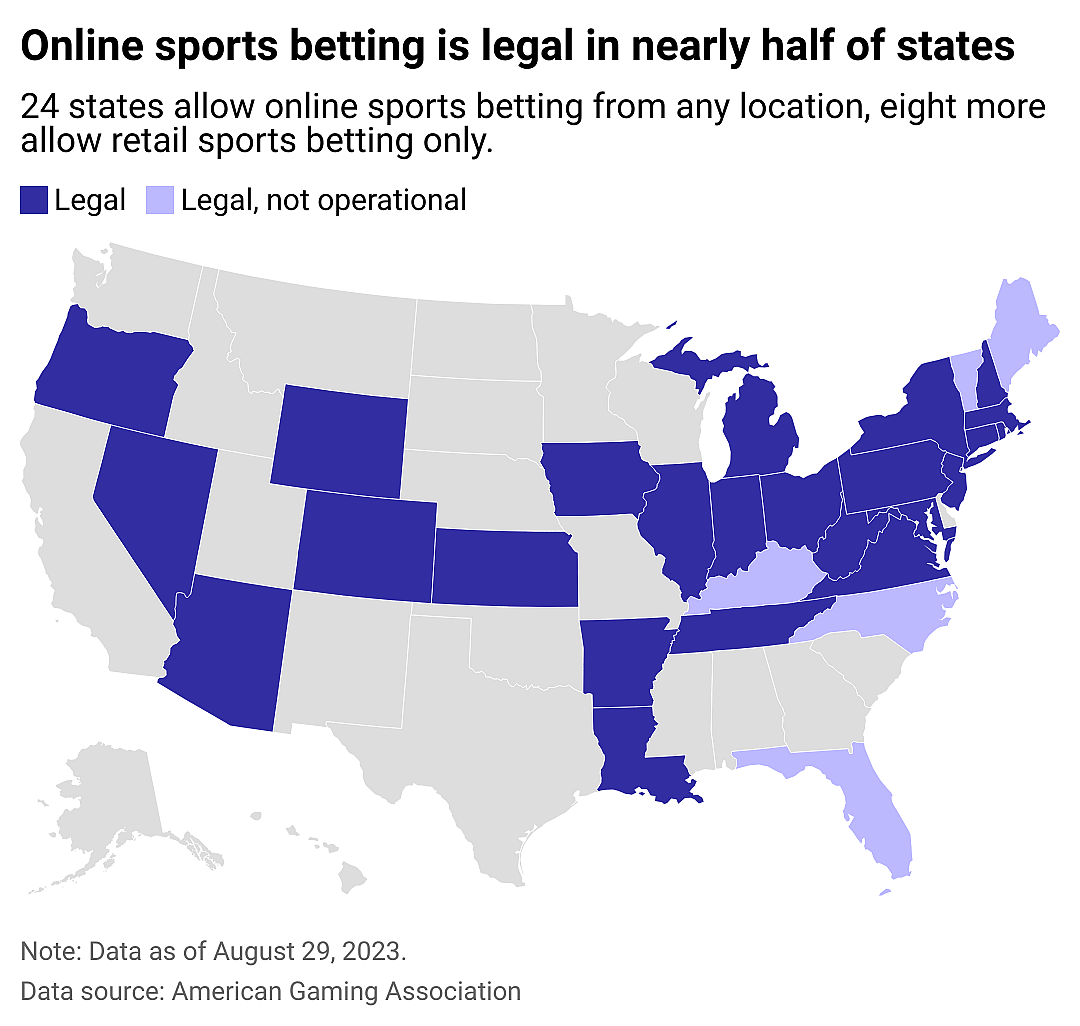
Since courts overturned the sports betting ban in 2018, 24 jurisdictions have legalized online sports betting from any location. The industry has become so popular and visible that it's hard to escape even for those who don't gamble. Nielsen reports that the online gambling advertising spend in local television skyrocketed from $10.7 million market in 2019 to $153.62 million in the first quarter of 2021, the few years following sports betting's legalization.
The jurisdictions that rode the initial wave of online sports betting experienced a major boom in the COVID-19 pandemic. At the time, dollars waged on mobile sports betting overtook land-based bets, according to a Bloomberg analysis of Sportshandle.com data.
New York was undoubtedly at the top of that heap. In 2022, the state brought $1.37 billion, or nearly $1 of every $5 of revenue from online sports betting in the U.S., according to the AGA. In just the first six months, New York made $267 million in tax revenue.
Sportsbooks made online sports betting the norm, benefitting from increasing partnerships with professional and college sports teams, investments from media outlets like Fox and ESPN, and other major publications like The Washington Post and The Boston Globe increased their focus on sports betting by publishing analyses and data.
The industry blossomed so rapidly that a New York Times investigation looked at whether consumers had adequate protections from the deluge of online sports betting advertising and pointed out how the industry's attempts to self-regulate have fallen short. Some states like Ohio, however, have had stronger stances. Gov. Mike DeWine stepped in to double Ohio's sports betting tax to damper the saturation of ads.
State taxes on online sports bets vary greatly, which affects every state's revenues.
Iowa and Nevada tax rates are only 6.75% for land-based and online operations, whereas New York imposes tax rates as high as 51%. New York also taxes businesses based on gross revenue rather than profits—even free bets offered to players are counted in an operator's total revenue, shooting tax payments up to 77%, according to the Tax Foundation.
Nevertheless, in 2022, the state earned more than $693 million in taxes. How much a state makes greatly depends on how high a tax it levies.