ATS.io
1 / 1Sports betting taxes in the US states grew nearly 30% from Q1 2023
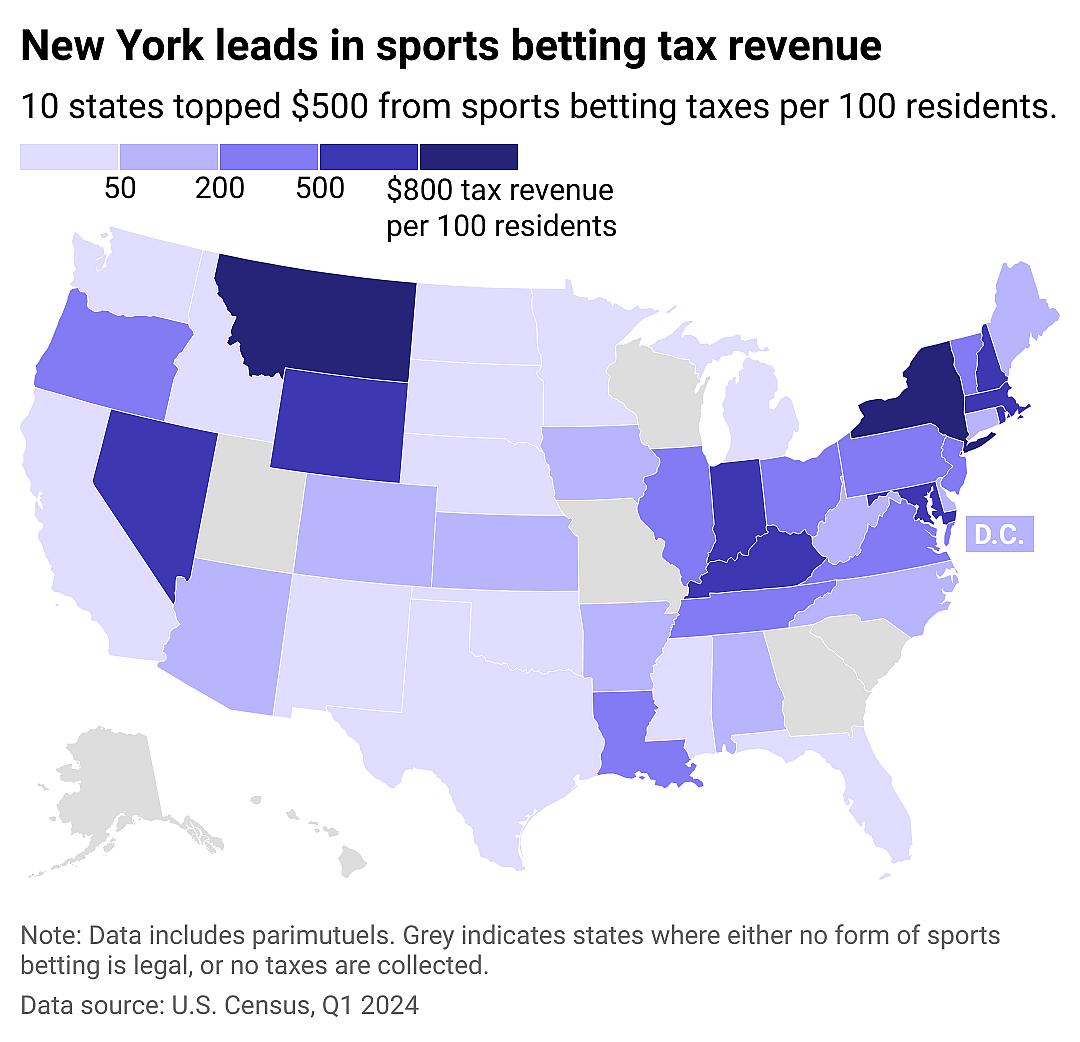
In the first quarter of 2023, U.S. sports betting tax revenue was $619 million, or 0.18% of the country's total tax revenue. The former figure jumped 30% in 2024—even without much input from the three most populous states: California, Texas, and Florida. The first two are among the states in which parimutuel, or pool, betting is legal but sports betting has not been fully sanctioned.
The windfall, however great, still accounts for just 0.23% of tax revenue across the U.S. Only in Montana does sports betting tax revenue surpass 1% of tax revenue. Even so, states can do novel things with the supplementary money. Colorado, for instance, is funding water conservation efforts, taking profits from a vice industry, and putting them in the pocket of an underfinanced sector in an increasingly dry West. This gambit has some legislators thinking twice, though. "How do I justify in my mind benefiting society from somebody else's guilty pleasures that have the potential to impact their lives permanently?" state Sen. Cleave Simpson, the co-sponsor of a bill that would uncap this revenue stream, told the Post.
Sure, the rise of sports betting in the U.S. was predictable, but lawmakers seemingly saw dollar signs instead of an accompanying increase in problem gamblers. The issue and its highest-profile victims have made headlines worldwide, partly because sports leagues were eager to cozy up to sportsbooks to get a cut.
One scandal haunted perhaps the best player in Major League Baseball, Shohei Ohtani, ahead of this season. He was cleared of wrongdoing, but his interpreter and friend, Ippei Mizuhara, was charged with bank and tax fraud and could spend 33 years in federal prison after stealing nearly $17 million from the two-way superstar to help pay off $40.7 million in gambling debts. The situation outlines the risks involved with legalized sports gambling, the foremost of which is addiction. One poll showed nearly half (45%) of people ages 18 to 34 have bet more than they should with an online sportsbook.
So even if sports betting tax revenues account for minuscule percentages of state budgets, sportsbooks are supercharging economies while fueling unhealthy appetites in problem gamblers. Advocates are calling on governments and industry leaders to address a gambling issue that is putting millions of people in danger while undermining sports betting's growth trajectory. That could mean moving more of that revenue—the standard is 1%—into addiction services.
Story editing by Carren Jao. Additional editing by Kelly Glass. Copy editing by Paris Close.