Caring.com
1 / 2Severe weather-related fatalities on the rise
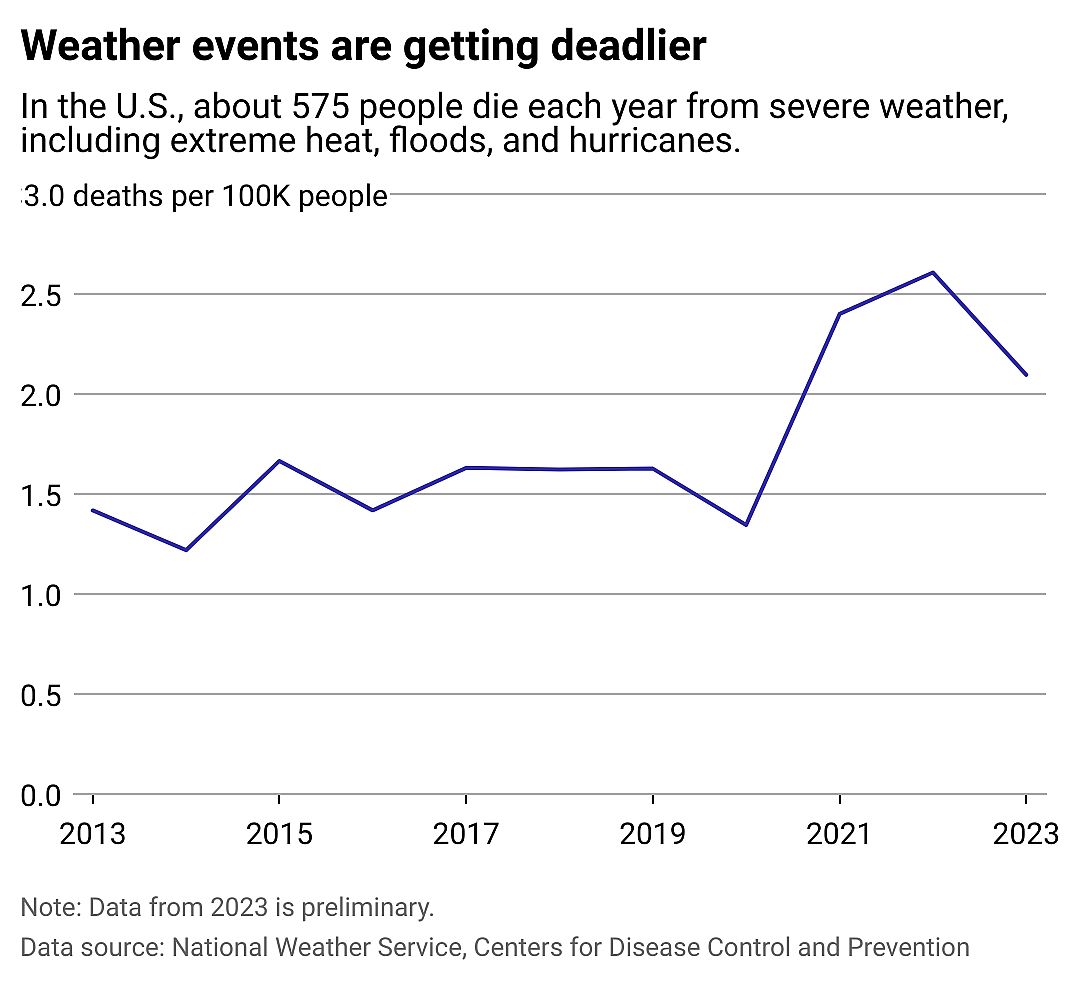
As weather events get more severe, so too does their fallout. About 575 people die annually from severe weather events, with fatalities peaking in 2021 and 2022, according to CDC data.
That figure accounts for fatalities from all types of weather events, but extreme heat is the most deadly. Since 1979, over 14,000 Americans have died as a direct result of causes related to heat, according to the EPA. 2021 and 2022 were two of the hottest years in recent history, with several heat waves resulting in a record-breaking number of heat-related deaths.
For older people, extreme heat is a major cause for concern. This population is particularly vulnerable to heat because it interacts with preexisting or underlying conditions. Since 1999, retirement-aged people have been several times more likely to die from heat than their younger peers due to cardiovascular disease.
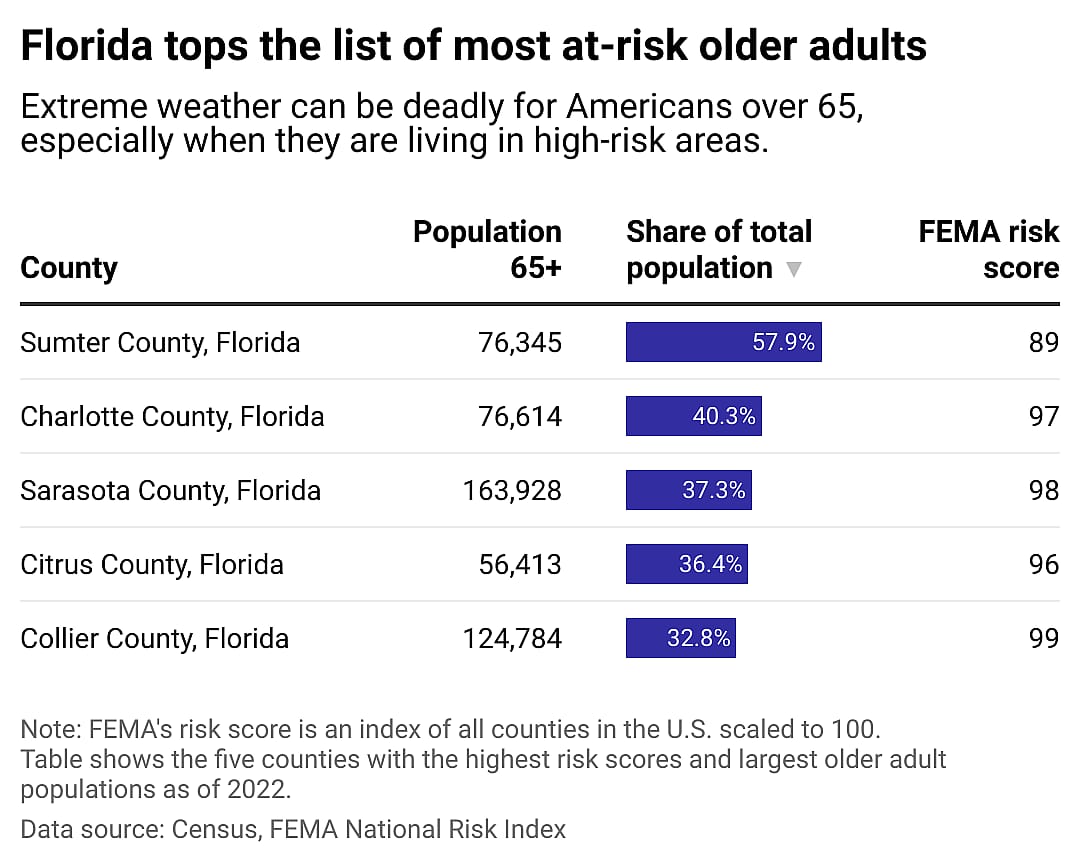
Hurricanes, western wildfires, and a southern cold freeze in 2021 have also contributed to the rising death toll, with some disasters causing more hardship to older adults than others. Hurricane Ian struck Florida's coast in September 2022, causing 120 fatalities, among which 2 in 3 were 60 or older, according to FEMA.
Older adults also face multiple vulnerabilities during extreme weather events. For instance, they're more likely to rely on specialized equipment, including ventilators or oxygen machines. A hurricane or flood wiping out a region's electricity puts older individuals at instant risk. They are also more susceptible to hypothermia, overheating, and other temperature-related conditions. Evacuating to safety or avoiding dangerous areas can also be more challenging due to mobility issues. And that's just the general population above 65. For those with specific disabilities or health conditions, the loss of access to medicine or interruptions to health care services can be catastrophic.
Historial health data also reveals racial disparities in heat-related deaths in the U.S. In a 2024 study published in the journal One Earth, researchers analyzing decades of data confirmed that extreme heat disproportionately impacts non-Hispanic Black residents more than non-Hispanic white individuals, which they attribute to systemic issues, including higher rates of non-Hispanic Black people living in heat islands.
Examining 2022, one of the hottest years on record, the paper's authors suggest the excess death rate of non-Hispanic Black people is twice the rate as that of non-Hispanic white residents. These racial inequities increase the risk for older individuals who are non-Hispanic Black.