Insurify
1 / 2Louisiana, South Carolina, and Maine can expect double-digit insurance rate hikes
The U.S. could see a "hurricane season from hell" in 2024, according to WeatherBELL. The Atlantic basin will become an ideal environment for hurricane formation as El Niño, a period of warming ocean surface temperatures, reverses into La Niña, a period of cooling.
Accumulated cyclone energy (ACE), which measures wind energy and the overall activity of tropical cyclones, could reach two to three times the average on the Southeast coast of the United States. The odds of La Niña developing by June to August 2024 are 60%, according to the National Oceanic and Atmospheric Administration (NOAA).
"If there's a surge in the number and intensity of hurricanes, insurance companies would face higher payouts for property damage, business interruption, and other related claims," says Jacob Gee, an insurance agent and quality assurance specialist. "This would likely lead insurers to reassess their risk models and adjust insurance rates accordingly."
Post-hurricane rate adjustments could mean steep hikes for homeowners affected by a hurricane, but they wouldn't see premium increases immediately, says Gee.
First, insurance companies would collect data on the damages. Then, insurers would assess the data, factor it into risk models, and propose new rates to ensure they meet state regulatory standards. If regulators approve rate hikes, insurers notify policyholders in their renewal documents.
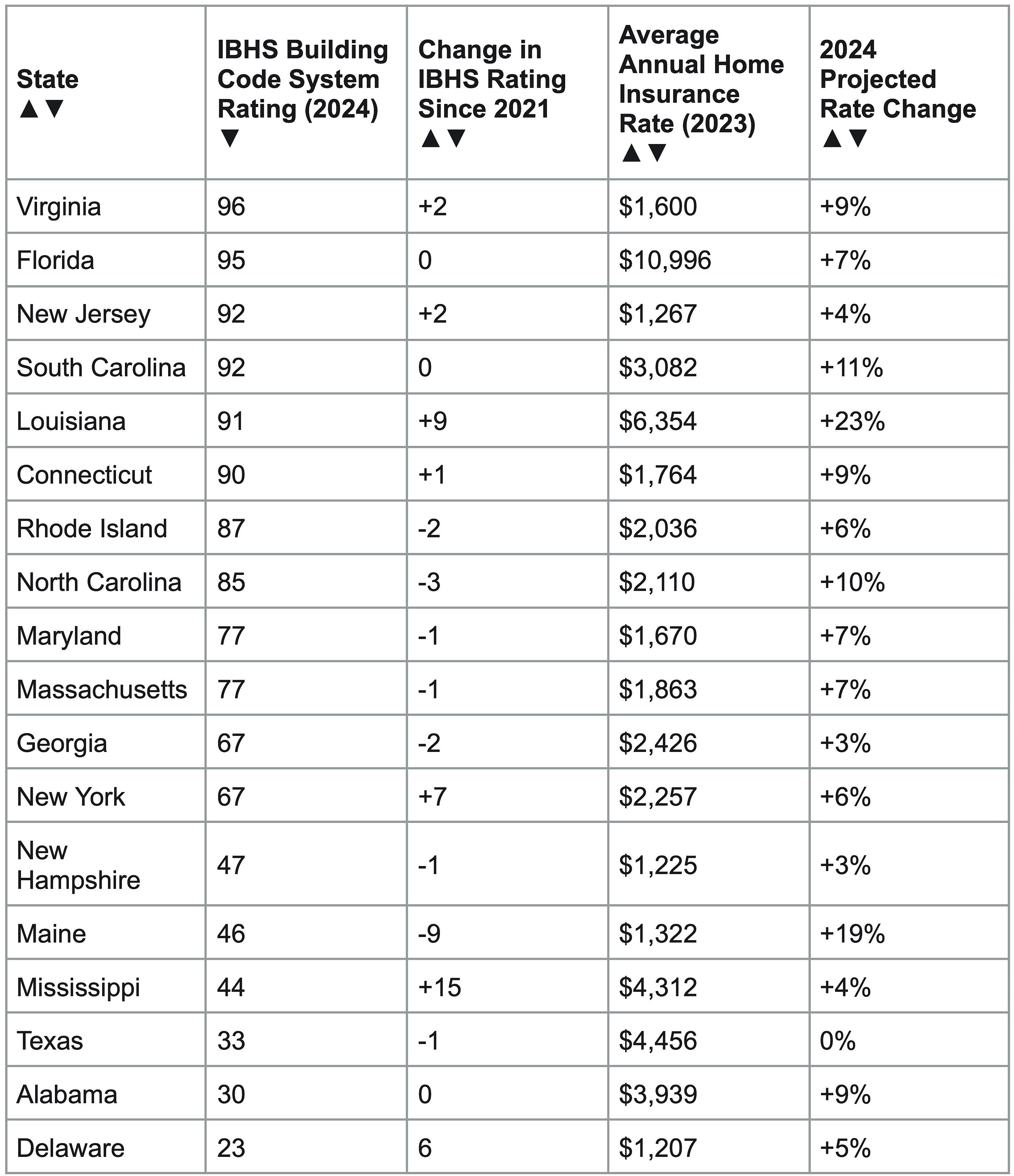
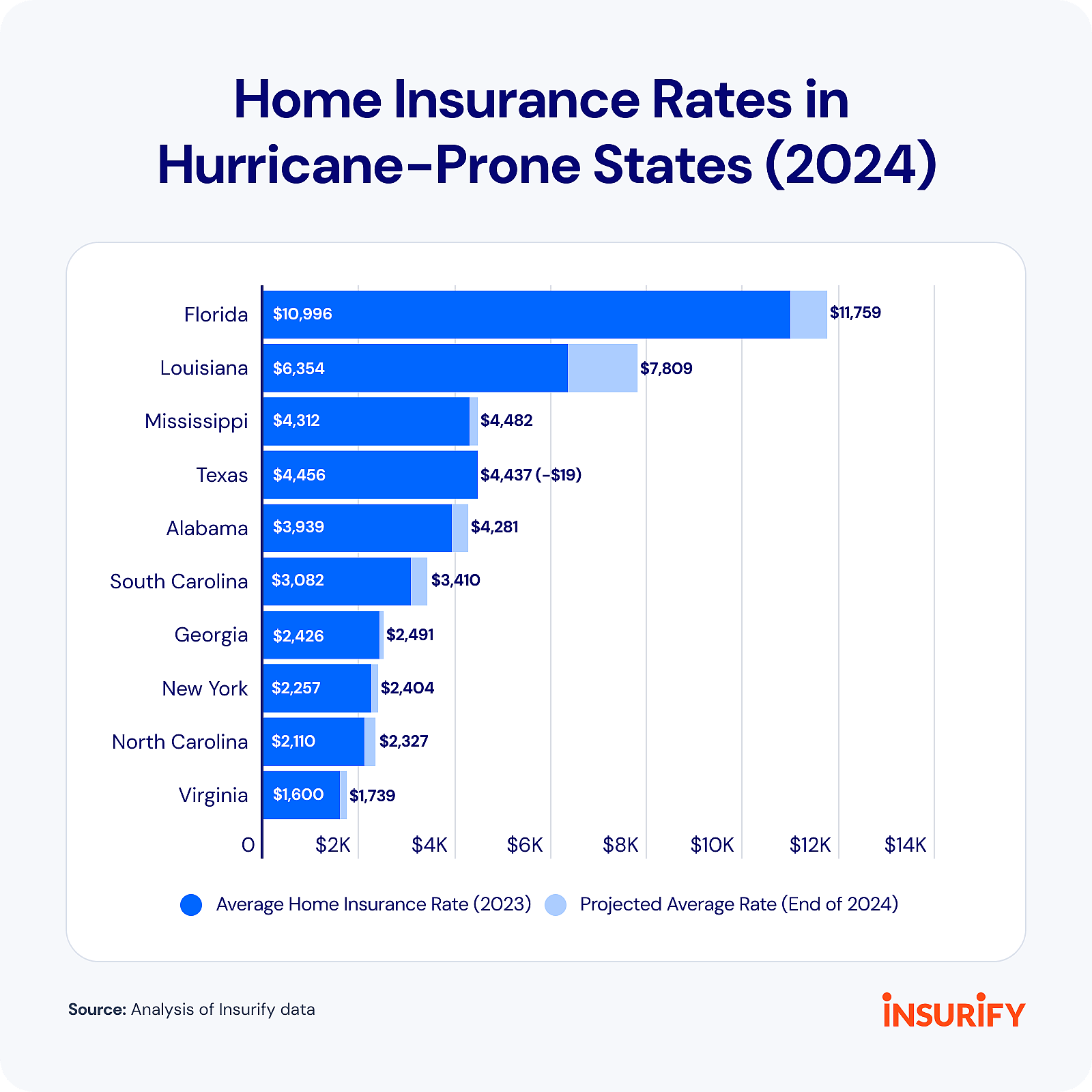
Several coastal states, including Louisiana, South Carolina, and Maine, could see double-digit home insurance rate hikes in 2024, according to projections by Insurify's data science team. Louisiana's home insurance costs may increase by as much as 23%.
Post-disaster insurance fraud also drives rate increases, especially in Florida, says Joseph Brenckle, director of public affairs with the National Insurance Crime Bureau (NICB).
"Unfortunately, disreputable contractors often swoop in after a catastrophic event, preying on desperation with high-pressure tactics and promises of quick fixes," says Brenckle. "In 2023, U.S. insurers paid more than $92 billion in catastrophe losses, with upward of 10%, or $9.2 billion, lost to post-disaster fraud. This can add hundreds of dollars to a homeowner's annual premium."
Roof replacement schemes have contributed "enormously" to net underwriting losses for Florida insurers, according to Sean Kevelighan, CEO of the Insurance Information Institute.
Reinsurance rates jumped by 50% in response to natural catastrophes
Insurance companies have insurance too. Reinsurance provides coverage to insurers when they need to distribute some of the costs of damage from catastrophic events. Home insurers often turn to reinsurance after destructive hurricanes.
"The increased demand for reinsurance would likely lead to higher costs for insurance companies. Reinsurers would need to adjust their pricing models to account for the elevated risk and potential for more significant losses," says Gee.
Catastrophe reinsurance rates increased by up to 50% upon renewal on Jan. 1, 2024, for policies hit by natural disasters, according to a Gallagher Re report. Reinsurance rate increases for insurers are often passed down to policyholders through higher home insurance premiums.
Building codes, quite literally, are make-or-break
When enforced, building codes save homeowners from weather-related damages totaling billions of dollars, the IBHS Rating the States 2024 report found. The report evaluates 18 states across the Atlantic and Gulf coasts and rates them on a 0–100-point scale based on building code adoption, implementation, and enforcement systems toward mitigating windstorm damage.
After Hurricane Ian, the IBHS analyzed 455 single-family homes and 57 multifamily structures built under the modern Florida Building Code (FBC). None of the FBC-built homes had structural damage. The FBC prevented an estimated $1 billion to $3 billion in damages to single-family homes.
Florida enacted the FBC in 2002, which means a higher proportion of homes and buildings are up to a strong modern standard compared to states like Louisiana, which updated its building codes in 2023. These states might not fare as well if hit by a storm that's equivalent to Hurricane Ian, says Dr. Anne Cope, chief engineer for the IBHS.
"Building codes are a marathon game, not a sprint," says Cope. "Enacting a building code today is not going to change the buildings that are on my street right now. But it will change the way they're built in new neighborhoods. It will change the way that we re-roof them. … But it's a long-term effort."
Getting stakeholders on board for that long-term effort is challenging. Resilient construction that adheres to modern building codes costs about $2 more per square foot — a cost developers and homebuyers often find difficult to stomach.
"It does add to the initial purchase price of the structure, but it reduces the lifecycle cost," says Cope. "So, by paying just a little bit more up front, you get a more durable structure, and the maintenance and ownership costs will [be lower] over time."
Resilient building standards are still a "tough sell," says Cope, despite National Institute of Building Sciences data showing that adopting the latest building codes saves $11 in damages per $1 invested.