Courtesy of River Partners
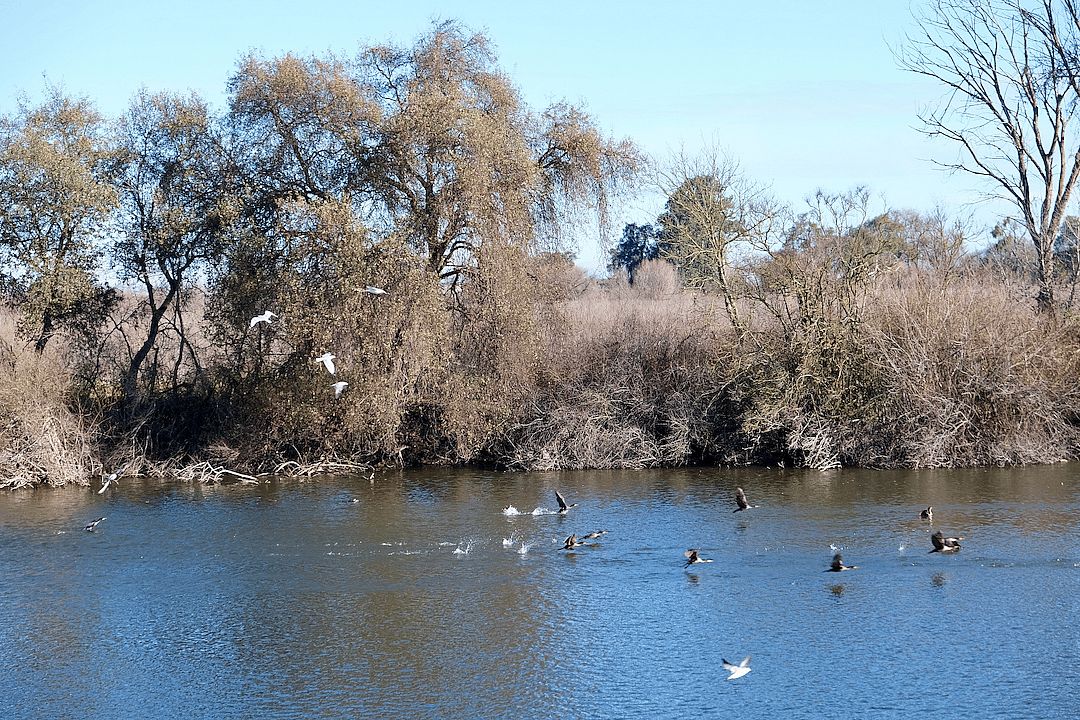
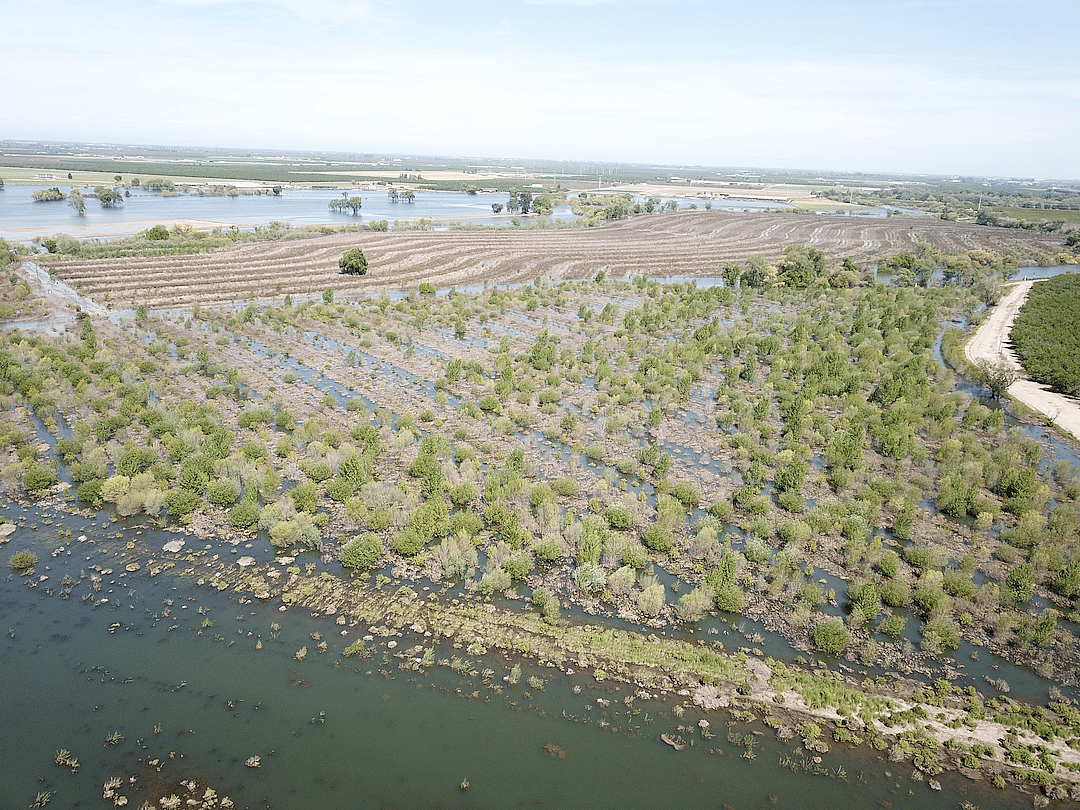
1 / 2Rewilded riverside habitat: flooded farmland to California's next state park
Until a little more than a decade ago, this area was productive farmland, used for growing crops like tomatoes, alfalfa, melons and almonds. Now it's set to be California's next state park after a restoration project spearheaded by River Partners converted the ranch into rewilded riverside habitat. As climate change has doubled the likelihood of flooding in California, and is projected to increase runoff from storms by as much as 200 percent to 400 percent, this restored floodplain is proving to be a promising approach.
Not only does the area help buffer downstream communities from flood damage, it also maximizes environmental benefits from high waters.
"When we step back from the river, when we give the river more room, flooding actually is a very productive process for the ecosystem," says Cain. "It recharges groundwater. It filters polluted water. It nourishes riparian forests that support all kinds of wildlife. It's alive."
California's Central Valley doesn't get much rain, but the 400-mile-long region is naturally shaped by water. Before human intervention, rivers fluctuated with flow from the towering Sierra Nevada range to the east. But over the last century and a half, rivers have been tamed by dams and constricted by levees as land was converted for agriculture and urban development. Some 95 percent of the region's native riparian and wetland habitat has been lost.
Even as rivers have been engineered with the aim of reducing flooding, communities and farmland have remained vulnerable. Bill Lyons, whose family owned Dos Rios Ranch for about 25 years, says that it was good farmland. But he recalls three times when the ranch was impacted by major flooding, resulting in loss of crops, erosion damage, and debris scattered across farmland.
Lyons' family — which has been farming for four generations and has a century of history in this region — has long been committed to stewardship of the land. They are concerned with supporting the health of the environment, he says. So the family was interested when River Partners approached them about buying Dos Rios Ranch.
"We looked at it from a point of view that probably its highest and best use would be to be returned to a natural state," Lyons says.
In 2012, River Partners purchased the property and began restoration work along eight miles of river. Berms that had been built to protect farmland from high water were removed. To date, more than 350,000 trees and shrubs have been planted. River Partners uses existing irrigation infrastructure on former farmland to help young vegetation endure hot dry summers as it gets established. About 1,600 acres have been rewilded so far, and restoration work is ongoing on another 500 acres on an adjacent former farm.
Pausing on a rough single-track road that runs atop higher ground through the preserve, Cain points out a long, shrubbery-covered berm that gently slopes down to the floodplain about three yards below the road. It's a ramp designed for riparian brush rabbits, an endangered species that has moved in at Dos Rios. The slope allows them to escape to higher ground when the area floods. To the right of the ramp, birds flit between bare branches of densely planted trees. To the left, a low-lying grassy meadow is primed to take on high water. When the San Joaquin River overflows onto the field, it offers an abundant feast of zooplankton and tiny bugs for juvenile salmon, which studies show grow faster on floodplains than in the river. Instead of aiming to benefit any single species, the restoration was geared toward creating a varied ecosystem.
"It's a more resilient landscape that supports a greater diversity of life," Cain says.