The RealReal
1 / 2What's behind the growth in textile waste?
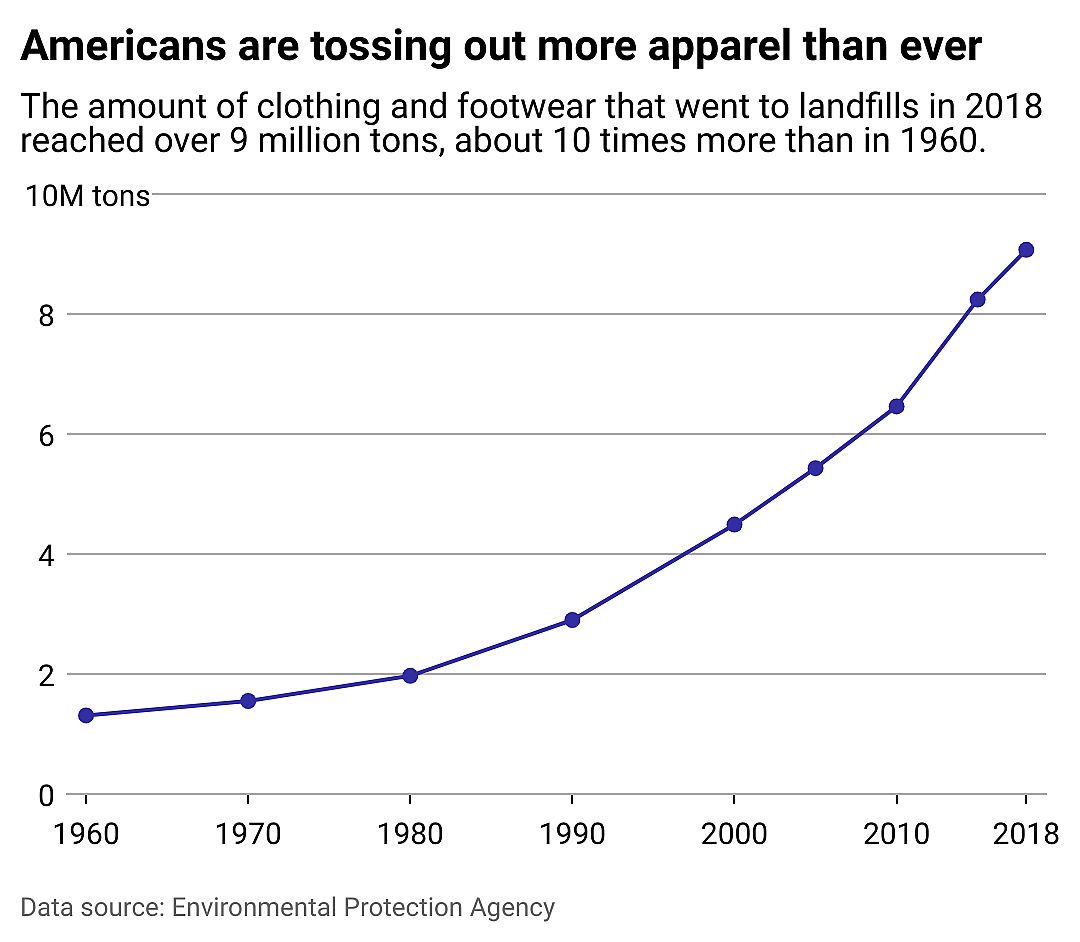
As trend-driven fashion purchases increase, so too does the amount of clothing and footwear that ends up in American landfills—now, at a rate of "one garbage truck per second," according to a paper published in the journal Materials Circular Economy in 2021. In 1960, clothing and footwear generated equalled 50,000 more U.S. tons than what was landfilled, per EPA data. By 2018, the gap between generated and landfilled clothing and footwear increased dramatically to 3.9 million U.S. tons.
Destroying the clothing that remains through incineration also has significant environmental impacts. According to a 2020 article by the Princeton Student Climate Initiative, such processes also present health and environmental hazards to nearby communities, with pollutants contaminating the air, water, and soil, often dramatically affecting marginalized communities.
This broad systemic issue was first revealed in a 1979 lawsuit by Robert Bullard, a pioneering scientist and civil rights leader who collected and published data linking race and health issues with disproportionate exposure to pollution in predominantly Black neighborhoods. His research found that six of Houston's eight incinerators were in Black neighborhoods, effectively dumping 85% of the city's garbage on 25% of the population at the time.
It's not just disposal, either. Clothing production processes, such as clothing dyes leaking into drinking sources, are also linked to increased health issues in populations living near polluted water systems in China, India, Bangladesh, Indonesia, and Zambia. Within the United States, there are racial-ethnic disparities for almost all types of emissions regardless of income level, according to a study by the EPA published in 2021.