Live It Up
1 / 1Mexico is the main source of US fruit and nut imports
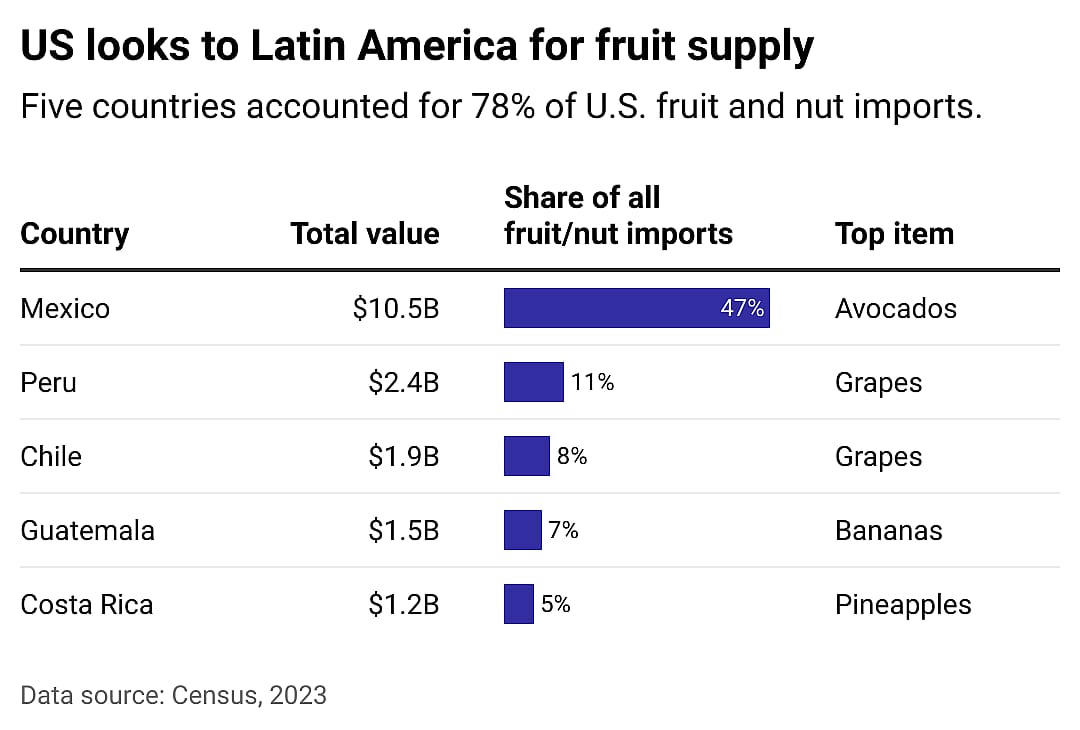
Mexico is not just the largest market for U.S. nuts; the country, in turn, outpaces other food and nut partners in American groceries. Shoppers frequently purchase avocados from Mexico, but also raspberries, strawberries, grapes, lemons, and limes. Factors such as proximity to the U.S. via a shared land border, tropical climate, and relatively low labor costs contribute to Mexico's status as a top U.S. trading partner.
Although NAFTA brought many benefits, such as increasing variety in U.S. supermarkets and boosting investment and trade between its member states, some of its broader effects may not be so palatable. For example, the presence of U.S. companies in Mexico has increased fertilizer and chemical-related pollution and deforestation rates, contributing to global warming. Increased import of goods has also led to more carbon emissions. A study published in June 2022 in Nature Food reported that transporting food accounts for around 19% of total food-system emissions.
Transportation is just one facet of the discussion, however, as sustainability expert Pablo Päster explained on Treehugger. There is also the suitability of growing fruits in their natural climates to consider.
"[The] net emissions will likely favor the imports because non-tropical climates simply do not support the efficient production of tropical fruits," Päster wrote. Using fertilizers and pesticides, watering requirements, and greenhouse infrastructure to grow tropical fruits domestically all add to its emissions—additions that may not be needed when fruit production happens in the proper climate.
From a nutritional perspective, it is easy to see how increased availability and consumption of fresh produce positively impacts health. Yet, while U.S. consumers may benefit from the increased availability of fruits and nuts, some argue that free trade may have had the opposite impact on partner countries. Mexico has ended up importing more unhealthy processed foods. Some critics also note that Mexico missed a window for more development by removing industry protections without a guarantee of investments from its richer partners. The U.S., too, saw its manufacturing jobs move south across the border.
In 2020, NAFTA was replaced with the United States-Mexico-Canada Agreement. USMCA is in many ways an extension of NAFTA in that it places zero tariffs on the same agricultural products while providing broader opportunities for U.S. exports to Canada of dairy, poultry, and egg products. This means that even though NAFTA is no longer with us, trends in the trade of fruit and nuts are likely to continue.
Story editing by Carren Jao. Additional editing by Kelly Glass. Copy editing by Kristen Wegrzyn.