AaronP/Bauer-Griffin/GC Images // Getty Images
1 / 4Delivery robots
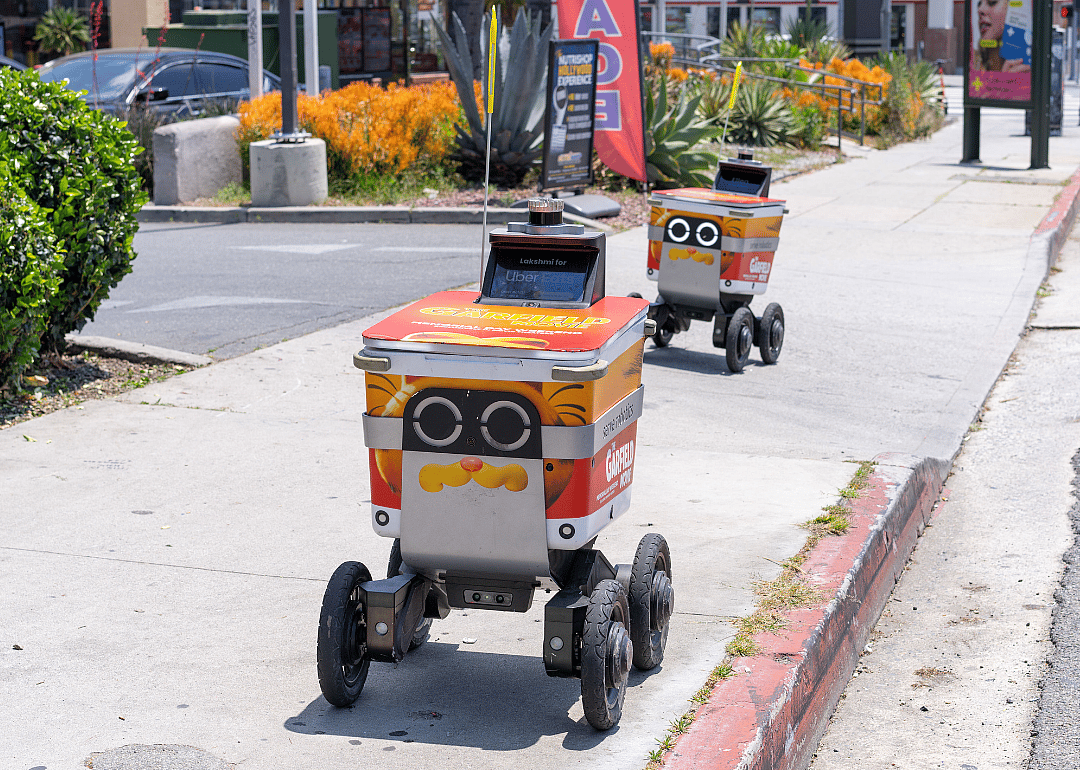
Autonomous delivery robots are gaining momentum in major cities like Chicago and Los Angeles as restaurants and retailers look to improve efficiency, cut costs, and meet rising demand for faster, more reliable deliveries.. These robots use advanced navigation systems, cameras, and sensors to safely transport orders from businesses to customers, reducing reliance on human couriers.
In Los Angeles, fast-casual burger chain Shake Shack partnered with Serve Robotics and Uber Eats to offer robot deliveries at select locations. These robots navigate sidewalks using advanced mapping technology to deliver food directly to customers without human involvement.
Globally, in places such as Chicago, Miami, Los Angeles, and Helsinki, Coco delivery robots are helping businesses fulfill local orders using small, wheeled robots that travel on sidewalks. Unlike traditional bike or car deliveries, these robots bypass traffic, lower delivery costs, and improve order fulfillment efficiency. Coco uses QR Codes displayed on the outside of each robot to help businesses accurately fulfill orders.
Coco robots are used in collaboration with companies such as DoorDash, Uber Eats, and OpenAI.
Beyond food delivery, Vayu Robotics has developed an on-road, AI-powered delivery robot designed to operate without expensive lidar sensors, a technology that uses pulses of laser light typically used in drones for aerial and 3D mapping.
Instead, it uses a more affordable vision-based system to transport goods, making last-mile logistics more scalable and accessible for retailers and e-commerce brands.