Uniqode
1 / 1While we're encouraged to tip in more venues, our habits haven't changed much
Technology—particularly cashless payment systems—may have upended tipping norms through a phenomenon known as the framing effect, a cognitive bias in which people make choices based on how a set of options is presented or "framed" instead of based on facts.
If a kiosk or other tech-based payment system prompts people to select 20%, 25%, and 28% tips instead of the traditional 10%, 15%, and 20%, it can create a culture of overtipping. It can also play into people's desire not to appear ungenerous by nudging them to tip more. This tactic can also be done without technology, as restaurants can place higher percentages on receipts in their suggested tips sections.
Payment processing companies, which take a cut from every transaction, benefit from bigger tips. Cashless payment systems like Venmo, Cashapp, and Zelle allow people to pay buskers and street artists quickly, making paying tips more convenient. Some hotels use technologies that allow customers to pay tips by scanning a QR code.
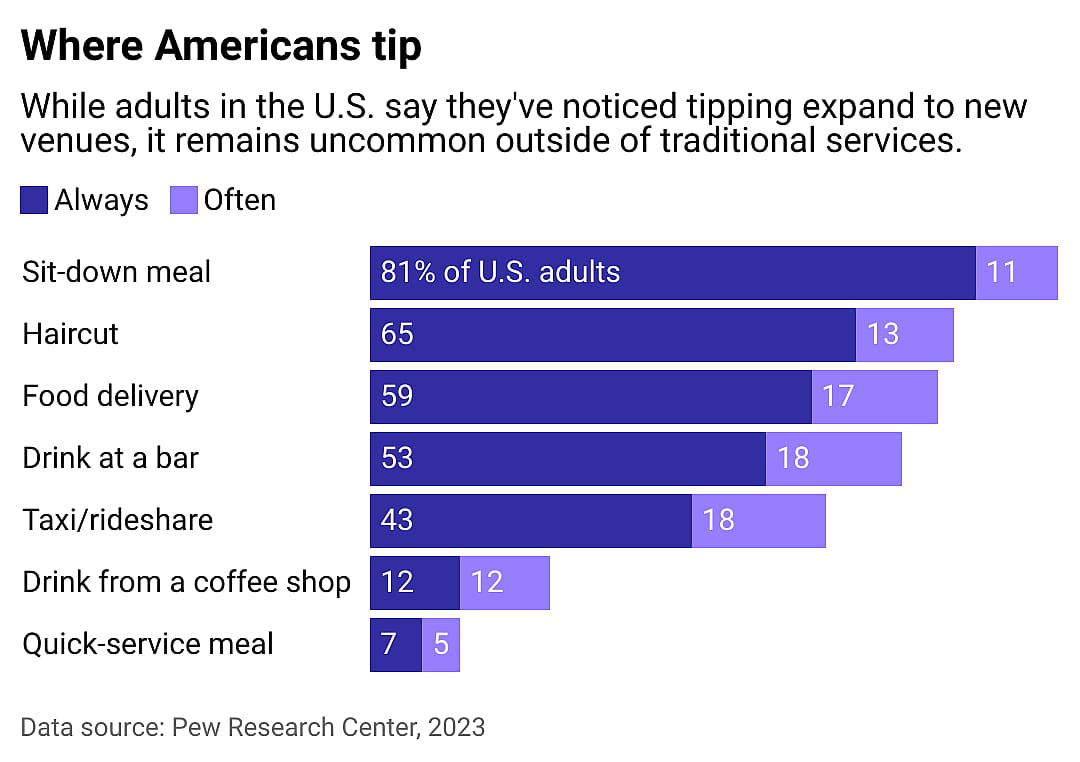
While our overall tipping behaviors might not have changed entirely, the visualization above does underscore some movement. While many coffee shops historically had tip jars out for baristas, tipping at fast food restaurants or other quick-service locations wasn't a regular part of American tipping culture. The fact that 12% of people now report tipping often or always in those settings shows how much has evolved in a short time—and how tipping may continue to adapt as the technology around us advances.
Story editing by Nicole Caldwell. Copy editing by Kristen Wegrzyn.